


Are 100 Pin SCSI Cables Standardized?
As a supplier of 100 Pin SCSI cables, I often get asked about the standardization of these cables. The topic of standardization is crucial in the electronics industry, as it ensures compatibility, reliability, and safety across different products and systems. In this blog post, I'll delve into the question of whether 100 Pin SCSI cables are standardized, exploring the relevant standards, their implications, and what it means for our customers.
Understanding SCSI and 100 Pin SCSI Cables
SCSI, or Small Computer System Interface, is a set of standards for physically connecting and transferring data between computers and peripheral devices. It has been widely used in various applications, including servers, storage systems, and high - end workstations, due to its high data transfer rates and ability to support multiple devices on a single bus.
The 100 Pin SCSI cables are a specific type of SCSI cable designed to handle high - speed data transfer and provide a reliable connection for devices that require a large number of data lines. These cables are commonly used in applications such as motion control systems, servo drives, and high - density storage arrays.
Industry Standards for 100 Pin SCSI Cables
There are indeed several industry standards that govern 100 Pin SCSI cables. One of the most important standards is set by the International Electrotechnical Commission (IEC) and the Institute of Electrical and Electronics Engineers (IEEE). These organizations have developed standards for the electrical, mechanical, and performance characteristics of SCSI cables, including those with 100 pins.
Electrical Standards
The electrical standards for 100 Pin SCSI cables define parameters such as impedance, signal integrity, and data transfer rates. For example, the cables must have a specific impedance value (usually around 100 ohms) to ensure proper signal transmission and minimize signal reflections. Signal integrity is also a critical factor, as it affects the accuracy and reliability of data transfer. High - speed data transfer requires cables that can maintain clean signals without significant interference or noise.
Mechanical Standards
Mechanical standards cover aspects such as the physical dimensions of the connectors, the pin layout, and the cable construction. The 100 - pin connectors must have precise dimensions to ensure a proper fit with the corresponding device ports. The pin layout is standardized to ensure that the signals are correctly routed between the devices. For example, each pin is assigned a specific function, such as data lines, control lines, or power lines.
Performance Standards
Performance standards define the maximum data transfer rates and other operational characteristics of the cables. For 100 Pin SCSI cables, these rates can vary depending on the specific application and the technology used. Some cables are designed to support data transfer rates of up to several gigabits per second, which is essential for applications such as high - speed storage systems.
Variations and Customization
While there are industry standards for 100 Pin SCSI cables, there are also some variations and opportunities for customization. Different manufacturers may produce cables with slightly different characteristics to meet the specific needs of their customers.
Connector Types
There are several types of 100 - pin connectors available, such as HDRA (High - Density Right - Angle), HPDB (High - Performance Data Bus), and VHDCI (Very High - Density Cable Interconnect). Each connector type has its own advantages and is suitable for different applications. For example, the 0.80mm pitch HDRA 100 pin to HPDB 100 pin Motion Controller Adapter Cable is specifically designed for motion control systems, where precise signal transmission is crucial.
Cable Length and Configuration
Customers may also require cables of different lengths and configurations. Longer cables may be needed for larger systems or to accommodate specific installation requirements. Additionally, some applications may require custom cable configurations, such as cables with different pin assignments or additional shielding for enhanced signal protection. For instance, the 0.80mm picth HDRA 100 Pin To VHDCI 100 Pin Servo SCSI Cable is a customized cable that can be used in servo drive applications.
The Importance of Standardization for Our Customers
Standardization is of great importance for our customers. When 100 Pin SCSI cables are standardized, it ensures that the cables are compatible with a wide range of devices. This means that customers can easily replace or upgrade existing cables without having to worry about compatibility issues.
Standardized cables also offer better reliability and performance. Since they are designed to meet specific industry standards, they are more likely to provide consistent and high - quality data transfer. This is especially important in critical applications such as data centers and industrial automation systems, where any downtime or data loss can have significant consequences.
Our Role as a 100 Pin SCSI Cable Supplier
As a supplier of 100 Pin SCSI cables, we are committed to adhering to the industry standards while also offering customized solutions to meet the unique needs of our customers. Our High Density 100 Pin SCSI Cable Assembly is designed to meet the highest standards of quality and performance.
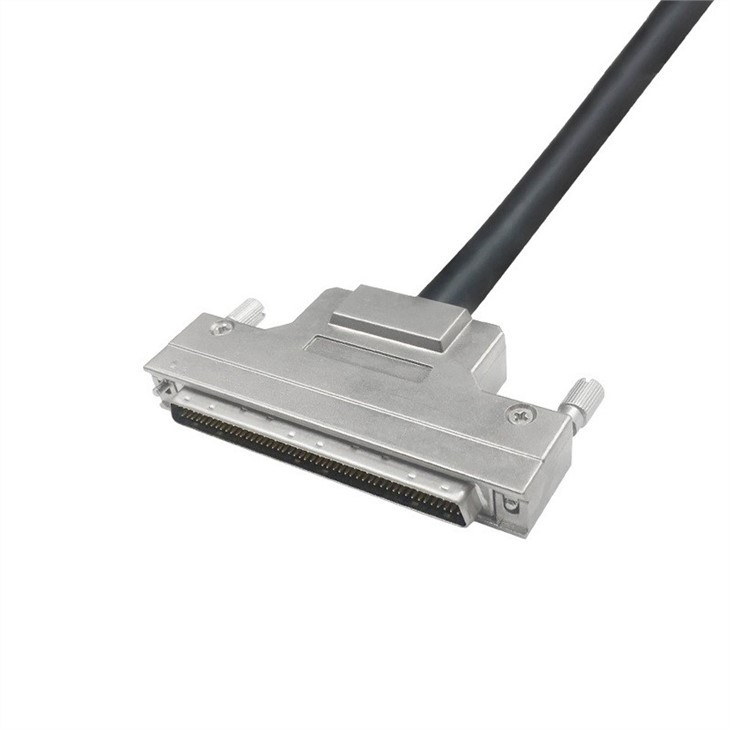

We use high - quality materials and advanced manufacturing processes to ensure that our cables meet or exceed the industry standards. Our team of experts is also available to provide technical support and advice to our customers, helping them choose the right cables for their specific applications.
Contact Us for Your 100 Pin SCSI Cable Needs
If you are in the market for 100 Pin SCSI cables, whether you need standard cables or customized solutions, we are here to help. Our extensive experience and commitment to quality make us a reliable partner for all your SCSI cable requirements. Contact us today to discuss your needs and start a procurement negotiation. We look forward to working with you to find the best cable solutions for your applications.
References
- International Electrotechnical Commission (IEC) standards related to SCSI cables.
- Institute of Electrical and Electronics Engineers (IEEE) standards for SCSI interfaces.
- Industry whitepapers on high - speed data transfer and SCSI technology.