



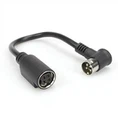
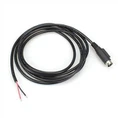
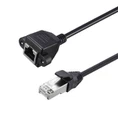
USB 2.0 Cable
Your Professional USB 2.0 Cable Supplier
USB 2.0 cable is standard cable based on second-generation Universal Serial Bus interface, mainly used to connect computers to various peripheral devices. Such as keyboards, mice, printers, external hard disk drives, etc. Standard USB2.0 cable features a USB2.0 interface connector on each side, linked with one pairs wire and two single wire, data transfer can speed up to 480 Mbps (High-Speed USB) while supplying power to connected devices.
Compared with original USB 1.1 standard, USB 2.0 has achieved comprehensive technical upgrades. It adopts a 4-wire differential signal transmission architecture to eliminate the traditional low-speed transmission mode, with a theoretical peak data transfer rate of 480 Mbps, which is 40 times that of USB 1.1 (12 Mbps). Meanwhile, it is fully compatible with old USB 1.1 and USB 1.0 devices, featuring outstanding universality as a standardized and generalized basic electronic accessory.


Features of USB2.0 Cable
USB2.0 data Cable uses differential signal transmission technology, which distinguishes the bidirectional data transmission logic of upstream and downstream. Supports three transmission modes: High-Speed, Full-Speed and Low-Speed to meet the demands of various devices. High speed USB2.0 cable supports to stably transmit documents, images and standard video files, eliminating lag and packet loss issues found in older interfaces, and satisfying most basic data transfer requirements.
You can plug and unplug USB2.0 sync cable directly without powering off or restarting the equipment. Equipment system will automatically identify and match the connected device by high speed USB 2.0 cord. Meanwhile, Hot-swappable plug design of USB2.0 port effectively prevents device damage caused by reversed insertion, making it ideal for frequent daily use scenarios.
USB 2.0 power cables adopt a classic 4-pin structure, including VCC (power positive), GND (power negative), D+ and D- (data pins) with clear functional divisions. 5V/500mA standard power supply does not easily damage device batteries and main-board. Mainly used to supply power and charge low-power peripherals, such as keyboards, mice, Bluetooth headsets and small card readers.
USB 2.0 protocol is fully compatible with all USB 1.0 and USB 1.1 devices. Meanwhile, it can work seamlessly with new-generation interface devices such as USB 3.0, USB 3.1 and USB-C. Supports both old and new devices, no need to distinguish device versions, delivering an extremely wide range of compatibility.
USB2.0 charging and data cable adopt mature manufacturing processes with low production costs. Featuring stable wire construction and wear-resistant connectors, they have a low failure rate in daily use. Compared with high-speed USB3.0 cables or USB3.1 Cables, USB2.0 cable is more suitable for long-term and frequent daily applications.

Classification of USB 2.0 Cables
Classification by USB2.0 Interface Form
USB2.0 Type A Cable
Classic rectangular interface with 4 pins. Commonly used for computers, sockets and host terminals. Include USB2.0 A to A cable and USB2.0 A to B Cable. Compatible with conventional peripherals such as keyboards, mice and printers.
01
USB2.0 Type B Cable
Square interface with 4 pins. Mainly applied to office and industrial equipment including printers, scanners, industrial devices and external optical drives. Including USB2.0 B to B cable and USB2.0 B to A cable.
02
USB2.0 Micro B Cable
Micro flat trapezoidal interface with 5 pins. Extensively adopted in old Android phones, power banks, Bluetooth headsets and small home appliance. Including Micro USB2.0 cable and 5 Pin USB2.0 Micro B cable.
03
USB2.0 Mini B Cable
Mini trapezoidal interface with 5 pins or 8 pins, widely used in early portable digital devices. Such as old MP3 players, dash-cams, digital camera and feature phones. Included Mini USB2.0 cable and 5 pin USB2.0 mini B cable.
04
Classification by Cable USB2.0 Functional Purpose
USB2.0 power Cable
Only remain power Pin1 and Pin4 , data transmission is not supported. Commonly use Black and Red copper wire. Specially designed for charging low-power devices. Including 2 wires USB2.0 power supply cable, USB2.0 charging cable, USB2.0 to DC power cable.
01
USB2.0 Data synchronization cable
Use 4 wires to support up to 480Mbps data transfer and Up to 500mA power supply. This high speed USB 2.0 cable core need standard UL list shielding wire, common wire size is one pairs wire add two power wires.
02
USB2.0 OTG Cable
A special USB2.0 data cable based on USB 2.0 standard that allows mobile devices (such as phones and tablets) to directly act as "hosts" without a computer, connecting peripherals devices. USB2.0 on-the-go cable donot support power supply. Including Micro USB2.0 OTG Cable and Mini USB2.0 OTG Cable.
03
Active USB2.0 Cable
When USB2.0 data transmission length exceeds 5 meters, signal begins to attenuate, then requiring an amplifier to provide higher power to boost signal transmission.USB 2.0 active Extension cable’s maximum transmission distance can reach up to 50 meters. Including USB2.0 A to A amplification cable and USB2.0 A to B active Cable.
04
Advantages of USB 2.0 Cables

Low Cost: Mature manufacturing processes and lower material requirements
Longer Transmission Distance: Standard USB 2.0 cable supports up to 5 meters without a repeater; USB 2.0 active extension cables can easily reach 10 m, 20 m, or even 50 m.
Low Power Consumption and Supply Demands: Provide 500 mA standard power output, placing minimal load on the host. Sufficient for low-power devices like mice, keyboards, USB flash drives, card readers, and audio equipment, requiring no external power.
Strong Anti-Interference and Low EMI: With data rate of only 480 Mbps, signal spectrum is narrow, easing shielding requirements. In industrial environments or long distance situation, USB 2.0 cables suffer less electromagnetic interference and more gradual signal attenuation, ensuring more reliable transmission.
Mature, Stable, and Well-Established Ecosystem: Over 20 years of technological refinement , related USB2.0 chip solutions, cable standards, and testing procedures extremely mature. All mainstream host controllers and peripheral chips fully support USB 2.0, resulting in low failure rates and easy debugging.
Disadvantages of USB 2.0 Cables
Slow Data Transfer (Primary Bottleneck): Theoretical USB2.0 bandwidth is 480 Mbps (~60 MB/s), real-world speeds typically 30–40 MB/s. Much slower than USB3.0 and USB3.1 speed.
Weak Power Delivery: USB2.0 ports supply is only 5V / 500mA (2.5W), not suitable for high-draw peripherals like portable hard drives, external optical drives, LED lights, USB fans, or desktop vacuums.
No Video Output Support: Bandwidth and protocol design do not support DisplayPort Alt Mode, HDMI, or other video signals. Need chipset to change it with high cost.
Half-Duplex Communication: USB 2.0 Data can only flow in one direction at a time (half-duplex), simultaneous send/receive is not supported by USB2.0 data cable.
Higher CPU Overhead: USB 2.0 relies on the host CPU for packet framing and error checking (interrupt transfers), consuming CPU resources during heavy traffic.
Insufficient Bandwidth for Emerging Peripherals: High speed USB2.0 cable do not support high-resolution video devices, such as: 4K/8K cameras, VR/AR headsets, Multi‑channel audio interfaces.

Applications of USB 2.0 Cables
Despite the rise of USB 3.0 cable and USB-C cable, USB 2.0 cables remain essential for a wide range of applications.
Office & Work Environments
USB 2.0 to USB 2.0 cable can be used to connect computers to distant printers, scanners, fax machines, and all-in-one devices for remote printing, scanning, and faxing.
Home & Personal Use
2.0 USB cable can be used to link PCs to speakers, projectors, and external sound cards for multimedia playback and home entertainment.Attach game controllers, steering wheels, and VR trackers.
Industrial & Professional Systems
Used in factory automation to connect PLCs, barcode scanners, and diagnostic tools over longer distances. Deploy for surveillance cameras and data loggers – active USB 2.0 extension cables (up to 50 m) ensure reliable signal integrity.
Retail & Education
USB2.0 printer cable can be used to connect POS terminals, receipt printers, and customer displays in retail checkouts. Link projectors or interactive whiteboards to teachers’ computers in classrooms.
Long Distance Extension (Active Cables)
Extension cable USB 2.0 is Perfect for conference room cabling, remote server management, and outdoor digital signage, where USB 3.0 would fail due to shorter reach and higher cost.
Legacy Device Support
Many older peripherals (e.g., industrial controllers, vintage printers, medical equipment) have only USB 2.0 ports. Cable USB 2.0 keeps them operational without costly upgrades.

How to choose suitable USB 2.0 Cable

USB2.0 Type-A connector: Standard rectangular, connects to computers and chargers.
USB2.0 Type-B connector: Square – common on printers, scanners, and older audio interfaces.
USB2.0Mini-B connector: Older digital cameras and portable drives.
USB2.0 Micro-B connector: Legacy Android phones, Raspberry Pi, and many development boards.
AWG (American Wire Gauge) determines conductor thickness. Lower numbers mean thicker wires and lower electrical resistance. USB2.0 data cables requires a twisted 28AWG Pairs wire as data lines, two twisted wires as power supplier wire. Common power wire size is 28AWG, if you need high power, 24AWG or 20AWG wire is ok for you.


Essential for Signal Stability
Shielding protects against electromagnetic interference(EMI)and radio-frequency interference (RFI). In noisy environments (factories, server rooms) or for runs longer than 1.5 metres, shielding becomes critical.
Breaking the 5.0 Meter Barrier
USB2.0 Passive cables (≤ 5 m) : No internal electronics. Suitable for short connections.
USB2.0 Active cables (> 5 m) : Built-in signal repeaters chips regenerate the signal. Support 25 meters, 50 meters, or even longer distance.

Custom USB 2.0 Cable Solution
in USB2.0 Cable
As a professional USB2.0 manufacturer, Starte has built up comprehensive USB2.0 cable manufacturing capacity with over 3,000 sets molding molds and 5,000 mature off-the-shelf USB2.0 cable connectivity solutions. Here are our main customized USB2.0 cable assembly:
90 degree USB2.0 Cable
Panel mount USB2.0 Cable
USB2.0 Cable with screw locking
Waterproof USB2.0 cable assemblies
USB 2.0 active extension Cable

Our Certificates:

Our Clients

FAQ
Q:What is a USB 2.0 Cable?
A:High-speed USB 2.0 cable is a standard universal serial bus cord supporting 480Mbps transmission, featuring dual functions of USB 2.0 data transfer and low-power charging.
Q:What is USB 2.0 Cord Speed & Charging Spec?
A:Standard USB 2.0 data transfer cable supports 480Mbps max, ideal for daily file sync. Most USB 2.0 charging cables support stable 5V/2A output.
Q:What Are regular USB 2.0 Cable Types?
A:Main types include USB 2.0 A to B scanner cable, 5 pin USB 2.0 Micro USB cable, 5 pin Mini USB 2.0 cable, USB 2.0 extension cable and USB 2.0 OTG.
Q: Is USB 2.0 Cable Still Worth Using?
A:Yes. Durable USB 2.0 cable offers excellent stability, wide compatibility, and high cost performance. It is best choice for basic data transfer, low-power charging, and fixed equipment wiring in home, office, and industrial scenarios.
Q:What does a USB 2.0 cable do?
A:USB2.0 shielding cable transmits data and supplies power for USB 2.0 compatible devices, such as camera, printer, power bank, mobile phone and MP4, etc.
Q: What is the maximum data transfer speed of high speed USB 2.0 cable?
A: Up to 480 Mbps for high speed mode.
Q: What power can a standard USB 2.0 cable deliver?
A: Max 5V / 500mA for power supply.
Q: What connector types fit a USB 2.0 cable?
A: USB2.0 Type A connector, USB2.0 type B connector, Micro USB2.0 connector, Mini USB2.0 connector.
Q: Are USB 2.0 cables backward compatible with USB 1.1 devices?
A: Yes, but its speed drops to USB 1.1 rate.
What is the maximum recommended length for a USB 2.0 passive cable?
A: 5 meters without signal repeater. If you want to use it with longer distance, USB2.0 active cable is ok for you.
Q: Does micro USB 2.0 OTG cable support peripheral connection?
A: Yes, it lets host devices connect USB peripherals.
Q: Does Mini USB 2.0 OTG cable support power supply?
A: No, standard USB OTG cable just support data transfer, if you need power supply, you can add more two USB wires for charging.
Q: What is the difference between charge only and data USB 2.0 cables?
A: USB2.0 charging cable just need two wires, but USB data cable need 4 wires.
Q: Can a USB 2.0 cable work with USB 3.0 ports?
A: Yes, limited to USB 2.0 speed performance. And lower power supply.
Q: Which pins inside a USB 2.0 cable carry differential data signals?
A: D+ and D‑pins for differential data transmission.
Q: Do shielded USB 2.0 cables reduce EMI interference?
A: Yes, shielding suppresses electromagnetic interference.
Shenzhen Starte Technology Co., Ltd is one of the most professional usb 2.0 cable manufacturers and suppliers in China. Welcome to wholesale bulk high quality usb 2.0 cable made in China here from our factory. For customized service, contact our factory.