


In the realm of data storage and transfer, SCSI (Small Computer System Interface) cables have long played a pivotal role. Among them, the 68 - pin SCSI cables are widely used in various high - performance computing and storage systems. As a supplier of 68 - pin SCSI cables, I often encounter questions from customers about whether there are different versions of these cables. In this blog, I'll explore this topic in detail.
The Basics of 68 - Pin SCSI Cables
Before delving into the different versions, it's essential to understand the fundamental purpose and structure of 68 - pin SCSI cables. These cables are designed to connect SCSI devices such as hard drives, tape drives, and optical drives to a host system. The 68 - pin configuration provides a relatively large number of data and control lines, enabling high - speed data transfer and communication between devices.
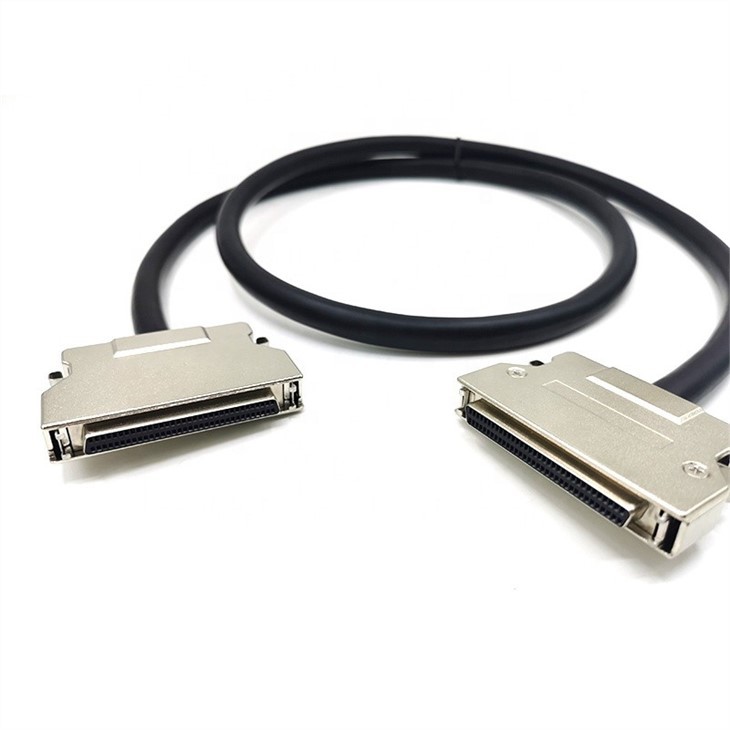
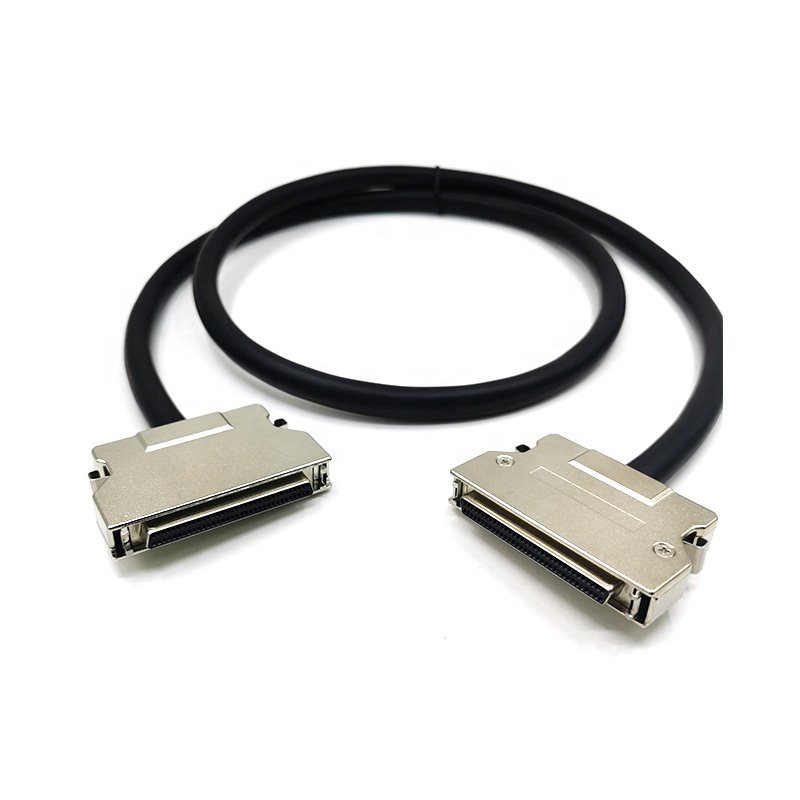
The standard 68 - pin SCSI cable typically consists of a bundle of wires encased in a protective sheath. The pins on each end of the cable are arranged in a specific pattern to ensure proper connection and signal transmission. Different types of connectors can be used at the ends of the cable, including HD68, DB68, and others, which are designed to fit specific SCSI devices and interfaces.
Different Versions of 68 - Pin SCSI Cables
Physical Design Variations
One of the most obvious differences between versions of 68 - pin SCSI cables is their physical design. For example, there are flat cables and molded cables.
The 68 Pin Seven Drive SCSI Flat Cable is a type of flat cable. Flat cables are known for their flexibility and ease of installation. They can be easily routed through tight spaces in a computer chassis, making them suitable for systems where cable management is a concern. These cables are often used in multi - drive configurations, such as those with seven drives, as the flat design allows for efficient connection and organization of multiple devices.
On the other hand, the Half Pitch MD68 Pin SCSI - 3 Mould Cable is a molded cable. Molded cables have a more rigid structure compared to flat cables. The molding process ensures that the pins are securely held in place, reducing the risk of pin damage or misalignment. This type of cable is often used in environments where durability and reliability are crucial, such as industrial or enterprise - level systems.
Connector Types
Another significant factor that differentiates 68 - pin SCSI cable versions is the type of connectors used. Different SCSI devices may require specific connector types to ensure proper electrical and mechanical connection.
The HD68 Female To DB68 Female SCSI - III Cable is an example of a cable with specific connector types. The HD68 connector is a high - density 68 - pin connector that is commonly used in high - performance SCSI devices. It provides a more secure and reliable connection compared to some other connector types. The DB68 connector, on the other hand, is a more standard 68 - pin connector that is widely used in various SCSI applications. A cable with HD68 female to DB68 female connectors is designed to connect devices with different connector requirements, allowing for greater flexibility in system configuration.
Electrical Characteristics
The electrical characteristics of 68 - pin SCSI cables can also vary between versions. These characteristics include impedance, signal attenuation, and noise immunity.
Cables with different electrical characteristics are designed to meet the requirements of different SCSI standards. For example, some cables are optimized for high - speed data transfer, with low impedance and minimal signal attenuation. These cables are suitable for use in systems that require fast and reliable data transfer, such as high - end servers and storage arrays. Other cables may be designed to provide better noise immunity, which is important in environments where there is a lot of electromagnetic interference.
Factors Influencing the Choice of 68 - Pin SCSI Cable Version
When choosing a 68 - pin SCSI cable, several factors need to be considered.
System Requirements
The first factor is the requirements of the system in which the cable will be used. If the system requires high - speed data transfer, a cable with low impedance and good signal integrity should be selected. For example, in a data center environment where large amounts of data need to be transferred quickly between servers and storage devices, a high - performance 68 - pin SCSI cable is essential.
Device Compatibility
Another important factor is device compatibility. Different SCSI devices may have different connector requirements and electrical characteristics. It's crucial to choose a cable that is compatible with the devices in the system. For example, if a device has an HD68 connector, a cable with an HD68 connector on one or both ends should be used.
Physical Constraints
Physical constraints in the system, such as available space and cable routing, also play a role in cable selection. If there is limited space in the computer chassis, a flat cable may be a better choice due to its flexibility. On the other hand, if the cable needs to be installed in a harsh environment where it may be subject to mechanical stress, a molded cable may be more suitable.
Our Offerings as a 68 - Pin SCSI Cable Supplier
As a supplier of 68 - pin SCSI cables, we understand the diverse needs of our customers. We offer a wide range of 68 - pin SCSI cable versions to meet different requirements.
Our 68 Pin Seven Drive SCSI Flat Cable is a popular choice for customers who need a flexible and easy - to - install cable for multi - drive systems. It is made of high - quality materials to ensure reliable performance and long - term durability.
The Half Pitch MD68 Pin SCSI - 3 Mould Cable is designed for customers who require a more rigid and durable cable. It is suitable for use in industrial and enterprise - level systems where reliability is of utmost importance.
Our HD68 Female To DB68 Female SCSI - III Cable provides a solution for customers who need to connect devices with different connector types. It is carefully engineered to ensure proper signal transmission and compatibility between devices.
Contact Us for Procurement and Consultation
If you are in the market for 68 - pin SCSI cables, we invite you to contact us for procurement and consultation. Our team of experts can help you choose the right cable version based on your specific requirements. Whether you need a cable for a small - scale system or a large - scale data center, we have the products and knowledge to meet your needs.
References
- SCSI Interface Standards Documentation
- Technical Manuals of SCSI Devices
- Industry Reports on SCSI Cable Technology