




Hey there! As a supplier of 68 Pin SCSI Cables, I often get asked all sorts of questions about these cables and their potential uses. One question that's come up a few times lately is whether a 68 Pin SCSI Cable can be used for RFID readers. Let's dig into this topic and see what we find out.
First off, let's quickly understand what a 68 Pin SCSI Cable is and what RFID readers do. A Right Angle 68 Pin Female SCSI Cable is a type of cable commonly used in computer systems for connecting various devices. SCSI, which stands for Small Computer System Interface, is a set of standards for physically connecting and transferring data between computers and peripheral devices. These 68-pin cables are designed to handle a relatively large amount of data and are known for their reliability in high - performance computing environments.
On the other hand, RFID readers are devices that use radio waves to read data stored on RFID tags. These tags can be attached to objects, and the readers can quickly and non - invasively gather information about those objects. RFID technology is widely used in industries like retail, logistics, and access control.
Now, can we use a 68 Pin SCSI Cable for RFID readers? Well, it's not a straightforward yes or no answer.
Compatibility Factors
Electrical Compatibility
One of the first things to consider is electrical compatibility. RFID readers operate on specific electrical signals, frequencies, and power requirements. SCSI cables, on the other hand, are built for different electrical specifications. SCSI cables are designed to transfer digital data signals between computer components in a very precise and high - speed manner. The voltage levels, signal timing, and impedance characteristics of a SCSI cable may not match those of an RFID reader.
For example, RFID readers often work with radio - frequency signals, which have different electrical properties compared to the digital signals carried by SCSI cables. If the electrical characteristics of the cable and the reader are not compatible, it can lead to signal interference, data corruption, or even damage to the RFID reader or the SCSI cable itself.
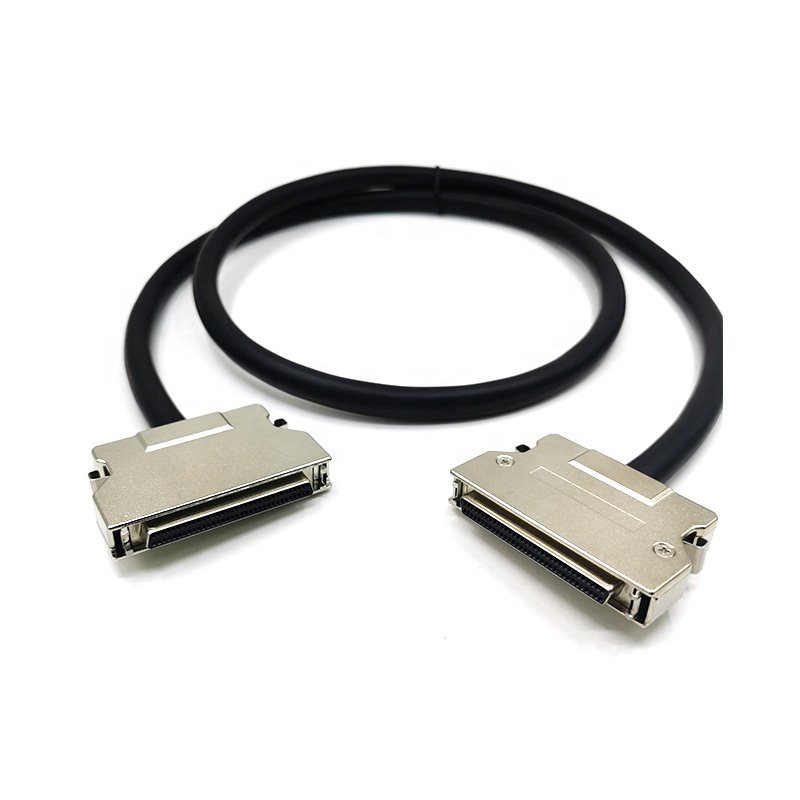

Interface Compatibility
Another important aspect is interface compatibility. SCSI cables are associated with the SCSI interface, which is a well - defined standard for computer - peripheral communication. RFID readers typically use different types of interfaces such as USB, Ethernet, or a custom RFID - specific interface.
The pin configuration and the communication protocol of a 68 Pin SCSI Cable are optimized for SCSI devices. An RFID reader may not have the appropriate pin connections or the ability to understand the SCSI protocol. So, even if physically you could connect a SCSI cable to an RFID reader, the two devices may not be able to communicate effectively.
Possible Workarounds
However, there are some scenarios where you might be able to make it work with some modifications.
Using Adapters
If you're really set on using a 68 Pin SCSI Cable with an RFID reader, you could look into using adapters. An adapter can help convert the SCSI interface to a more suitable interface for the RFID reader. For example, you could find an adapter that converts the SCSI - type signals to USB signals, which are more commonly supported by RFID readers.
Custom - Built Solutions
In some cases, for specific industrial applications, custom - built solutions can be designed. A team of engineers could design a custom circuit board that can interface between the SCSI cable and the RFID reader. This would involve carefully matching the electrical and signal characteristics of both the cable and the reader. This approach is not for the faint - hearted and can be quite expensive, but it might be a viable option for large - scale operations where the existing infrastructure already has a lot of SCSI - based equipment.
Advantages of Using a 68 Pin SCSI Cable (in theory)
If, by some miracle, you manage to get a 68 Pin SCSI Cable working with an RFID reader, there could be some benefits.
SCSI cables are known for their high - speed data transfer capabilities. If your RFID application requires quick and large - scale data transfer from multiple tags, a SCSI cable could potentially handle the load better than some other types of cables. For example, in a large warehouse environment where thousands of RFID - tagged items need to be scanned and the data transferred quickly to a central system, the high - speed nature of SCSI cables could be an advantage.
Also, SCSI cables are generally very durable. They are built to withstand the rigors of industrial use, with high - quality insulation and shielding. This means that in a harsh environment where an RFID system might be exposed to vibrations, temperature variations, or electromagnetic interference, a SCSI cable could offer better performance and longevity compared to other types of cables.
Disadvantages and Risks
But let's not forget about the downsides. As mentioned earlier, the compatibility issues are a major hurdle. If the cable and the reader are not properly matched, you could end up with a lot of problems.
Signal interference is a big concern. Since SCSI cables are designed for digital data transfer in a computer environment, they may not be well - shielded against the radio - frequency signals used by RFID readers. This can lead to errors in data reading and transfer, resulting in inaccurate information about the tagged objects.
Another risk is the cost. If you have to use adapters or custom - built solutions to make the SCSI cable work with the RFID reader, it can add a significant amount of cost to your project. This might not be feasible for small - scale or budget - constrained applications.
Real - World Use Cases
In real - world scenarios, it's rare to see a 68 Pin SCSI Cable being used for RFID readers. Most RFID systems are already designed to work with more common interfaces like USB or Ethernet. These interfaces are easier to implement, more widely supported, and more cost - effective.
However, in some legacy systems where there is a lot of SCSI - based infrastructure already in place, there might be an incentive to try and integrate RFID readers using SCSI cables. For example, in an old manufacturing plant that still uses SCSI - connected servers and control systems, they might be looking for ways to add RFID technology to their inventory management system without completely overhauling their existing infrastructure.
Conclusion
In conclusion, while it's theoretically possible to use a 68 Pin SCSI Cable for RFID readers, it's a tricky proposition. The compatibility issues, both electrical and interface - wise, are significant hurdles that need to be overcome. But if you're in a unique situation where you have a specific need and the right resources, it might be worth exploring.
If you're still interested in using a 68 Pin SCSI Cable for your RFID project, or if you have any other questions about our SCSI DB 68 Pin Connector Servo Data Cable or HD68 Female To DB68 Female SCSI - III Cable, feel free to reach out to us. We're here to help you figure out the best solution for your needs. Let's start a conversation and see if we can make your project a success!
References
- "SCSI Technology Handbook"
- "RFID Systems and Applications"