


Hey there! I'm a supplier of serial adapters, and today I wanna chat about whether a serial adapter can be used for medical equipment. It's a question that comes up quite often, and there's a lot to unpack here.
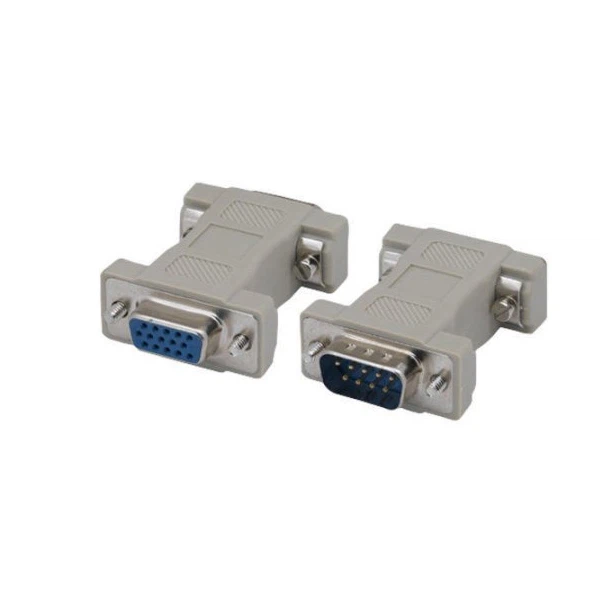
First off, let's understand what serial adapters are. In simple terms, serial adapters are devices that convert one type of serial interface to another. They're super handy when you've got different pieces of equipment that don't naturally "talk" to each other. For example, if you have a device with a DB9 port and another with a VGA port, a DB9 Male To VGA 15 Pin Female Adapter can bridge that gap.
Now, let's dive into the world of medical equipment. Medical devices are a whole different ballgame compared to regular consumer electronics. They need to meet strict safety and performance standards. The stakes are high because these devices are used to diagnose, treat, and monitor patients. So, when it comes to using serial adapters with medical equipment, we've got to be extra careful.
One of the main concerns is data integrity. Medical equipment generates and relies on a ton of sensitive data. Any loss or corruption of this data could have serious consequences for patient care. Serial adapters need to ensure that the data transmitted between different medical devices is accurate and reliable. For instance, if an electrocardiogram (ECG) machine is sending data to a monitoring system via a serial adapter, the adapter has to make sure that the heart rhythm data arrives intact.
Another crucial aspect is safety. Medical environments are filled with all sorts of electrical and electromagnetic interference. Serial adapters used in these settings need to be designed to withstand such interference without affecting the performance of the medical equipment. They also need to be properly insulated to prevent any electrical hazards.
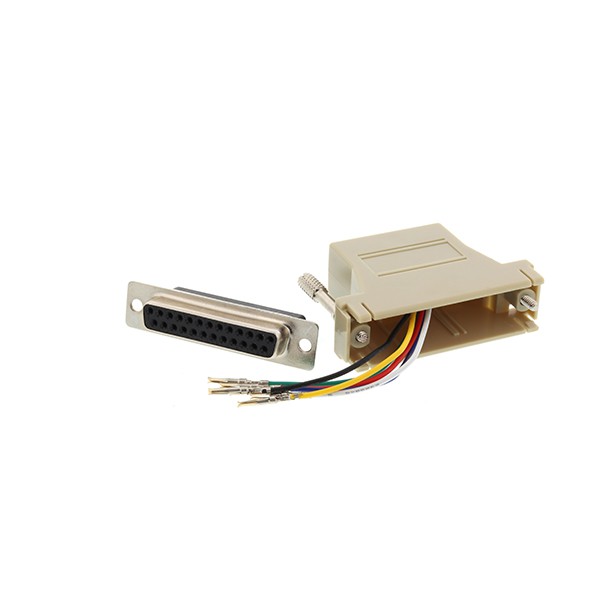
But hey, it's not all doom and gloom. There are definitely scenarios where serial adapters can be used effectively in medical equipment. Take older medical devices, for example. Many hospitals still use legacy equipment that has serial interfaces. These devices might be perfectly functional but lack the modern connectivity options. A DB25 Female To RJ12 Female Adaptor can be used to connect these older devices to newer systems, allowing for seamless data transfer and integration.
In some cases, serial adapters can also be used for equipment testing and calibration. Technicians need to connect different testing tools to medical devices to ensure they're working correctly. Serial adapters can make these connections possible, enabling efficient maintenance and quality control.
However, it's important to note that not all serial adapters are created equal. When it comes to medical applications, you need to choose adapters that are specifically designed and tested for use in healthcare settings. These adapters are built to meet the strict regulatory requirements and standards. For example, they might have features like enhanced electromagnetic compatibility (EMC) and isolation to protect against interference and electrical shocks.
A DB9 Female To DB25 Female Low Profile Serial Adapter can be a great choice for medical equipment that requires a compact and reliable connection. Its low-profile design makes it suitable for use in tight spaces, which is often the case in medical cabinets and equipment racks.
So, can a serial adapter be used for medical equipment? The answer is yes, but with some important caveats. You've got to make sure you're using the right adapter for the job, and that it meets all the necessary safety and performance standards.
If you're in the medical industry and are looking for high-quality serial adapters, we're here to help. We offer a wide range of serial adapters that are designed to meet the unique needs of medical equipment. Whether you need to connect legacy devices or ensure reliable data transfer between modern systems, we've got you covered. Reach out to us to discuss your specific requirements and let's work together to find the perfect solution for your medical equipment needs.
References
- Standards for Medical Electrical Equipment, International Electrotechnical Commission (IEC)
- Guidelines for Connectivity in Healthcare, Healthcare Information and Management Systems Society (HIMSS)