


Hey there! I'm a supplier of Bulk Parallel Cables, and today I wanna chat about how these cables perform in a corrosive environment. It's a topic that's super important, especially for folks who use these cables in industrial or harsh settings.
First off, let's talk about what a Bulk Parallel Cable is. These cables are designed to transfer multiple bits of data simultaneously, which makes them great for high - speed data transfer. They're used in a bunch of applications, like connecting printers, scanners, and other peripheral devices to computers. For example, the Centronics 36 Pin Parallel Printer Cable is a classic type of bulk parallel cable that's been around for ages and is still widely used in many printing setups.
Now, when it comes to corrosive environments, things can get a bit tricky. A corrosive environment is one where there are substances like chemicals, moisture, or salt in the air or on surfaces. These substances can react with the materials in the cable and cause damage over time.
Let's start with the outer jacket of the cable. Most Bulk Parallel Cables have an outer jacket made of materials like PVC (Polyvinyl Chloride) or rubber. In a mildly corrosive environment, PVC is usually pretty resistant. It can withstand a bit of moisture and some common chemicals without getting too damaged. But in a more severe corrosive environment, say one with strong acids or alkalis, PVC might start to break down. The outer layer could become brittle, crack, or even start to dissolve. This exposes the inner conductors to the corrosive agents, which is a big no - no.
The inner conductors are another story. These are typically made of copper, which is a great conductor of electricity. However, copper is also prone to corrosion. When copper is exposed to moisture and oxygen, it forms copper oxide, which is a greenish - blue substance that you might have seen on old copper pipes or statues. In a corrosive environment, this oxidation process can happen much faster. If the oxidation gets too bad, it can increase the resistance of the conductors. This means that the cable won't be able to transfer data as efficiently, and you might start to experience signal loss or errors.
Some Bulk Parallel Cables, like the DB25 To Centronics 36 Parallel Printer Cable, have connectors at the ends. These connectors are often made of metal, and they're also at risk of corrosion. Corrosion on the connectors can lead to poor contact between the cable and the device it's connected to. This can cause intermittent connections, which is really frustrating when you're trying to get your printer to work or transfer data.
So, what can we do to make Bulk Parallel Cables more resistant to corrosion? One option is to use corrosion - resistant materials. For the outer jacket, there are special types of polymers that are more resistant to chemicals and moisture. These materials can provide better protection for the inner conductors. For the conductors, we can use coated copper. The coating acts as a barrier between the copper and the corrosive environment, preventing oxidation.

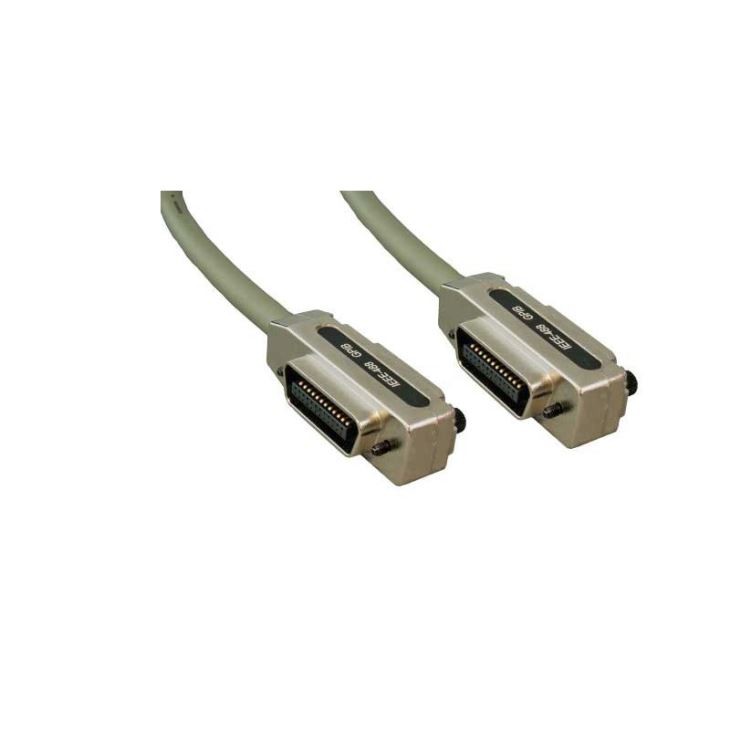
Another solution is to use shielding. The Shielded IEEE 488 Interface CN24 GPIB Cable is a good example of a cable with shielding. The shield not only helps to reduce electromagnetic interference but also provides an extra layer of protection against corrosion. The shield can be made of materials like aluminum foil or braided copper, which can block the corrosive agents from reaching the inner conductors.
In some cases, we can also use protective enclosures. These are like boxes or covers that you can put the cable in to keep it away from the corrosive environment. They can be made of plastic or metal and are designed to be airtight or at least resistant to the entry of corrosive substances.
When it comes to testing how well a Bulk Parallel Cable performs in a corrosive environment, we usually do accelerated corrosion tests. In these tests, we expose the cable to a high - concentration of corrosive agents for a short period of time. This simulates what would happen to the cable over a long period in a real - world corrosive environment. We then measure things like the resistance of the conductors, the integrity of the outer jacket, and the performance of the connectors. Based on the results of these tests, we can make improvements to the cable design and materials.
It's also important to note that regular maintenance can go a long way in ensuring the performance of Bulk Parallel Cables in corrosive environments. This includes cleaning the cables regularly to remove any corrosive substances that might have accumulated on the surface. We should also check the cables for signs of damage, like cracks in the outer jacket or corrosion on the connectors. If we find any damage, we can either repair or replace the cable before the problem gets worse.
In conclusion, Bulk Parallel Cables can face some challenges in corrosive environments. But with the right materials, design, and maintenance, we can ensure that they perform well and last a long time. If you're in need of Bulk Parallel Cables for a corrosive environment or any other application, don't hesitate to reach out. We're here to help you find the best cable solutions for your needs. Whether it's the classic Centronics 36 Pin Parallel Printer Cable or a more specialized shielded cable, we've got you covered. Let's have a chat about your requirements and see how we can work together to get you the cables you need.
References
- "Handbook of Electrical and Electronic Insulating Materials" by D. C. Sinclair
- "Corrosion Science and Engineering" by John W. Martin