




As a supplier of 68 Pin SCSI Cables, I understand the importance of meeting the environmental requirements for these crucial components. SCSI (Small Computer System Interface) cables are widely used in various computer systems, especially in high - performance and enterprise - level applications. The 68 Pin SCSI Cable, in particular, is designed to transfer data between different devices such as hard drives, tape drives, and other storage peripherals. In this blog, I will delve into the environmental requirements that these cables need to meet to ensure optimal performance and longevity.
Temperature Requirements
One of the most critical environmental factors affecting 68 Pin SCSI Cables is temperature. These cables are made up of various materials, including conductors, insulators, and jackets. Extreme temperatures can have a significant impact on the physical and electrical properties of these materials.
In high - temperature environments, the insulation materials used in the cable can start to degrade. This degradation can lead to a decrease in the cable's dielectric strength, which may result in electrical leakage and signal interference. For example, if a 68 Pin SCSI Cable is installed in a server room with poor ventilation and high ambient temperatures, the insulation around the conductors may become brittle over time. This can cause short - circuits and ultimately lead to data transfer errors.
On the other hand, low - temperature environments can also pose challenges. At very low temperatures, the cable's materials can become stiff and less flexible. This can make the cable more prone to damage during installation or movement. For instance, if a cable is bent or twisted at a low temperature, the conductors inside may break, leading to a complete loss of connectivity.
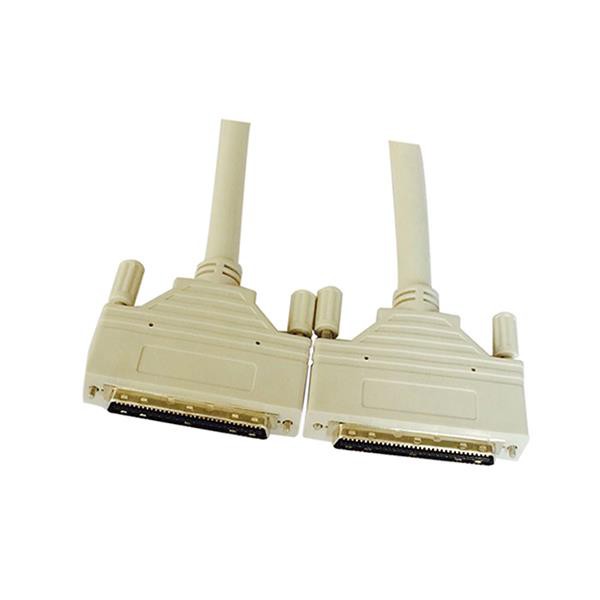
Most 68 Pin SCSI Cables are designed to operate within a temperature range of - 20°C to 60°C. However, for applications in extreme environments, such as industrial settings or outdoor installations, cables with a wider temperature tolerance may be required. Our company offers a range of 68 Pin SCSI Cables that can withstand more extreme temperature conditions. You can check out our CN 68 Pin Male SCSI Cable which is engineered to perform reliably in a variety of temperature environments.
Humidity Requirements
Humidity is another environmental factor that can affect the performance of 68 Pin SCSI Cables. High humidity levels can cause moisture to penetrate the cable's insulation and conductors. This moisture can lead to corrosion of the conductors, which can increase the cable's resistance and degrade the signal quality.
In addition, moisture can also promote the growth of mold and mildew on the cable's surface. This not only affects the cable's appearance but can also cause damage to the insulation and other components. For example, in a data center located in a coastal area with high humidity, the 68 Pin SCSI Cables may be at risk of corrosion and mold growth if proper precautions are not taken.
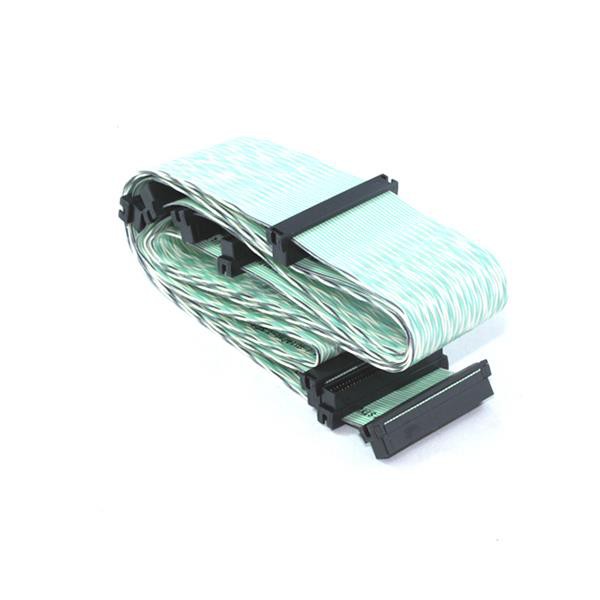
To prevent these issues, 68 Pin SCSI Cables should be installed in environments with a relative humidity range of 10% to 80%. In high - humidity areas, it is advisable to use cables with moisture - resistant jackets. Our 68 Pin Seven Drive SCSI Flat Cable is designed with a special moisture - resistant coating that helps protect the cable from the harmful effects of humidity.
Dust and Contamination
Dust and other contaminants can also have a negative impact on the performance of 68 Pin SCSI Cables. Dust particles can accumulate on the cable's connectors, which can cause poor electrical contact and signal loss. In industrial environments, where there is a high level of dust and debris, the cables are particularly vulnerable.
Contaminants such as chemicals and oils can also damage the cable's insulation and conductors. For example, in a manufacturing plant where there are chemicals in the air, these chemicals can react with the cable's materials and cause degradation.
To minimize the effects of dust and contamination, 68 Pin SCSI Cables should be installed in clean environments. In areas with high levels of dust, it is recommended to use cable management systems that can protect the cables from dust accumulation. Our HD 68 Pin SCSI Ribbon Cable is designed with a tight - fitting jacket that helps prevent dust and contaminants from entering the cable.
Electromagnetic Interference (EMI) and Radio Frequency Interference (RFI)
68 Pin SCSI Cables are often used in environments where there is a high level of electromagnetic interference (EMI) and radio frequency interference (RFI). These interferences can be caused by various sources, such as power lines, motors, and other electronic devices.
EMI and RFI can disrupt the data signals transmitted through the cable, leading to data errors and loss. To reduce the effects of EMI and RFI, 68 Pin SCSI Cables are usually shielded. Shielding helps to block the external electromagnetic and radio frequency fields from interfering with the cable's signals.
There are different types of shielding available for 68 Pin SCSI Cables, including foil shielding and braided shielding. Foil shielding provides a basic level of protection against EMI and RFI, while braided shielding offers a higher level of protection. When choosing a 68 Pin SCSI Cable, it is important to consider the level of EMI and RFI in the installation environment and select the appropriate shielding option.
Vibration and Mechanical Stress
In some applications, 68 Pin SCSI Cables may be subjected to vibration and mechanical stress. For example, in a mobile data storage system or a vehicle - mounted computer, the cables may experience constant vibration. This vibration can cause the cable's conductors to break or the connectors to loosen over time.
Mechanical stress, such as bending, twisting, and pulling, can also damage the cable. If a cable is bent beyond its recommended bend radius, the conductors inside may break, leading to a loss of connectivity.
To withstand vibration and mechanical stress, 68 Pin SCSI Cables should be designed with flexible materials and proper strain relief. Our cables are engineered to have a high level of flexibility and are equipped with strain - relief features to ensure reliable performance in challenging environments.
Conclusion
Meeting the environmental requirements is essential for the optimal performance and longevity of 68 Pin SCSI Cables. As a supplier, we are committed to providing high - quality cables that can withstand a variety of environmental conditions. Whether you need a cable for a server room, an industrial setting, or a mobile application, we have the right solution for you.
If you are interested in purchasing 68 Pin SCSI Cables or have any questions about our products, please feel free to contact us for a detailed discussion. We look forward to working with you to meet your specific needs.
References
- "Handbook of Cable Technology" by John A. Weeks
- "Electromagnetic Compatibility Engineering" by Henry W. Ott