




In the realm of modern data transmission and connectivity, serial adapters play a pivotal role. As a seasoned serial adapter supplier, I've witnessed firsthand the diverse needs and challenges that customers face when it comes to communication protocols. In this blog post, I'll delve into the communication protocol support of serial adapters, exploring the various protocols they can handle and why it matters.
Understanding Serial Adapters
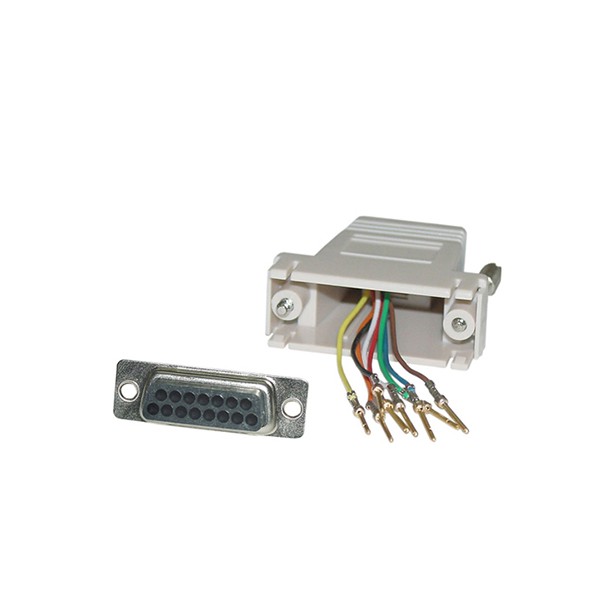
Before we dive into communication protocols, let's briefly understand what serial adapters are. A serial adapter is a device that allows different types of serial interfaces to communicate with each other. It serves as a bridge between devices with incompatible serial ports, enabling seamless data transfer. For instance, a DB15 Female To RJ45 Computer Adaptor can connect a device with a DB15 female port to a network using an RJ45 interface.
Common Communication Protocols Supported by Serial Adapters
RS - 232
RS - 232 is one of the oldest and most widely used serial communication protocols. It's a standard for serial binary data interchange between data terminal equipment (DTE) and data circuit - terminating equipment (DCE). Serial adapters often support RS - 232 because of its simplicity and widespread adoption. Many legacy devices, such as older computers, modems, and industrial control systems, use RS - 232 for communication. The protocol defines the electrical characteristics, signal levels, and pin assignments for serial communication.
RS - 422
RS - 422 is an improvement over RS - 232, designed for longer - distance communication and higher data transfer rates. It uses differential signaling, which means that data is transmitted as the difference in voltage between two wires. This makes it more resistant to noise and interference compared to RS - 232. Serial adapters that support RS - 422 are commonly used in industrial automation, security systems, and other applications where reliable long - distance communication is required.
RS - 485
RS - 485 is an extension of RS - 422, allowing multiple devices to be connected on the same communication line. It's a multi - drop communication protocol, which means that up to 32 devices can share a single pair of wires. This makes it ideal for applications such as building automation, energy management systems, and industrial sensor networks. Serial adapters supporting RS - 485 can facilitate communication between multiple devices, enabling efficient data collection and control.

USB
With the widespread use of USB (Universal Serial Bus) in modern devices, many serial adapters now support USB connectivity. USB offers high - speed data transfer, plug - and - play functionality, and power delivery. A USB - to - serial adapter can convert a USB port on a computer into a serial port, allowing the computer to communicate with serial devices. This is particularly useful for connecting legacy serial devices to modern computers that may not have built - in serial ports.
Why Protocol Support Matters
The ability of a serial adapter to support multiple communication protocols is crucial for several reasons. Firstly, it provides flexibility. In a complex system, different devices may use different serial communication protocols. A serial adapter that supports multiple protocols can bridge the gap between these devices, enabling seamless integration.
Secondly, it future - proofs your investment. As technology evolves, new communication protocols may emerge, and older protocols may still be in use in some legacy systems. A serial adapter with broad protocol support can adapt to these changes, ensuring that your system remains functional and up - to - date.
Finally, it simplifies system design and maintenance. Instead of using multiple adapters for different protocols, a single serial adapter that supports multiple protocols can be used, reducing the complexity of the system and the cost of maintenance.
Our Product Range and Protocol Support
As a serial adapter supplier, we offer a wide range of products with comprehensive protocol support. For example, our DB15 Male To Female Mini Gender Changer is designed to change the gender of the DB15 port while also supporting various serial communication protocols. This product is useful in situations where you need to connect a device with a male DB15 port to a female DB15 port.
Our DB25 Male To RJ45 Female Modular Adapter is another example. It can convert a DB25 male port to an RJ45 female port, supporting protocols such as RS - 232, RS - 422, and RS - 485. This adapter is suitable for applications where you need to connect a device with a DB25 port to a network using an RJ45 interface.
Considerations When Choosing a Serial Adapter Based on Protocol Support
When selecting a serial adapter, it's important to consider the specific communication protocols required by your application. Here are some factors to keep in mind:
- Device Compatibility: Ensure that the serial adapter is compatible with the devices you want to connect. Check the protocol requirements of your devices and make sure the adapter supports them.
- Data Transfer Rate: Different protocols have different maximum data transfer rates. Choose an adapter that can support the data transfer rate required by your application.
- Distance Requirements: If your application requires long - distance communication, consider an adapter that supports protocols like RS - 422 or RS - 485, which are designed for such scenarios.
- Number of Devices: If you need to connect multiple devices on the same communication line, an adapter supporting a multi - drop protocol like RS - 485 may be necessary.
Conclusion
In conclusion, the communication protocol support of a serial adapter is a critical factor in its functionality and usability. As a serial adapter supplier, we understand the importance of providing products that support a wide range of communication protocols. Our product range, including the DB15 Female To RJ45 Computer Adaptor, DB15 Male To Female Mini Gender Changer, and DB25 Male To RJ45 Female Modular Adapter, is designed to meet the diverse needs of our customers.
If you're in the market for a serial adapter and need help choosing the right one based on your communication protocol requirements, we're here to assist you. Our team of experts can provide you with detailed information and guidance to ensure that you make the best choice for your application. Contact us today to start a discussion about your serial adapter needs and explore how our products can fit into your system.
References
- "Serial Communication Protocols: A Comprehensive Guide", Electronics Notes
- "RS - 232, RS - 422, and RS - 485: A Comparison", TechTarget
- "USB: The Universal Serial Bus", O'Reilly Media