


SCSI (Small Computer System Interface) technology has long been a cornerstone in data storage and transfer, especially in enterprise - level environments. Two types of SCSI adapters that frequently come up in discussions are Ultra SCSI and Wide SCSI adapters. As a SCSI Adapter supplier, having in - depth knowledge about these differences can not only help customers make more informed decisions but also enables us to better meet their specific needs.
Basic Principles of SCSI Technology
Before delving into the differences between Ultra SCSI and Wide SCSI adapters, it's essential to understand the fundamental principles of SCSI technology. SCSI is a set of standards for physically connecting and transferring data between computers and peripheral devices. It allows multiple devices to be connected to a single bus, reducing the number of cables and interface cards required. The SCSI bus operates on a shared principle, where multiple devices can communicate with the host system through a common pathway.
Ultra SCSI Adapters
Ultra SCSI is an improved version of the traditional SCSI technology, designed to enhance data transfer speeds and overall performance.
Data Transfer Rate
One of the most significant features of Ultra SCSI is its high - speed data transfer rate. Ultra SCSI operates at a base frequency of 20 MHz, which allows for a data transfer rate of up to 20 megabytes per second (MB/s). This is a considerable improvement over its predecessors. For applications that require fast data access, such as large - scale database management systems or high - definition video editing, Ultra SCSI can significantly reduce the time required for data transfer.
Bus Width
Ultra SCSI typically uses a standard 8 - bit bus width in some of its early versions. However, there are also 16 - bit wide versions available. The 8 - bit version is suitable for systems with relatively low data - transfer requirements, while the 16 - bit version can support more substantial data transfer volumes, almost doubling the data transfer rate in theory if all other factors remain constant.
Device Compatibility
Ultra SCSI adapters are compatible with a wide range of SCSI devices, including hard drives, tape drives, and CD - ROM drives. They can be easily integrated into existing SCSI - based systems, which makes them a popular choice for system upgrades. When upgrading to an Ultra SCSI adapter, the existing SCSI devices can often continue to be used without significant modifications.
Wide SCSI Adapters
Wide SCSI, on the other hand, puts more emphasis on increasing the bus width to improve data transfer capabilities.
Data Transfer Rate
The primary means of improving data transfer in Wide SCSI is by increasing the number of data lines. A typical Wide SCSI adapter can use a 16 - bit or 32 - bit bus width. With a 16 - bit bus, the data transfer rate can be substantially higher compared to a standard 8 - bit SCSI adapter, as it can transfer more data in each clock cycle. For 32 - bit Wide SCSI configurations, the potential data transfer rate can be even more significant, depending on the operating frequency.
Bus Width
The increased bus width of Wide SCSI is its defining characteristic. The 16 - bit or 32 - bit data paths allow for more data to be transferred simultaneously. This is particularly beneficial for applications that deal with large - scale data, such as enterprise - level data storage systems that need to handle continuous data streams from multiple sources.
Device Compatibility
Wide SCSI also offers good device compatibility. However, due to the increased bus width, some older SCSI devices may require additional adapters or modifications to work properly with Wide SCSI systems. For example, an 8 - bit SCSI device may need a conversion adapter to be connected to a 16 - bit or 32 - bit Wide SCSI bus.
Comparing Ultra SCSI and Wide SCSI Adapters
Data Transfer Performance
In terms of data transfer performance, both Ultra SCSI and Wide SCSI aim to improve on traditional SCSI technology, but they take different approaches. Ultra SCSI focuses on increasing the clock frequency to boost the data transfer rate, while Wide SCSI increases the bus width. In some cases, a combination of both high - speed clock frequency and wide bus width can be used in advanced SCSI systems. For applications where speed is of the essence, Ultra SCSI may be the better choice if the system can make full use of the increased clock speed. In contrast, applications that involve large - volume data transfer in a single operation, such as bulk data storage or backup, may benefit more from a Wide SCSI adapter.
Cost and Complexity
Ultra SCSI adapters generally tend to be more cost - effective in lower - scale applications. They are relatively simple to install and configure, especially for systems that already have a basic SCSI infrastructure in place. Wide SCSI adapters, due to their more complex bus architecture and potentially the need for additional conversion devices for older SCSI equipment, can be more expensive both in terms of the adapter itself and the installation and configuration process.
Physical Connectivity
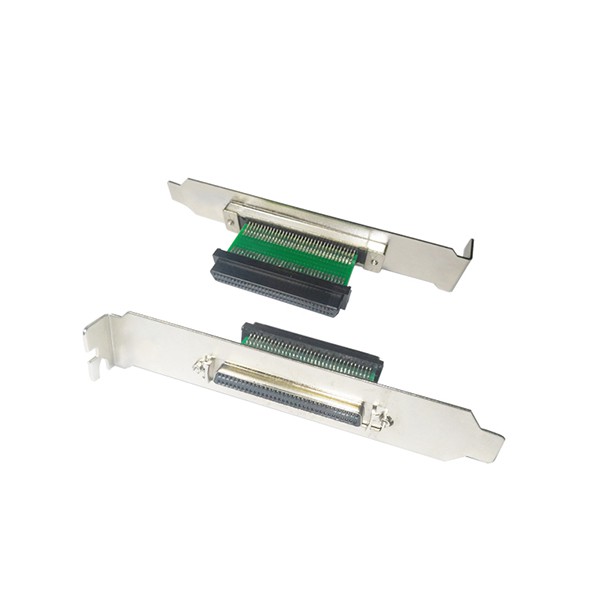
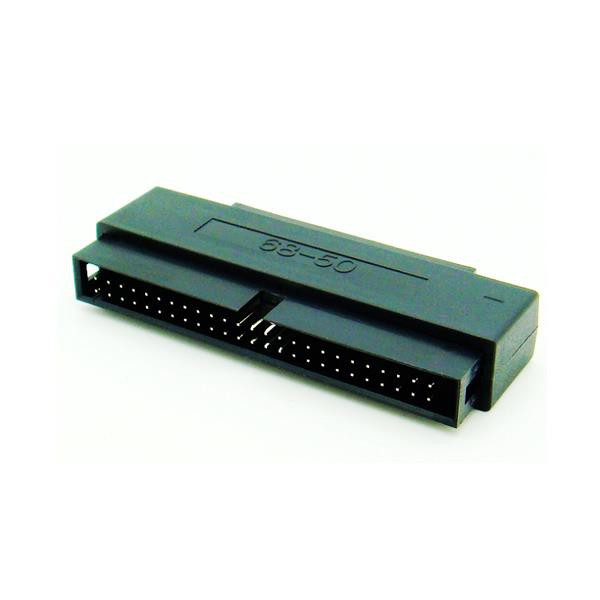
The physical connectors of Ultra SCSI and Wide SCSI adapters also differ. Ultra SCSI may use standard 50 - pin or 68 - pin connectors, depending on the specific version. Wide SCSI, especially the 32 - bit versions, often use larger and more specialized connectors to accommodate the increased number of data lines. For example, our company offers a variety of SCSI adapters with different connectors, such as the HPDB 68 Male to IDC 50 Male Adapter, which can be used to adapt different SCSI devices with different connector types. Another example is the 68 Female to Female SCSI Adapter with Bracket, which can be used to expand or modify the SCSI connection topology. And the HD50 Female to Female Gender Changer can be useful in specific connection scenarios where gender conversion is required.
Application Considerations
Server - Based Applications
In server - based applications, both Ultra SCSI and Wide SCSI can play important roles. For small - to - medium - sized servers with relatively moderate data - transfer requirements, Ultra SCSI adapters can provide sufficient performance at a lower cost. They can help improve the data access speed of hard drives and other storage devices connected to the server. However, for large - scale enterprise servers that need to handle a high volume of concurrent data requests, Wide SCSI adapters may be a better option. The wider bus width allows for faster data transfer between the server and multiple storage devices, enhancing the overall system efficiency.
Storage Area Networks (SANs)
Storage Area Networks require high - speed and reliable data transfer. Wide SCSI adapters are often preferred in large - scale SAN deployments due to their ability to handle large - volume data streams. The wide bus width can support the continuous flow of data between multiple storage arrays and servers. However, Ultra SCSI can also be used in smaller SANs or as a cost - effective alternative for some peripheral storage devices in a SAN environment.
Conclusion and Call to Action
Understanding the differences between Ultra SCSI and Wide SCSI adapters is crucial for making the right choice in various data - storage and transfer applications. As a SCSI Adapter supplier, we are committed to providing high - quality SCSI adapters and detailed technical support to meet the diverse needs of our customers. Whether you need an Ultra SCSI adapter for a small - scale system upgrade or a Wide SCSI adapter for a large - scale enterprise deployment, we have the expertise and products to serve you.
If you are interested in learning more about our SCSI adapter products, or if you have specific requirements for your data - storage and transfer systems, please feel free to contact us for a detailed consultation. We look forward to discussing your needs and finding the most suitable SCSI adapter solutions for you.
References
- Andrews, T. (2015). The Complete Guide to SCSI Technology. TechPub Press.
- Brown, R. (2018). SCSI Interface Standards and Applications. DataTech Publishing.