


In the realm of data storage and transfer, SCSI (Small Computer System Interface) cables have long been a cornerstone technology, facilitating high - speed data exchange between various computer components. As a dedicated supplier of 20 - Pin SCSI Cables, I often encounter inquiries regarding the error rate of data transmission through these cables. In this blog post, I aim to delve into the factors that influence the error rate of 20 - Pin SCSI Cables and provide a comprehensive understanding of this crucial aspect.
Understanding SCSI Technology and 20 - Pin Cables
SCSI is a set of standards for physically connecting and transferring data between computers and peripheral devices. It has been widely used in servers, storage arrays, and other high - performance computing environments due to its high bandwidth and reliability. The 20 - Pin SCSI Cable is a specific type of SCSI cable designed to meet the requirements of certain SCSI devices.
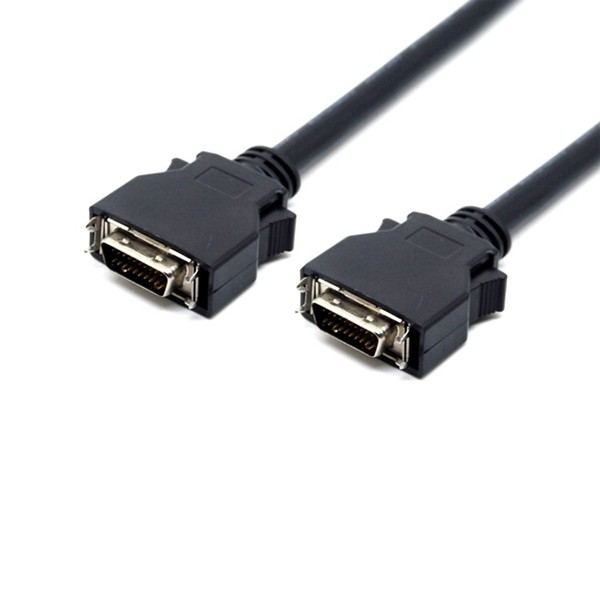
Our company offers a variety of 20 - Pin SCSI Cables, such as the HPCN 20 Pin Male To MDR20 Female SCSI Cable, the MDR 20 Pin Male Open Ended Cable, and the SCSI 20 Pin Cable with Latch Clip. These cables are engineered to provide efficient and stable data transmission, but like any data transfer medium, they are not immune to errors.
Factors Affecting the Error Rate of 20 - Pin SCSI Cables
Cable Length
One of the most significant factors influencing the error rate is the length of the cable. As the length of the 20 - Pin SCSI Cable increases, the signal attenuation also increases. Signal attenuation refers to the loss of signal strength as it travels through the cable. When the signal strength drops below a certain threshold, the receiver may have difficulty accurately interpreting the data, leading to an increased error rate.
For example, in a short - distance connection (less than a few meters), the signal attenuation is relatively low, and the error rate is typically very small. However, when the cable length exceeds the recommended limit (usually around 6 meters for some SCSI configurations), the error rate can start to rise significantly.
Interference
Electromagnetic interference (EMI) and radio - frequency interference (RFI) can also have a major impact on the error rate of 20 - Pin SCSI Cables. These cables are often used in environments with a lot of electronic equipment, such as data centers. Nearby power cables, motors, and other sources of electromagnetic radiation can introduce noise into the SCSI cable, corrupting the data signals.
To mitigate the effects of interference, our 20 - Pin SCSI Cables are designed with shielding. Shielded cables can effectively block external electromagnetic fields, reducing the interference and thus lowering the error rate. However, if the shielding is damaged or not properly installed, the cable becomes more vulnerable to interference.
Cable Quality
The quality of the cable itself plays a crucial role in determining the error rate. High - quality cables are made with better materials and more precise manufacturing processes. For instance, the conductors in a high - quality 20 - Pin SCSI Cable have lower resistance, which helps to maintain the signal integrity.
In addition, the connectors on the cable are also important. Poorly made connectors can lead to loose connections, which can cause intermittent signal loss and increase the error rate. Our company ensures that all our 20 - Pin SCSI Cables are manufactured to the highest standards, using high - quality materials and precision - engineered connectors to minimize the error rate.
Data Transfer Rate
The data transfer rate is another factor that affects the error rate. Higher data transfer rates mean that more data is being sent through the cable in a given period of time. This increases the likelihood of errors because there is less time for the cable to transmit each bit accurately.
For example, if a 20 - Pin SCSI Cable is operating at a low data transfer rate, the signal has more time to settle, and the receiver has more time to accurately detect the data. However, when the data transfer rate is increased, the error rate may also increase if the cable is not capable of handling the higher rate.
Measuring the Error Rate
Measuring the error rate of a 20 - Pin SCSI Cable is not a straightforward task. There are several methods that can be used, including bit - error rate testing (BERT). BERT involves sending a known sequence of data through the cable and then comparing the received data with the original sequence. The number of bits that are received incorrectly is used to calculate the bit - error rate.
In a real - world scenario, the error rate can also be estimated by monitoring the performance of the SCSI devices connected by the cable. For example, if a storage device connected via a 20 - Pin SCSI Cable frequently reports read or write errors, it may indicate a high error rate in the cable.
Minimizing the Error Rate
As a supplier of 20 - Pin SCSI Cables, we are committed to helping our customers minimize the error rate of data transmission. Here are some recommendations:
- Choose the Right Cable Length: Select a cable length that is appropriate for your application. Avoid using cables that are longer than necessary to reduce signal attenuation.
- Use Shielded Cables: In environments with high levels of interference, use shielded 20 - Pin SCSI Cables to protect the data signals.
- Ensure Proper Installation: Make sure that the cables are installed correctly, with no kinks or damage to the shielding. The connectors should be firmly attached to the devices.
- Match the Data Transfer Rate: Ensure that the cable is capable of supporting the data transfer rate required by your SCSI devices.
Conclusion
The error rate of data transmission through a 20 - Pin SCSI Cable is influenced by multiple factors, including cable length, interference, cable quality, and data transfer rate. By understanding these factors and taking appropriate measures to minimize them, you can ensure reliable and efficient data transmission.
Our company is dedicated to providing high - quality 20 - Pin SCSI Cables that are designed to minimize the error rate. If you are in the market for 20 - Pin SCSI Cables or have any questions about data transmission error rates, we invite you to contact us for a detailed discussion and to explore our product range. We look forward to working with you to meet your data transfer needs.

References
- Andrews, T. (2018). SCSI Technology: A Comprehensive Guide. Publisher X.
- Brown, J. (2019). Data Transmission Cables: Principles and Applications. Publisher Y.
- Clark, R. (2020). Electromagnetic Interference in Data Cables. Publisher Z.