


As a seasoned supplier of Bulk SCSI Adapters, I've witnessed firsthand the crucial role these devices play in data storage and transfer systems. One aspect that often goes unnoticed but is of utmost importance is the heat dissipation of a Bulk SCSI Adapter. In this blog post, I'll delve into what heat dissipation means for these adapters, why it matters, and how we ensure our products are optimized for efficient heat management.
Understanding Heat Dissipation
Heat dissipation refers to the process by which a device transfers thermal energy from its internal components to the surrounding environment. In the case of a Bulk SCSI Adapter, this is essential because electronic components generate heat when they are in operation. The more data the adapter processes and the faster it transfers, the more heat it produces. If this heat is not effectively dissipated, it can lead to a range of problems, including reduced performance, component failure, and even system downtime.
The main sources of heat in a Bulk SCSI Adapter are the integrated circuits (ICs), such as the controller chips and buffer memory. These components consume electrical power, and a portion of this power is converted into heat. The heat is then transferred through conduction to the adapter's printed circuit board (PCB) and other components. From there, it can be dissipated through convection and radiation to the surrounding air.
Why Heat Dissipation Matters
Efficient heat dissipation is critical for the reliable operation of a Bulk SCSI Adapter. Here are some of the key reasons why:
1. Performance
Excessive heat can cause the electrical properties of the adapter's components to change, leading to signal degradation and errors. This can result in slower data transfer rates, increased latency, and reduced overall performance. By maintaining a lower operating temperature through effective heat dissipation, the adapter can operate at its optimal performance levels.
2. Reliability
High temperatures can accelerate the aging process of electronic components, reducing their lifespan and increasing the risk of failure. Heat can cause the solder joints to weaken, the PCB to warp, and the ICs to malfunction. By keeping the temperature within acceptable limits, the adapter's reliability can be significantly improved, reducing the likelihood of costly repairs and replacements.
3. System Stability
A Bulk SCSI Adapter is often a critical component in a larger data storage or transfer system. If the adapter fails due to overheating, it can cause the entire system to malfunction. This can lead to data loss, downtime, and financial losses for the user. By ensuring proper heat dissipation, the adapter can contribute to the overall stability and reliability of the system.
Our Approach to Heat Dissipation
At our company, we take heat dissipation seriously and have implemented several measures to ensure our Bulk SCSI Adapters are designed and manufactured for optimal thermal performance.
1. Component Selection
We carefully select high-quality components with low power consumption and good thermal characteristics. This helps to minimize the amount of heat generated by the adapter in the first place. For example, we use advanced controller chips that are designed to operate efficiently at high speeds while consuming less power.
2. PCB Design
The layout of the PCB plays a crucial role in heat dissipation. We design our PCBs to have a large surface area for heat transfer and to provide adequate ventilation paths for the air to flow. We also use thermal vias and copper pours to improve the conduction of heat from the components to the PCB and then to the surrounding air.
3. Heat Sinks and Fans
In some cases, we may use heat sinks and fans to enhance the heat dissipation of the adapter. Heat sinks are passive devices that increase the surface area of the component, allowing for more efficient heat transfer. Fans, on the other hand, are active devices that force air to flow over the heat sink, further improving the cooling effect. We carefully select the appropriate heat sinks and fans based on the specific requirements of the adapter.

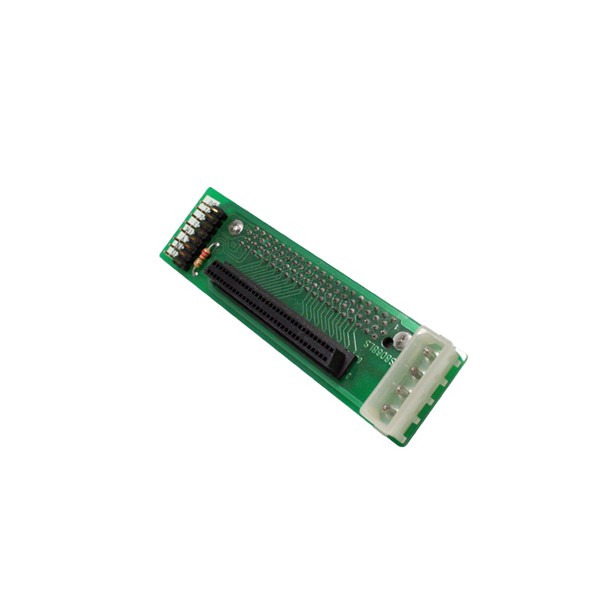
4. Testing and Validation
Before our Bulk SCSI Adapters are released to the market, they undergo rigorous testing and validation to ensure they meet our strict thermal performance standards. We use advanced thermal imaging cameras and temperature sensors to measure the temperature distribution of the adapter under various operating conditions. This allows us to identify any potential hotspots and make the necessary adjustments to the design or components.
Our Product Range
We offer a wide range of Bulk SCSI Adapters to meet the diverse needs of our customers. Here are some of our popular products:
- 68 Female to IDC 50 Male SCSI Adapter: This adapter is designed to convert a 68-pin SCSI connector to a 50-pin IDC connector, allowing for compatibility between different SCSI devices. It features high-quality components and a robust design for reliable operation.
- HD50 Female to Female Gender Changer: This adapter is used to change the gender of a 50-pin HD SCSI connector, providing flexibility in SCSI system configurations. It is made from high-quality materials and is optimized for efficient heat dissipation.
- SCA 80 to 68 Pin Female Adapter: This adapter is designed to convert an 80-pin SCA connector to a 68-pin female SCSI connector, enabling the use of SCA-compatible devices with standard SCSI interfaces. It offers excellent performance and reliability, with advanced heat dissipation features.
Contact Us for Procurement
If you're interested in learning more about our Bulk SCSI Adapters or would like to discuss your specific requirements, we'd love to hear from you. Our team of experts is available to provide you with detailed information, technical support, and competitive pricing. Whether you're a small business looking for a reliable SCSI solution or a large enterprise in need of high-performance adapters, we have the products and expertise to meet your needs.
References
- "Thermal Management in Electronic Systems" by David A. Reay, K. Ramakrishna, and Andrew K. McGaughey
- "Handbook of Electronic Packaging Thermal Management" by Avram Bar-Cohen and Ali Boroushaki