


As a supplier of Bulk Parallel Cables, I often get asked about the maximum data capacity of these cables. It's a crucial question, especially in an era where data transfer speed and volume are of utmost importance. In this blog, I'll delve into the factors that determine the maximum data capacity of Bulk Parallel Cables and provide some insights into how to choose the right cable for your specific needs.
Understanding Bulk Parallel Cables
Before we discuss the data capacity, let's first understand what Bulk Parallel Cables are. These cables are designed to transfer multiple bits of data simultaneously over multiple parallel lines. Unlike serial cables, which transfer data one bit at a time, parallel cables can transfer several bits in parallel, which theoretically allows for much higher data transfer rates.
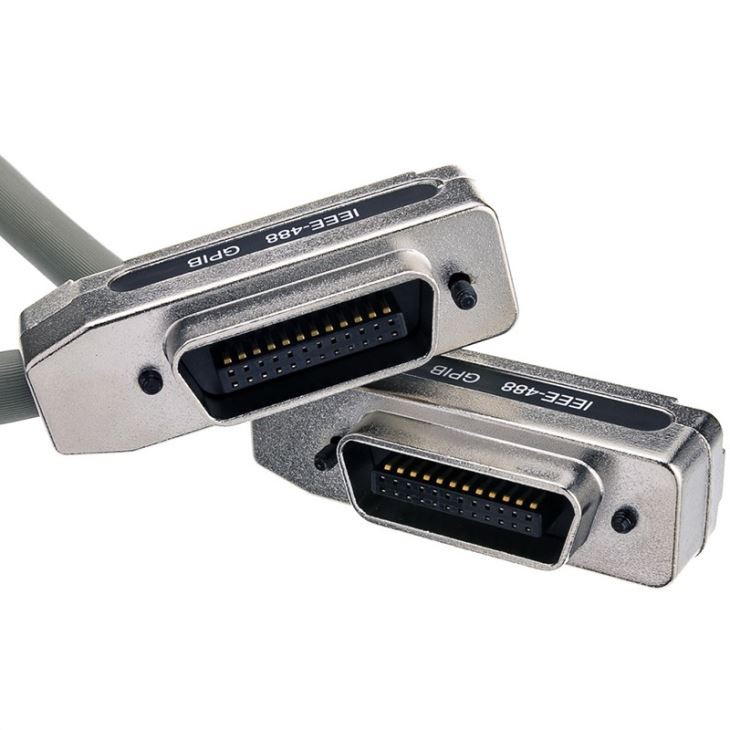
Bulk Parallel Cables come in various types and configurations, each with its own set of specifications and applications. Some common types include the 36 Way Centronics Male To CN36 Printer Cable, Shielded IEEE 488 Interface CN24 GPIB Cable, and DB25 Male to Half-Pitch Centronics 36 Male Cable. These cables are widely used in applications such as printers, data acquisition systems, and industrial automation.

Factors Affecting Data Capacity
The maximum data capacity of a Bulk Parallel Cable is determined by several factors, including the number of data lines, the signal frequency, the cable length, and the quality of the cable insulation. Let's take a closer look at each of these factors:
Number of Data Lines
The number of data lines in a parallel cable is one of the most important factors affecting its data capacity. Generally, the more data lines a cable has, the higher its data transfer rate. For example, a cable with 8 data lines can transfer 8 bits of data simultaneously, while a cable with 16 data lines can transfer 16 bits at a time. However, increasing the number of data lines also increases the complexity and cost of the cable.
Signal Frequency
The signal frequency is another crucial factor that determines the data capacity of a parallel cable. The higher the signal frequency, the more data can be transferred in a given amount of time. However, as the signal frequency increases, the cable is more susceptible to interference and signal degradation. Therefore, it's important to choose a cable that can support the required signal frequency without significant loss of data.
Cable Length
The length of the cable also has a significant impact on its data capacity. As the cable length increases, the resistance and capacitance of the cable also increase, which can cause signal attenuation and interference. This means that longer cables generally have lower data transfer rates compared to shorter cables. To minimize the effects of cable length, it's recommended to use high-quality cables with low resistance and capacitance.
Cable Insulation
The quality of the cable insulation is also important for maintaining the integrity of the data signal. Poor insulation can lead to signal leakage and interference, which can reduce the data capacity of the cable. Therefore, it's important to choose a cable with high-quality insulation that can protect the data signal from external interference.
Calculating Data Capacity
To calculate the maximum data capacity of a Bulk Parallel Cable, you need to consider the number of data lines, the signal frequency, and the number of data transfers per second. The formula for calculating the data capacity is as follows:
Data Capacity (bps) = Number of Data Lines x Signal Frequency (Hz) x Number of Data Transfers per Second
For example, if a cable has 8 data lines, a signal frequency of 1 MHz, and can transfer data 10 times per second, the data capacity would be:
Data Capacity = 8 x 1,000,000 x 10 = 80,000,000 bps or 80 Mbps
It's important to note that this is the theoretical maximum data capacity, and the actual data transfer rate may be lower due to factors such as signal interference and cable length.
Choosing the Right Cable
When choosing a Bulk Parallel Cable, it's important to consider your specific requirements and applications. Here are some tips to help you choose the right cable:
Determine Your Data Transfer Requirements
Before choosing a cable, you need to determine your data transfer requirements, including the required data transfer rate, the number of data lines, and the signal frequency. This will help you choose a cable that can meet your specific needs.
Consider the Cable Length
As mentioned earlier, the cable length can have a significant impact on the data capacity of the cable. Therefore, you need to consider the distance between the devices you're connecting and choose a cable that is long enough to reach but not too long to cause significant signal attenuation.
Choose High-Quality Cables
To ensure reliable data transfer, it's important to choose high-quality cables that are made from high-quality materials and have good insulation. This will help minimize the effects of signal interference and ensure the integrity of the data signal.
Look for Shielding
Shielding is an important feature to consider when choosing a parallel cable. Shielded cables can protect the data signal from external interference, which can improve the data transfer rate and reliability.
Conclusion
In conclusion, the maximum data capacity of a Bulk Parallel Cable is determined by several factors, including the number of data lines, the signal frequency, the cable length, and the quality of the cable insulation. By understanding these factors and choosing the right cable for your specific needs, you can ensure reliable and efficient data transfer.
If you're in the market for Bulk Parallel Cables, I encourage you to contact us to discuss your requirements and explore our wide range of products. We have a team of experts who can help you choose the right cable for your application and provide you with the best possible solution.
References
- "Parallel Data Transmission." Wikipedia, Wikimedia Foundation, 25 Aug. 2023, en.wikipedia.org/wiki/Parallel_data_transmission.
- "Data Transfer Rate." Wikipedia, Wikimedia Foundation, 24 Aug. 2023, en.wikipedia.org/wiki/Data_transfer_rate.