




As a supplier of 36 Pin SCSI cables, I often receive inquiries from customers about the maximum length of these cables. This is a crucial question, as the cable length can significantly impact the performance and reliability of SCSI-based systems. In this blog post, I'll delve into the factors that determine the maximum length of a 36 Pin SCSI cable, and provide some practical insights for those looking to make the right choice.
Understanding SCSI and Its Cable Requirements
SCSI, or Small Computer System Interface, is a set of standards for physically connecting and transferring data between computers and peripheral devices. The 36 Pin SCSI cable is a specific type of cable used in SCSI systems, commonly found in applications such as hard drives, tape drives, and scanners.
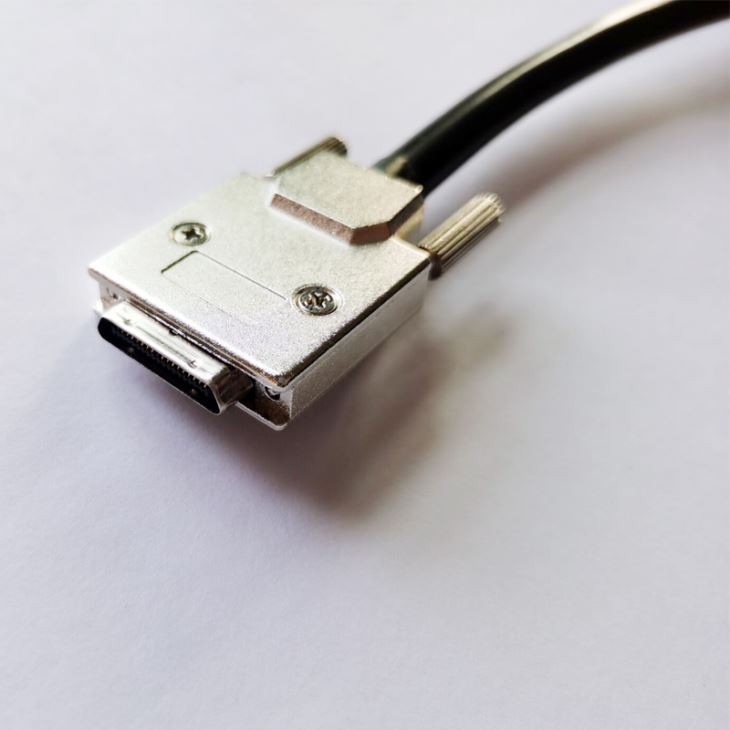

The performance of a SCSI system is closely tied to the quality and length of the cable. As the cable length increases, the signal quality can degrade due to factors such as attenuation, impedance mismatches, and electromagnetic interference (EMI). These issues can lead to data errors, reduced transfer speeds, and even system failures.
Factors Affecting the Maximum Cable Length
Several factors come into play when determining the maximum length of a 36 Pin SCSI cable. Let's take a closer look at each of these factors:
1. Signal Attenuation
Signal attenuation refers to the loss of signal strength as it travels along the cable. Longer cables result in more significant attenuation, which can cause the received signal to be too weak for the receiving device to interpret correctly. The amount of attenuation depends on the cable's construction, including the type of conductors, insulation, and shielding.
High-quality cables with low attenuation characteristics are essential for longer cable runs. For example, cables with thicker conductors and better insulation materials can help minimize signal loss. Additionally, using shielded cables can reduce the impact of EMI, further improving signal quality.
2. Impedance Matching
Impedance is a measure of the opposition to the flow of electrical current in a circuit. In a SCSI system, it's crucial to ensure that the impedance of the cable matches the impedance of the devices connected to it. Mismatched impedance can cause signal reflections, which can distort the signal and lead to data errors.
Most 36 Pin SCSI cables have an impedance of around 50 to 90 ohms. When selecting a cable, it's important to choose one that is compatible with the impedance requirements of your SCSI devices. Using a cable with the wrong impedance can significantly limit the maximum cable length and degrade system performance.
3. SCSI Bus Speed
The speed at which the SCSI bus operates also affects the maximum cable length. Higher bus speeds require shorter cable lengths to maintain signal integrity. This is because faster signals are more susceptible to attenuation and interference.
For example, in a SCSI system operating at a low speed (e.g., 5 MB/s), a longer cable may be acceptable. However, in a high-speed SCSI system (e.g., 320 MB/s), the cable length must be kept much shorter to ensure reliable data transfer.
4. Number of Devices on the Bus
The number of devices connected to the SCSI bus can also impact the maximum cable length. Each device on the bus adds capacitance and impedance to the circuit, which can further degrade the signal quality. As the number of devices increases, the cable length may need to be reduced to compensate for these effects.
In general, it's recommended to keep the number of devices on a SCSI bus to a minimum and to use terminators at both ends of the cable to ensure proper signal termination.
Typical Maximum Cable Lengths
Based on the factors mentioned above, the typical maximum length of a 36 Pin SCSI cable can vary widely. In general, for low-speed SCSI systems (up to 10 MB/s), the maximum cable length can range from 6 to 12 feet (1.8 to 3.7 meters). For high-speed SCSI systems (up to 320 MB/s), the maximum cable length is typically limited to 3 to 6 feet (0.9 to 1.8 meters).
However, these are just general guidelines, and the actual maximum length may vary depending on the specific cable and SCSI devices being used. It's always a good idea to consult the manufacturer's specifications for your SCSI devices and cables to determine the recommended maximum cable length.
Our 36 Pin SCSI Cable Offerings
At our company, we offer a wide range of high-quality 36 Pin SCSI cables to meet the needs of different SCSI systems. Our cables are designed and manufactured to the highest standards, ensuring excellent signal quality and reliability.
One of our popular products is the 36 Pin MDR Cable Assembly. This cable features a multi-differential receiver (MDR) connector, which provides improved signal integrity and noise immunity. It's suitable for use in a variety of SCSI applications, including hard drives and tape drives.
Another option is the MDR36 Pin Female to Female SCSI Cable with latch clip. This cable is designed for easy installation and provides a secure connection between two female SCSI devices. The latch clip helps prevent accidental disconnection, ensuring reliable data transfer.
For customers who need a cable with a specific connector type, we also offer the VHDCI 36 Pin To VHDCI 36 Pin Cable. This cable is ideal for high-speed SCSI systems and provides excellent performance and durability.
Choosing the Right Cable for Your Needs
When selecting a 36 Pin SCSI cable, it's important to consider the specific requirements of your SCSI system. Here are some tips to help you make the right choice:
- Determine the bus speed: As mentioned earlier, the bus speed of your SCSI system will affect the maximum cable length. Make sure to choose a cable that is compatible with the speed of your system.
- Consider the number of devices: If you have multiple devices connected to the SCSI bus, you may need to choose a shorter cable or use a cable with better signal characteristics to ensure reliable data transfer.
- Check the impedance: Ensure that the impedance of the cable matches the impedance of your SCSI devices. This will help prevent signal reflections and ensure proper signal termination.
- Look for high-quality construction: Choose a cable that is made from high-quality materials and has excellent shielding to minimize signal loss and interference.
Contact Us for Your 36 Pin SCSI Cable Needs
If you're in the market for a 36 Pin SCSI cable, we're here to help. Our team of experts can provide you with detailed information about our products and help you choose the right cable for your needs. Whether you need a standard cable or a custom solution, we have the expertise and resources to meet your requirements.
Contact us today to discuss your 36 Pin SCSI cable needs and start a procurement negotiation. We look forward to working with you to provide the best SCSI cable solutions for your business.
References
- SCSI-3 Architecture Model - Part 1: General (SAM-1), ANSI INCITS 301-1997
- Small Computer System Interface - Parallel Interface - Version 3 (SCSI-3 PI-3), ANSI INCITS 358-2002
- SCSI Primary Commands - 3 (SPC-3), ANSI INCITS 363-2002