




What is the shielding effectiveness of a Bulk Parallel Cable?
As a supplier of Bulk Parallel Cables, I often encounter questions from customers about the shielding effectiveness of these cables. Shielding effectiveness is a crucial aspect when it comes to the performance and reliability of parallel cables, especially in environments where electromagnetic interference (EMI) and radio frequency interference (RFI) are concerns.
Understanding Shielding in Bulk Parallel Cables
Shielding in cables is designed to protect the signals transmitted through the conductors from external interference and also to prevent the cable from radiating electromagnetic energy that could interfere with other nearby electronic devices. In the case of Bulk Parallel Cables, shielding helps maintain the integrity of the parallel data transmission, which involves sending multiple bits of data simultaneously over separate conductors.
There are different types of shielding used in Bulk Parallel Cables. The most common ones include foil shielding and braided shielding. Foil shielding consists of a thin layer of metal foil, usually aluminum, wrapped around the conductors. It provides good coverage and is effective at blocking high - frequency EMI and RFI. Braided shielding, on the other hand, is made up of a mesh of fine metal wires, typically copper. Braided shields offer better flexibility and mechanical protection, and they are more effective at blocking lower - frequency interference.
Measuring Shielding Effectiveness
Shielding effectiveness is typically measured in decibels (dB). A higher shielding effectiveness value indicates better protection against interference. The measurement is based on the ratio of the incident electromagnetic field strength to the field strength that penetrates the shield. For example, a shielding effectiveness of 60 dB means that the shield reduces the incident electromagnetic field by a factor of 1000 (since 20 log(1000) = 60).
To accurately measure the shielding effectiveness of a Bulk Parallel Cable, specialized test equipment is required. This includes an anechoic chamber, which is a room designed to absorb all reflected electromagnetic waves, and a network analyzer to measure the transmission and reflection characteristics of the cable. The cable is placed in the anechoic chamber, and an electromagnetic field is applied to it. The network analyzer then measures the amount of energy that is transmitted through the shield and the amount that is reflected.
Factors Affecting Shielding Effectiveness
Several factors can affect the shielding effectiveness of a Bulk Parallel Cable.
Cable Construction: The quality of the shielding material and the way it is applied to the conductors play a significant role. A well - applied shield with proper grounding will provide better shielding effectiveness. For example, if the braided shield has gaps or the foil shield is torn, the shielding performance will be degraded.
Frequency of the Interference: Different shielding materials have different frequency responses. Foil shields are generally more effective at higher frequencies, while braided shields are better at lower frequencies. Therefore, the frequency range of the EMI and RFI in the operating environment needs to be considered when choosing a Bulk Parallel Cable.
Grounding: Proper grounding is essential for effective shielding. If the shield is not properly grounded, it can act as an antenna and actually radiate electromagnetic energy rather than blocking it. The shield should be connected to a low - impedance ground at both ends of the cable.
Applications and the Importance of Shielding Effectiveness
Bulk Parallel Cables are used in a wide range of applications, from industrial automation to computer peripherals. In industrial settings, where there are many electrical motors, generators, and other sources of EMI, high - quality shielding is essential to ensure reliable data transmission. For example, in a manufacturing plant, a Bulk Parallel Cable may be used to connect a programmable logic controller (PLC) to a motor drive. If the cable is not adequately shielded, the EMI from the motor drive could interfere with the data signals, leading to errors in the control system.
In the field of computer peripherals, parallel cables are used to connect devices such as printers and scanners to computers. Shielding helps prevent interference from other electronic components in the computer or from nearby devices, ensuring that the data is transferred accurately and without errors.
Our Product Offerings
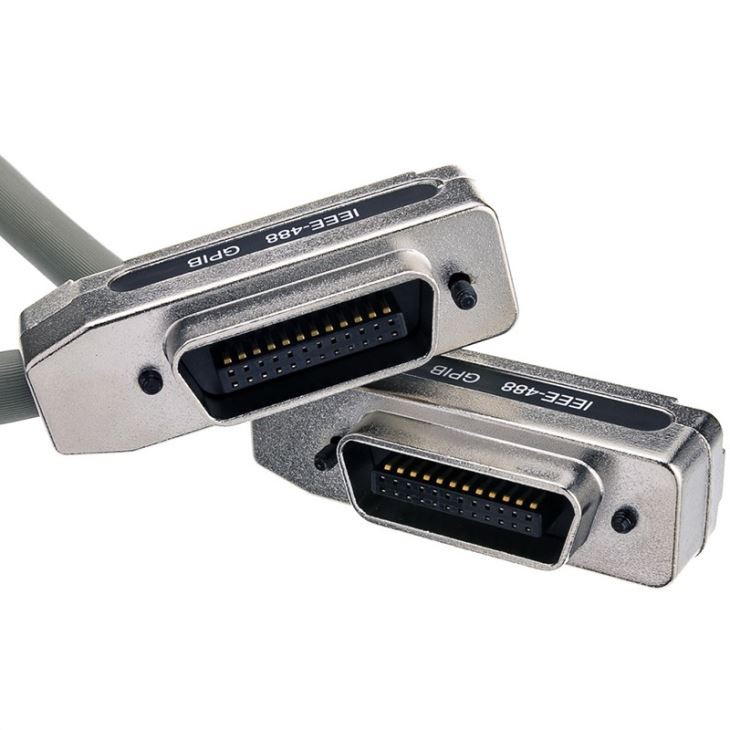
As a Bulk Parallel Cable supplier, we offer a variety of cables with different shielding options to meet the diverse needs of our customers. For example, our Shielded IEEE 488 Interface CN24 GPIB Cable is designed for use in test and measurement applications, where high - speed data transfer and low interference are crucial. This cable features a high - quality braided shield that provides excellent shielding effectiveness over a wide frequency range.
Another product in our portfolio is the DB25 Male to Half - Pitch Centronics 36 Male Cable. This cable is commonly used in computer - peripheral connections, and its foil shielding ensures reliable data transmission by blocking external EMI and RFI.
We also offer the DB15 To 34Pin V. 35 Female Cisco Router Cable, which is suitable for networking applications. The cable's shielding design helps maintain the integrity of the data signals, even in environments with high levels of electromagnetic noise.
Contact Us for Procurement
If you are in need of Bulk Parallel Cables with high shielding effectiveness, we are here to assist you. Our team of experts can help you select the right cable for your specific application based on factors such as the frequency range of the interference, the length of the cable, and the required data transfer rate. We offer competitive pricing, high - quality products, and excellent customer service. Whether you are a small business or a large industrial corporation, we have the solutions to meet your needs.

References
- "Electromagnetic Compatibility Engineering" by Henry W. Ott.
- "Cable Design and Installation Handbook" by the Institute of Electrical and Electronics Engineers (IEEE).