


As a supplier of 100 Pin SCSI cables, I often get asked whether a 100 Pin SCSI cable can be used in a RAID system. This is a crucial question for many businesses and individuals who are looking to build or upgrade their data storage solutions. In this blog post, I'll delve into the technical aspects of 100 Pin SCSI cables and their compatibility with RAID systems, providing you with a comprehensive understanding of this topic.
Understanding 100 Pin SCSI Cables
SCSI (Small Computer System Interface) is a set of standards for physically connecting and transferring data between computers and peripheral devices. The 100 Pin SCSI cable is a specific type of SCSI cable that offers high - speed data transfer and is commonly used in enterprise - level storage systems. These cables are designed to support a large number of data lines, which allows for faster and more reliable data transmission.
The 100 Pin SCSI cable comes in different configurations, such as 100 Pin Male to Male SCSI Cable, SCSI HD 100 Pin Male to male Cable, and 0.80mm pitch HDRA 100 pin to HPDB 100 pin Motion Controller Adapter Cable. Each configuration is tailored to specific applications and device requirements.
RAID Systems: An Overview
RAID (Redundant Array of Independent Disks) is a data storage virtualization technology that combines multiple physical disk drives into a single logical unit for the purposes of data redundancy, performance improvement, or both. There are several RAID levels, including RAID 0, RAID 1, RAID 5, RAID 6, and RAID 10, each with its own characteristics and use - cases.
RAID 0, for example, stripes data across multiple disks, which improves performance but offers no data redundancy. RAID 1, on the other hand, mirrors data between two or more disks, providing high data redundancy but with a reduced usable storage capacity.
Compatibility of 100 Pin SCSI Cables with RAID Systems
The compatibility of a 100 Pin SCSI cable with a RAID system depends on several factors.
1. Interface Compatibility
First and foremost, the RAID controller and the storage devices in the RAID system must support the SCSI interface. Many modern RAID controllers are designed to support a variety of interfaces, including SCSI. However, it's essential to check the specifications of your RAID controller to ensure that it can work with a 100 Pin SCSI cable.
If your RAID controller has a 100 - pin SCSI interface, then using a 100 Pin SCSI cable is straightforward. The cable will provide a direct connection between the controller and the storage devices, enabling data transfer.
2. Data Transfer Requirements
RAID systems often require high - speed data transfer to achieve optimal performance. 100 Pin SCSI cables are capable of supporting high - speed data transfer rates, which makes them suitable for many RAID setups. For example, in a RAID 0 configuration where performance is the primary goal, a 100 Pin SCSI cable can help to ensure that data is transferred quickly between the disks and the controller.
However, it's important to note that the actual data transfer rate also depends on other factors, such as the speed of the RAID controller and the storage devices themselves.
3. Cable Length and Signal Integrity
The length of the 100 Pin SCSI cable can also affect its compatibility with a RAID system. Longer cables can introduce signal degradation, which may lead to data errors or reduced performance. When using a 100 Pin SCSI cable in a RAID system, it's recommended to keep the cable length within the specified limits to maintain signal integrity.
Advantages of Using 100 Pin SCSI Cables in RAID Systems
- High - Speed Data Transfer: As mentioned earlier, 100 Pin SCSI cables can support high - speed data transfer, which is beneficial for RAID systems that require fast read and write operations.
- Reliability: These cables are designed to be robust and reliable, which is crucial for RAID systems where data integrity is of utmost importance.
- Scalability: 100 Pin SCSI cables can be used to connect multiple storage devices in a RAID system, allowing for easy scalability as your storage needs grow.
Potential Challenges
- Cost: 100 Pin SCSI cables can be more expensive than other types of cables, which may be a consideration for budget - conscious users.
- Limited Compatibility: Not all RAID controllers and storage devices support the SCSI interface. Before purchasing a 100 Pin SCSI cable for your RAID system, you need to ensure that all components are compatible.
Conclusion
In conclusion, a 100 Pin SCSI cable can be used in a RAID system, provided that the RAID controller and storage devices support the SCSI interface. These cables offer high - speed data transfer, reliability, and scalability, which are all important factors in a RAID setup. However, you need to consider factors such as cable length, signal integrity, and cost before making a decision.
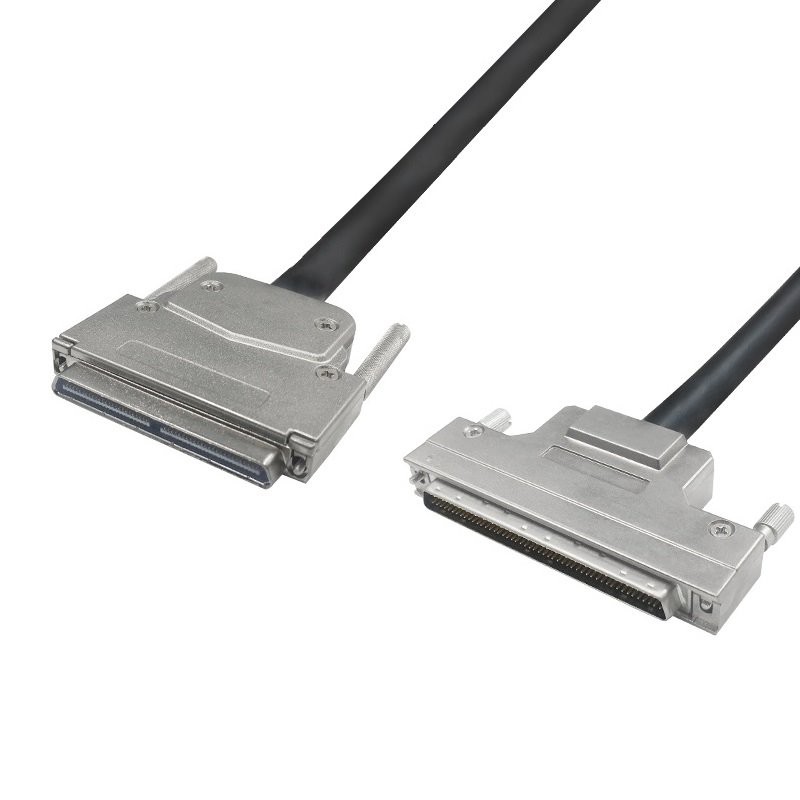

If you're interested in purchasing 100 Pin SCSI cables for your RAID system or have any questions about their compatibility, feel free to contact us for further discussion and procurement negotiation. We're here to help you find the best solution for your data storage needs.
References
- Andrews, T. (2018). SCSI Technology Handbook. TechPub Press.
- Brown, R. (2020). RAID Systems: Design and Implementation. Data Storage Institute.