


In the realm of data connectivity, the question of whether a Bulk Parallel Cable can be used for data storage device connections is a topic that merits in - depth exploration. As a supplier of Bulk Parallel Cables, I've witnessed firsthand the diverse applications and limitations of these cables, and I'm eager to share my insights with you.

Understanding Bulk Parallel Cables
Bulk Parallel Cables are designed to transfer multiple bits of data simultaneously. Unlike serial cables that transmit data one bit at a time, parallel cables can send several bits concurrently, which theoretically allows for faster data transfer rates. These cables typically have multiple conductors bundled together, enabling parallel communication between devices.
The structure of a Bulk Parallel Cable is engineered to support high - speed data transmission. Each conductor within the cable is responsible for carrying a specific bit of data, and they work in harmony to move large amounts of information quickly. This design makes them suitable for applications where rapid data transfer is crucial.
Compatibility with Data Storage Devices
When it comes to using Bulk Parallel Cables for data storage device connections, compatibility is a key factor. Data storage devices such as hard disk drives (HDDs), solid - state drives (SSDs), and external storage enclosures have different interface requirements.
In the past, many HDDs used parallel interfaces like the Integrated Drive Electronics (IDE) or Parallel ATA (PATA). These interfaces were designed to work with parallel cables, allowing for relatively fast data transfer between the drive and the computer's motherboard. Bulk Parallel Cables were the go - to solution for connecting these types of storage devices, as they could handle the high - volume data transfer demands of HDDs.
However, the landscape of data storage has evolved significantly. Modern SSDs and many external storage devices now predominantly use serial interfaces such as Serial ATA (SATA), USB, or Thunderbolt. These serial interfaces offer several advantages over parallel interfaces, including better signal integrity, longer cable lengths, and easier implementation.
The shift towards serial interfaces has made it more challenging to use Bulk Parallel Cables for direct connections to most contemporary data storage devices. While some legacy systems may still support parallel storage interfaces, the prevalence of serial - based storage solutions has reduced the direct applicability of Bulk Parallel Cables in this area.
Advantages of Using Bulk Parallel Cables in Storage Connections (Where Applicable)
Despite the shift towards serial interfaces, there are still scenarios where Bulk Parallel Cables can offer distinct advantages for data storage device connections.
One of the primary benefits is speed. In applications where large amounts of data need to be transferred quickly, such as in some enterprise - level storage systems or high - performance computing environments, the parallel nature of these cables can provide a significant edge. For example, in a data center where multiple HDDs are connected in a RAID configuration, a Bulk Parallel Cable can facilitate rapid data transfer between the drives and the server, ensuring efficient data access and management.
Another advantage is reliability. Bulk Parallel Cables are often built with robust materials and shielding to protect against electromagnetic interference (EMI). This shielding helps maintain the integrity of the data being transferred, reducing the likelihood of errors or data corruption. In a storage environment where data accuracy is critical, this reliability can be a valuable asset.
Challenges and Limitations
As mentioned earlier, the main challenge in using Bulk Parallel Cables for data storage device connections is compatibility. The increasing popularity of serial - based storage interfaces means that finding storage devices with parallel interfaces has become more difficult.
Cable length is another limitation. Parallel cables are more susceptible to signal degradation over longer distances compared to serial cables. This means that in large - scale data storage setups where long cable runs may be required, the performance of Bulk Parallel Cables can be compromised.
Additionally, the complexity of parallel interfaces can make them more difficult to troubleshoot and maintain. The multiple conductors in a Bulk Parallel Cable require precise alignment and termination, and any issues with the cable or the interface can lead to data transfer problems.
Our Product Offerings
As a Bulk Parallel Cable supplier, we offer a wide range of products that may be suitable for specific data storage applications. For example, our 36 Way Centronics Male To CN36 Printer Cable can be used in some legacy systems where parallel connections are still required. This cable is designed to provide reliable data transfer between devices with Centronics and CN36 interfaces.
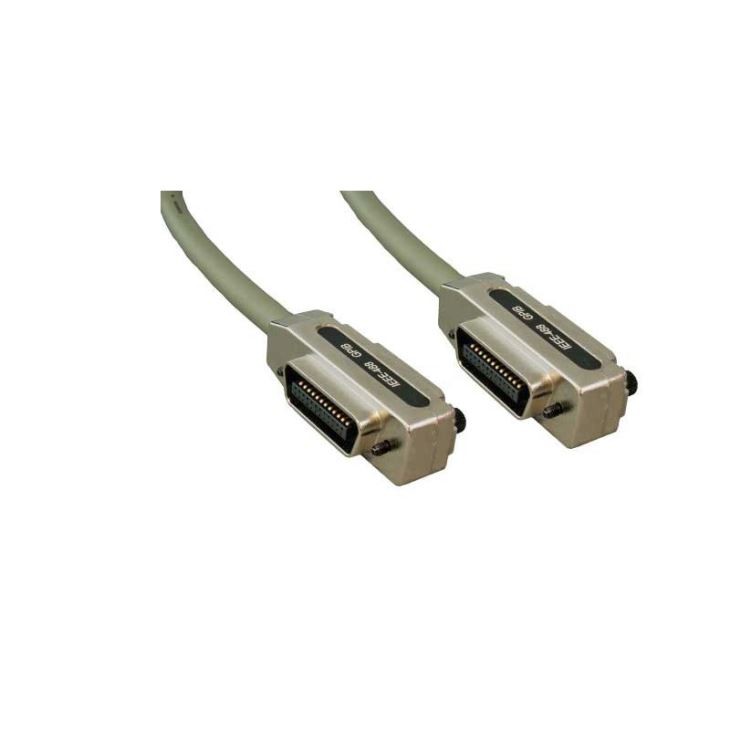
Our Shielded IEEE 488 Interface CN24 GPIB Cable is another option. The IEEE 488 interface, also known as the General - Purpose Interface Bus (GPIB), was commonly used for connecting test and measurement equipment, but it could also be used in some data storage - related setups where parallel communication was needed.
The DB25 To Centronics 36 Parallel Printer Cable is yet another product in our catalog. This cable can be useful for bridging different parallel interfaces, which may be necessary in some legacy storage systems.
Considerations for Using Bulk Parallel Cables in Storage
If you are considering using Bulk Parallel Cables for data storage device connections, there are several factors to keep in mind.
First, assess the compatibility of your data storage devices with parallel interfaces. If you have legacy storage devices or are working in an environment where parallel interfaces are still in use, Bulk Parallel Cables may be a viable option. However, if you are using modern storage devices, you may need to use adapter solutions to make the connection work.
Second, consider the data transfer requirements of your storage system. If you need to transfer large amounts of data quickly and your devices support parallel interfaces, Bulk Parallel Cables can offer a high - performance solution. But if your data transfer needs are more modest, or if you require long cable runs, serial interfaces may be a better choice.
Conclusion and Call to Action
In conclusion, while the use of Bulk Parallel Cables for data storage device connections has become less common due to the shift towards serial interfaces, there are still situations where they can be a valuable solution. Whether you are maintaining a legacy storage system or working on a project that requires high - speed parallel data transfer, our range of Bulk Parallel Cables may meet your needs.
If you are interested in learning more about our Bulk Parallel Cable products or have questions about using them for data storage device connections, we encourage you to reach out to us for a consultation. Our team of experts is ready to assist you in finding the right cable solution for your specific requirements. Let's discuss how we can help you achieve efficient and reliable data transfer in your storage systems.
References
- "Computer Organization and Design: The Hardware/Software Interface" by David A. Patterson and John L. Hennessy
- "Data Storage Technologies: An Overview" - Journal of Storage Systems Research
- "Parallel and Serial Data Transmission" - IEEE Transactions on Communications