


As a seasoned VHDCI SCSI cable supplier, I've witnessed firsthand the critical role these cables play in data - intensive environments. In this blog, we'll delve deep into the data transfer protocols used in VHDCI SCSI cables, exploring their features, benefits, and how they contribute to seamless data flow.
Understanding VHDCI SCSI Cables
VHDCI (Very High - Density Connector Interface) SCSI cables are a cornerstone in the world of high - performance data storage and transfer. They are designed to support the SCSI (Small Computer System Interface) standard, which has been a reliable and efficient method for connecting peripheral devices to computers for decades. These cables are known for their high - density connectors, which allow for a large number of data lines to be packed into a relatively small space. This high - density design is crucial for applications where space is limited, such as in server racks and high - end storage arrays.
The SCSI Data Transfer Protocols
SCSI encompasses a family of data transfer protocols, each with its own characteristics and capabilities. Let's take a closer look at some of the most common ones used in VHDCI SCSI cables.
SCSI - 1
SCSI - 1 was the first iteration of the SCSI standard. It was introduced in the early 1980s and provided a relatively simple and straightforward method for data transfer. SCSI - 1 supported a data transfer rate of up to 5 MB/s and could connect up to 8 devices on a single bus. While it was revolutionary at the time, its limited transfer rate and device - connection capabilities made it less suitable for modern, data - hungry applications.
SCSI - 2
SCSI - 2 built upon the foundation of SCSI - 1 and introduced several improvements. It increased the data transfer rate to up to 10 MB/s and offered more flexibility in terms of device configuration. SCSI - 2 also introduced new commands and features, such as the ability to support wide SCSI buses, which could transfer data in 16 - bit or 32 - bit chunks, further enhancing the data transfer capabilities.
Fast SCSI
Fast SCSI, as the name suggests, aimed to improve the data transfer speed. It doubled the transfer rate of SCSI - 2, reaching up to 20 MB/s. Fast SCSI achieved this by reducing the time between data transfers and optimizing the signaling protocol. This made it a popular choice for applications that required faster data access, such as high - performance disk drives and tape backup systems.
Fast Wide SCSI
Fast Wide SCSI combined the speed advantages of Fast SCSI with the wider data path of wide SCSI. It could transfer data at up to 40 MB/s over a 16 - bit bus. This protocol was well - suited for applications that demanded both high - speed data transfer and the ability to connect multiple devices, such as large - scale storage systems.
Ultra SCSI
Ultra SCSI took data transfer speeds to new heights. It offered a transfer rate of up to 40 MB/s, similar to Fast Wide SCSI, but with improved signal integrity and error - correction capabilities. Ultra SCSI used a differential signaling technique, which made it more resistant to electromagnetic interference, ensuring reliable data transfer even in noisy environments.
Ultra2 SCSI
Ultra2 SCSI further increased the data transfer rate to up to 80 MB/s. It introduced several enhancements, including a new arbitration mechanism and improved command queuing. These features allowed for more efficient use of the bus and reduced the overhead associated with data transfer, resulting in faster overall performance.
Ultra3 SCSI (Ultra160 SCSI)
Ultra3 SCSI, also known as Ultra160 SCSI, doubled the transfer rate again, reaching up to 160 MB/s. It introduced a new feature called Command Tagging, which allowed multiple commands to be queued and executed in parallel, further improving the efficiency of data transfer. Ultra3 SCSI also had enhanced error - detection and - correction capabilities, ensuring the integrity of the transferred data.
Ultra320 SCSI
Ultra320 SCSI continued the trend of increasing data transfer speeds, offering a rate of up to 320 MB/s. It built on the features of Ultra3 SCSI, with further optimizations to the signaling protocol and command queuing. Ultra320 SCSI was widely used in enterprise - level storage systems, where high - speed and reliable data transfer were essential.
Advantages of Using VHDCI SCSI Cables with These Protocols
The combination of VHDCI SCSI cables and the various SCSI data transfer protocols offers several advantages. Firstly, the high - density connectors of VHDCI cables allow for a large number of data lines to be connected, enabling the transfer of large amounts of data in a single operation. This is particularly beneficial for applications that deal with large files, such as video editing, scientific research, and enterprise - level data storage.
Secondly, the SCSI protocols provide a high degree of reliability. They incorporate error - detection and - correction mechanisms, which ensure that the data transferred over the cables is accurate and free from errors. This is crucial for applications where data integrity is of utmost importance, such as financial transactions and medical imaging.
Thirdly, the scalability of SCSI protocols is a significant advantage. As the data transfer requirements of an application grow, it is possible to upgrade to a higher - speed SCSI protocol without having to completely replace the existing infrastructure. This makes VHDCI SCSI cables a cost - effective solution for long - term use.
Our Product Range
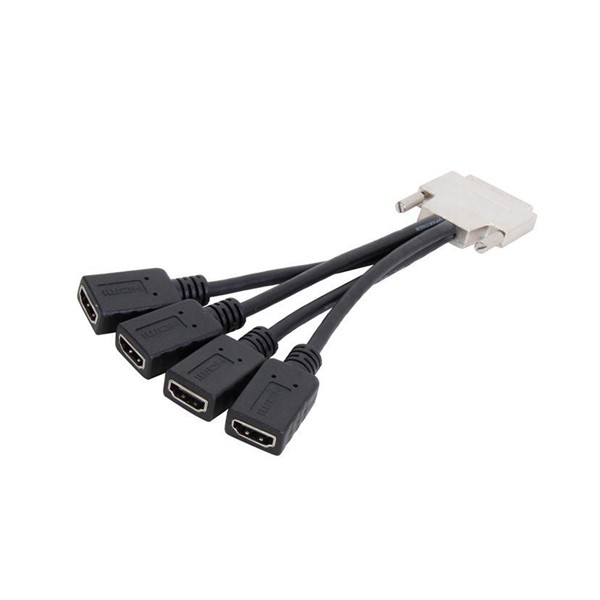
At our company, we offer a wide range of VHDCI SCSI cables to meet the diverse needs of our customers. For example, our VHDCI to Quad HDMI Splitter Breakout Cable is ideal for applications that require the conversion of VHDCI signals to multiple HDMI outputs. This cable is perfect for multimedia systems and digital signage applications.
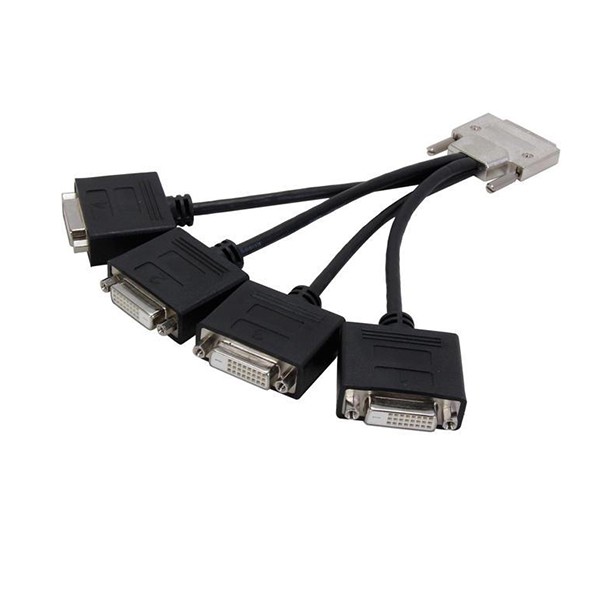
Our VHDCI to Quad DVI Splitter Breakout Cable is another popular product. It allows for the conversion of VHDCI signals to multiple DVI outputs, making it suitable for high - resolution display systems.
We also offer the VHDCI 68 to 8 Port DB9 Cable, which is designed for applications that require the connection of multiple serial devices to a VHDCI interface. This cable is commonly used in industrial control systems and networking equipment.
Contact Us for Procurement
If you are in the market for high - quality VHDCI SCSI cables, we invite you to contact us for procurement. Our team of experts is ready to assist you in selecting the right cables and protocols for your specific needs. Whether you are a small business looking to upgrade your storage system or a large enterprise in need of a high - performance data transfer solution, we have the products and knowledge to meet your requirements.
References
- Anderson, T. (2015). SCSI: A Comprehensive Guide. Tech Publications.
- Brown, J. (2017). Data Transfer Protocols in Storage Systems. Storage Press.
- Clark, R. (2019). High - Density Connector Technologies for Data Transfer. Connector Journal.