




As a seasoned supplier from a Serial Cable factory, I often encounter inquiries regarding the feasibility of producing cables for telecommunications. This question is not only relevant but also crucial in today's highly connected world, where reliable communication is the backbone of various industries. In this blog, I will delve into the capabilities of a Serial Cable factory in producing cables for telecommunications, exploring the technical aspects, market demand, and the potential benefits for businesses.

Technical Capabilities of a Serial Cable Factory
Serial cables are designed to transmit data serially, one bit at a time, over a communication channel. These cables are commonly used in a wide range of applications, including computer networking, industrial automation, and telecommunications. A well - equipped Serial Cable factory has the technical expertise and infrastructure to produce high - quality cables that meet the stringent requirements of the telecommunications industry.
Cable Design and Customization
One of the key strengths of a Serial Cable factory is its ability to design and customize cables according to specific customer needs. In the telecommunications sector, different applications may require cables with varying lengths, connector types, and shielding options. For example, a long - distance communication link may need a cable with excellent signal integrity and low attenuation, which can be achieved through proper cable design and the use of high - quality materials.
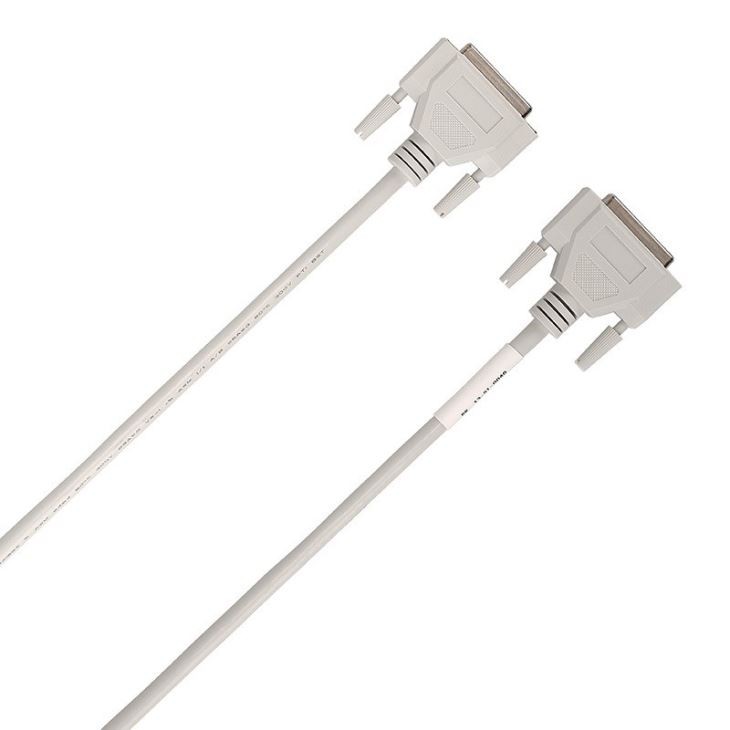
We offer a variety of serial cables, such as the DB25 Female To Female RS232 Serial Modem Cable. This cable is specifically designed for RS232 serial communication, which is widely used in telecommunications devices such as modems. It provides a reliable connection between two devices with DB25 female connectors, ensuring smooth data transmission.
Another popular product is the DB9 Male to Male Cable with Screw Nut. The screw nut design provides a secure connection, which is essential in telecommunications environments where vibrations or movement could potentially disrupt the connection. This cable is suitable for a variety of applications, including connecting serial devices such as routers and switches.
Quality Control and Testing
Quality control is of utmost importance in the production of cables for telecommunications. A Serial Cable factory should have a comprehensive quality control system in place to ensure that every cable meets the required standards. This includes testing for electrical properties such as impedance, capacitance, and signal attenuation, as well as mechanical properties such as cable flexibility and connector durability.
We conduct rigorous testing on all our cables, including the Micro DB9 Male to DB9 Male Cable. This cable is often used in compact telecommunications devices, and we ensure that it can withstand the rigors of daily use. Our testing procedures include both in - house testing using state - of - the - art equipment and third - party certification to guarantee the quality and reliability of our products.
Market Demand for Serial Cables in Telecommunications
Despite the increasing popularity of wireless communication technologies, serial cables still play a vital role in the telecommunications industry. There are several reasons for the continued demand for serial cables in this sector.
Legacy Systems
Many telecommunications systems installed in the past still rely on serial communication protocols. These legacy systems are often critical for the operation of various services, such as emergency communication networks and some industrial control systems. Replacing these systems with new wireless or Ethernet - based solutions can be costly and time - consuming. Therefore, there is a constant need for serial cables to maintain and upgrade these legacy systems.
Cost - Effectiveness
Serial cables are generally more cost - effective than some of the newer communication technologies. For small - scale telecommunications applications or in areas where budget is a major concern, serial cables offer a practical and affordable solution. They require less complex infrastructure and can be easily installed and maintained, making them an attractive option for many businesses.
Reliability
In certain telecommunications environments, such as industrial settings or areas with poor wireless coverage, serial cables provide a more reliable communication link. They are less susceptible to interference from electromagnetic fields and other external factors, ensuring stable data transmission. This reliability is crucial for applications where data accuracy and real - time communication are essential, such as in financial transactions and remote monitoring systems.
Benefits of Choosing a Serial Cable Factory for Telecommunications Cables
When businesses in the telecommunications industry choose a Serial Cable factory as their cable supplier, they can enjoy several benefits.
Expertise and Experience
A Serial Cable factory has in - depth knowledge and experience in cable production. The factory's engineers and technicians are familiar with the latest cable technologies and can provide valuable advice on cable selection and installation. They can also help customers troubleshoot any issues related to serial communication, ensuring that the telecommunications systems operate smoothly.
Customization Options
As mentioned earlier, a Serial Cable factory can customize cables to meet specific customer requirements. This flexibility allows telecommunications companies to get the exact cables they need for their applications, rather than having to settle for off - the - shelf products that may not be a perfect fit.
Cost - Savings
By working directly with a Serial Cable factory, telecommunications companies can eliminate the middleman and reduce costs. The factory can offer competitive prices due to its large - scale production capabilities and efficient manufacturing processes. Additionally, the factory can provide long - term cost savings by producing high - quality cables that have a longer lifespan and require less maintenance.
Conclusion
In conclusion, a Serial Cable factory is fully capable of producing cables for telecommunications. With its technical capabilities in cable design, customization, and quality control, as well as the market demand for serial cables in the telecommunications industry, a Serial Cable factory can be a reliable partner for businesses in this sector.
If your telecommunications business is in need of high - quality serial cables, we would be delighted to discuss your requirements. Our team of experts is ready to provide you with customized solutions and excellent customer service. We invite you to contact us to start a procurement negotiation and explore how our serial cables can meet your telecommunications needs.
References
- IEEE Standards Association. (20XX). Standards for serial communication in telecommunications.
- Telecommunications Industry Association (TIA). (20XX). Guidelines for cable installation in telecommunications systems.