




In the realm of data transmission and connectivity, bulk parallel cables play a pivotal role. As a dedicated bulk parallel cable supplier, I've witnessed firsthand the evolution of these cables and the challenges they face. One of the most pressing concerns in the industry is electromagnetic interference (EMI). In this blog post, I'll delve into the intricacies of EMI issues related to bulk parallel cables, exploring their causes, effects, and potential solutions.
Understanding EMI and Bulk Parallel Cables
EMI refers to the disturbance that affects an electrical circuit due to either electromagnetic induction or electromagnetic radiation emitted from an external source. Bulk parallel cables, which are designed to transmit multiple data signals simultaneously over parallel conductors, are particularly susceptible to EMI. This susceptibility stems from the close proximity of the conductors within the cable, which can lead to crosstalk and interference between the signals.
Causes of EMI in Bulk Parallel Cables
There are several factors that can contribute to EMI in bulk parallel cables. One of the primary causes is the external electromagnetic environment. Sources such as power lines, radio frequency (RF) transmitters, and other electrical equipment can emit electromagnetic fields that can interfere with the signals in the cable. Additionally, the cable itself can generate EMI if it is not properly shielded or if the conductors are not properly terminated.
Another significant cause of EMI in bulk parallel cables is crosstalk. Crosstalk occurs when the electromagnetic field generated by one conductor in the cable induces a current in an adjacent conductor. This can lead to signal degradation and errors in the data transmission. The closer the conductors are to each other, the greater the likelihood of crosstalk occurring.
Effects of EMI on Bulk Parallel Cables
The effects of EMI on bulk parallel cables can be far-reaching. At the most basic level, EMI can cause signal degradation, which can result in errors in the data transmission. This can lead to data loss, reduced data integrity, and even system failures. In addition to these technical issues, EMI can also have a significant impact on the performance and reliability of the equipment that is using the cable.
For example, in a network environment, EMI can cause packet loss and network congestion, which can slow down the network and reduce its overall efficiency. In industrial applications, EMI can cause malfunctions in control systems, which can lead to production delays and safety hazards. In medical equipment, EMI can interfere with the operation of sensitive devices, which can have serious consequences for patient health.
Solutions to EMI Issues in Bulk Parallel Cables
Fortunately, there are several solutions available to mitigate EMI issues in bulk parallel cables. One of the most effective solutions is to use shielded cables. Shielded cables are designed with a conductive layer that surrounds the conductors, which helps to block external electromagnetic fields and reduce crosstalk. There are several types of shielding available, including foil shielding, braided shielding, and combination shielding.
Another solution is to use proper cable routing and installation techniques. This includes keeping the cable away from sources of EMI, such as power lines and RF transmitters, and avoiding sharp bends and twists in the cable. Additionally, it is important to ensure that the cable is properly grounded, as this can help to dissipate any EMI that is generated within the cable.
In some cases, it may also be necessary to use EMI filters or ferrite beads. EMI filters are designed to block or reduce the amount of EMI that is transmitted through the cable, while ferrite beads are used to absorb and dissipate EMI. These devices can be particularly effective in reducing high-frequency EMI.
Our Bulk Parallel Cable Products and EMI Resistance
As a bulk parallel cable supplier, we offer a wide range of products that are designed to minimize EMI issues. Our cables are constructed using high-quality materials and advanced manufacturing techniques to ensure maximum performance and reliability.
For example, our DB15 To 34Pin V. 35 Female Cisco Router Cable is designed with a shielded construction to provide excellent EMI resistance. This cable is ideal for use in networking applications where reliable data transmission is critical.
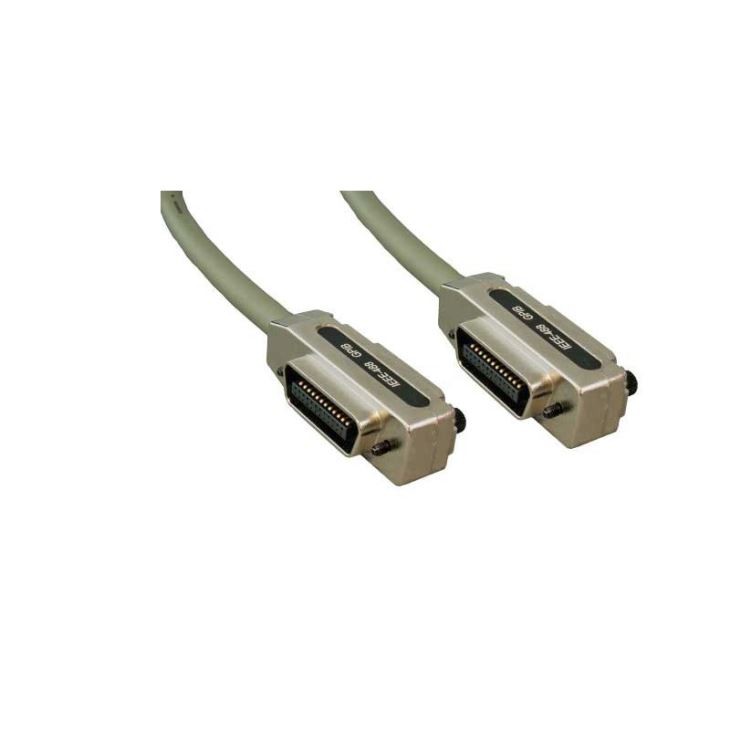

Our Shielded IEEE 488 Interface CN24 GPIB Cable is another product that offers superior EMI protection. This cable is commonly used in test and measurement applications, where it is important to minimize interference and ensure accurate data acquisition.
In addition, our DB25 Male to Half-Pitch Centronics 36 Male Cable is designed with a robust shielding design to reduce crosstalk and EMI. This cable is suitable for a variety of industrial and commercial applications.
Conclusion
EMI issues are a significant concern when it comes to bulk parallel cables. However, by understanding the causes and effects of EMI and implementing appropriate solutions, it is possible to minimize the impact of EMI on the performance and reliability of these cables. As a bulk parallel cable supplier, we are committed to providing our customers with high-quality products that offer excellent EMI resistance.
If you are in need of bulk parallel cables for your application, we invite you to contact us to discuss your requirements. Our team of experts is available to provide you with technical support and guidance to help you select the right cable for your needs. We look forward to the opportunity to work with you and provide you with the best possible solutions for your connectivity requirements.
References
- "Electromagnetic Interference: Principles, Techniques, and Applications" by Clayton R. Paul
- "Cabling: The Complete Guide to Network Wiring" by Andrew S. Tanenbaum
- "Handbook of Electromagnetic Compatibility" by Henry W. Ott