


Can a parallel cable carry power?
As a dedicated supplier of parallel cables, I often encounter inquiries regarding the capabilities of these cables, one of the most frequent questions being whether a parallel cable can carry power. This topic not only piques the curiosity of enthusiasts but also holds significant importance for those in industries where power transmission and data transfer are crucial.
To begin with, let's understand what a parallel cable is. Parallel cables are designed to transmit multiple data signals simultaneously over multiple conductors. Unlike serial cables, which send data one bit at a time, parallel cables can transfer several bits in parallel, enabling faster data transfer rates. They have been widely used in various applications, such as connecting printers, scanners, and other peripheral devices to computers.
Now, to address the question at hand: yes, a parallel cable can carry power. However, the amount of power it can carry depends on several factors, including the cable's design, the gauge of the conductors, and the insulation material.
The design of the parallel cable plays a crucial role in its power - carrying capacity. Some parallel cables are specifically designed with additional conductors dedicated to power transmission. For example, certain printer cables may have conductors that can provide a small amount of power to the printer to operate its internal components.
The gauge of the conductors is another important factor. Thicker conductors (lower gauge numbers) have less resistance, which means they can carry more current without significant power loss due to heat generation. In contrast, thinner conductors (higher gauge numbers) have higher resistance and are limited in the amount of current they can safely carry. When a parallel cable is used to carry power, a lower - gauge conductor is generally preferred to ensure efficient power transfer.
Insulation material also affects the power - carrying capacity of a parallel cable. High - quality insulation materials can withstand higher temperatures and prevent electrical leakage. This is especially important when dealing with power transmission, as any leakage can not only lead to power loss but also pose a safety hazard.
Let's take a look at some common types of parallel cables and their potential for power transmission.
The DB25 Male to Centronics 36 Male Parallel Printer Cable is a classic example. Historically, this cable was used to connect computers to printers. In many cases, it can provide a small amount of power to the printer. The power is usually just enough to operate basic functions such as the print head movement and paper feed mechanism. However, it is not designed to power high - energy - consuming components.

Another type is the DB15 To 34Pin V. 35 Female Cisco Router Cable. This cable is commonly used in networking applications. While its primary function is data transfer, it may also have the ability to carry a limited amount of power for some router functions. The power requirements of routers are often relatively low for certain standby or basic operation modes, and this cable can potentially meet those needs.
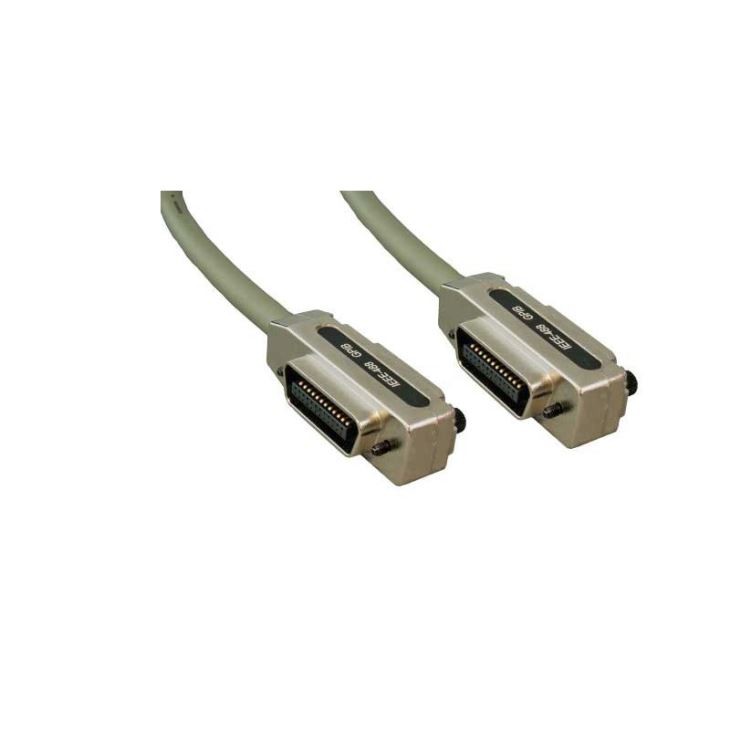
The Shielded IEEE 488 Interface CN24 GPIB Cable is used in laboratory and test equipment. These cables are designed to ensure accurate data transfer in a noisy electrical environment. Although they are not typically associated with high - power applications, they can carry a small amount of power to operate the connected test equipment, especially for low - power sensors or small - scale measurement devices.
It's important to note that while parallel cables can carry power, they are not generally used for high - power applications. For high - power needs, dedicated power cables are usually a better choice. High - power applications require cables with larger - gauge conductors and more robust insulation to handle the large amount of current and prevent overheating.
In industrial settings, the use of parallel cables for power transmission is often carefully evaluated. Engineers need to consider the overall power requirements of the equipment, the distance over which the power needs to be transmitted, and the safety regulations. If a parallel cable is used for power in an industrial environment, it must be properly installed and maintained to ensure reliable operation.
When it comes to consumer electronics, parallel cables are mostly used for data transfer, but the ability to carry a small amount of power can be an added convenience. For example, a printer that can draw a small amount of power from the computer via the parallel cable doesn't need a separate power adapter in some cases.
In conclusion, a parallel cable can carry power, but its power - carrying capacity is limited and depends on multiple factors. Whether you are in the industrial sector, the consumer electronics market, or the networking field, understanding the power - carrying capabilities of parallel cables can help you make more informed decisions when choosing the right cable for your application.
If you are interested in learning more about our parallel cables or need to find the perfect cable for your specific power and data - transfer requirements, we are here to assist you. Our team of experts can provide detailed information about the power - carrying capacity of different cables and help you select the most suitable product. We invite you to contact us for a procurement discussion. Our goal is to provide you with high - quality parallel cables that meet your needs and exceed your expectations.
References
- Electronics Handbook, edited by Jerry C. Whitaker
- Electrical Engineering Fundamentals, by Stephen W. Smith
- Cable Design and Installation Guidelines, various industry standards organizations