


Hey there! I'm a supplier for a SCSI Adapter factory, and today I wanna chat about how we manage our supply chain. It's a crucial part of our business, and I'm gonna break it down for you step by step.
Sourcing Raw Materials
First off, sourcing raw materials is like the foundation of our supply chain. We need all sorts of stuff to make those SCSI adapters, like printed circuit boards (PCBs), connectors, and chips. We've built strong relationships with multiple suppliers over the years. That way, we're not putting all our eggs in one basket. If one supplier runs into issues, we've got others to fall back on.
We're always on the lookout for high - quality materials at a reasonable price. Quality is non - negotiable because a sub - standard component can mess up the whole adapter. And price matters too, 'cause we gotta keep our costs down to stay competitive in the market.
We also do regular evaluations of our suppliers. We check things like their delivery times, the quality of the materials they provide, and their customer service. If a supplier starts slacking off, we're not afraid to look for alternatives. For example, when it comes to PCBs, we need them to be precisely made with the right number of layers and proper copper traces. So, we work closely with suppliers who have a good track record in producing top - notch PCBs.
Production Planning
Once we've got the raw materials sorted, it's time for production planning. This is where we figure out how many SCSI adapters we're gonna make, when we're gonna make them, and which production lines are gonna be used.
We look at market demand first. We analyze sales data from the past, keep an eye on industry trends, and listen to what our customers are saying. If there's a growing demand for 68 Female to IDC 50 Male SCSI Adapter, we'll ramp up production of that particular model.
We also have to consider our production capacity. We can't just decide to make a million adapters overnight if our factory can only handle a thousand a day. So, we balance the demand with our actual production capabilities. We use production scheduling software to make this process more efficient. It helps us allocate resources, set deadlines, and make sure everything runs smoothly on the production floor.
Inventory Management
Inventory management is a bit of a tightrope walk. We don't want to have too much inventory sitting around, 'cause that ties up our money and takes up space in our warehouses. But we also don't want to run out of stock, 'cause that means we can't fulfill customer orders on time.
We use a just - in - time (JIT) inventory system as much as possible. With JIT, we order raw materials and produce adapters based on actual customer orders. This reduces the amount of inventory we need to hold. But it also requires a very reliable supply chain. If there's a delay in getting raw materials, it can throw off our whole production schedule.
We also keep safety stock for some of our most popular adapters, like the SCA 80 to 68 Pin Female Adapter. Safety stock acts as a buffer in case there are unexpected spikes in demand or supply disruptions. We regularly review our inventory levels and adjust our safety stock based on market conditions.
Quality Control
Quality control is woven into every step of our supply chain. From the moment the raw materials arrive at our factory to the time the finished adapters are shipped out, we're constantly checking for quality.
When the raw materials come in, we do incoming inspections. We test the components to make sure they meet our specifications. For example, we check the electrical properties of the chips and the mechanical fit of the connectors.
During production, we have in - process quality checks. Workers on the production line are trained to spot any defects early on. They use testing equipment to check the functionality of the adapters at different stages of assembly.

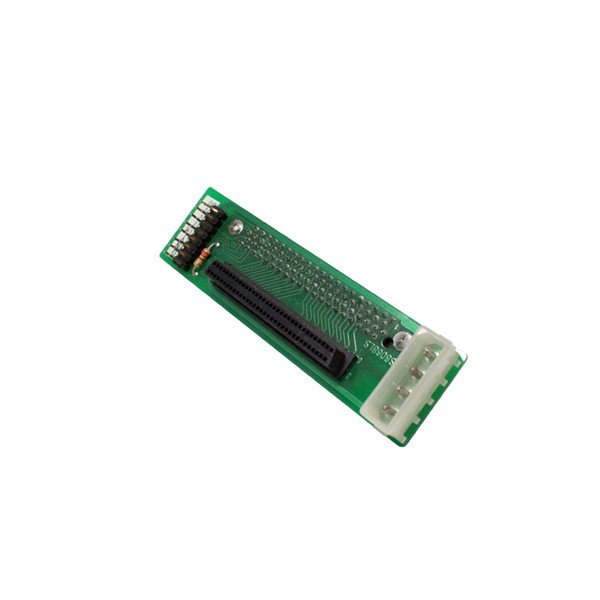
Once the adapters are finished, we do a final quality inspection. We test each adapter thoroughly to make sure it works perfectly. Only after passing this final test are the adapters packaged and ready for shipment. We take quality very seriously because a faulty adapter can damage our reputation and lead to customer dissatisfaction.
Logistics and Distribution
Logistics and distribution are all about getting our SCSI adapters from the factory to our customers. We work with reliable shipping partners to handle this part of the process.
We choose shipping companies based on their speed, reliability, and cost. We want our customers to get their orders as quickly as possible, but we also don't want to spend a fortune on shipping. We offer different shipping options to our customers, like standard shipping for those who are not in a hurry and express shipping for urgent orders.
We also use a tracking system to keep an eye on our shipments. This way, we can let our customers know where their orders are at any given time. And if there are any delays or issues during shipping, we can take action right away to resolve them.
Supplier Relationships
As I mentioned before, supplier relationships are super important. We don't just see our suppliers as people who sell us stuff; we see them as partners. We communicate with them regularly, share our plans and forecasts, and work together to solve problems.
For example, if we're planning to launch a new type of SCSI adapter, like the 68 Female to Female SCSI Adapter with Bracket, we'll involve our suppliers early on. We'll tell them about our requirements and see if they can come up with the right materials or components.
We also negotiate contracts with our suppliers to get the best terms possible. We talk about things like price, delivery schedules, and payment terms. A good contract can help us build a long - term and stable relationship with our suppliers.
Risk Management
No supply chain is perfect, and there are always risks. There could be natural disasters that disrupt our suppliers' operations, political instability in the regions where our suppliers are located, or sudden changes in market demand.
We have a risk management plan in place to deal with these situations. We identify potential risks, assess their likelihood and impact, and come up with strategies to mitigate them. For example, if there's a high risk of a supplier in a particular region being affected by a hurricane, we might look for an alternative supplier in a more stable area.
We also have insurance to cover some of the potential losses. This gives us a bit of a safety net in case something goes wrong.
Continuous Improvement
Finally, we're always looking for ways to improve our supply chain. We collect data from every part of the process, from sourcing to distribution, and analyze it to find areas for improvement.
We encourage our employees to come up with suggestions for making things better. We hold regular meetings to discuss new ideas and implement changes. For example, if our production team notices that a certain process can be streamlined, we'll look into it and see if we can make the necessary adjustments.
Conclusion
Managing the supply chain for a SCSI Adapter factory is a complex but rewarding task. It involves a lot of moving parts, from sourcing raw materials to getting the finished products to our customers. By focusing on quality, efficiency, and strong relationships, we're able to keep our supply chain running smoothly.
If you're in the market for high - quality SCSI adapters, we'd love to have a chat with you. Whether you're a small business looking for a few adapters or a large corporation with a big order, we can work with you to meet your needs. Reach out to us, and let's start a conversation about your SCSI adapter requirements.
References
- Christopher, M. (2016). Logistics & Supply Chain Management. Pearson.
- Chopra, S., & Meindl, P. (2016). Supply Chain Management: Strategy, Planning, and Operation. Pearson.