


Hey there! As a supplier of VHDCI SCSI cables, I often get asked whether these cables can be used in a surveillance system. Well, let's dive right into it and find out if VHDCI SCSI cables are a good fit for your surveillance setup.
First off, let's talk a bit about what VHDCI SCSI cables are. VHDCI stands for Very High - Density Centronics Interface, and SCSI is Short for Small Computer System Interface. These cables are known for their high - density connectors and are commonly used in data storage and transfer applications. They can handle a large amount of data at relatively high speeds, which is a pretty important feature when it comes to a surveillance system.
In a surveillance system, one of the key requirements is the ability to transfer large amounts of video data from cameras to storage devices. The cameras in a surveillance system capture high - resolution video, sometimes in real - time, and this data needs to be moved quickly and reliably. That's where the speed and data - handling capabilities of VHDCI SCSI cables come in handy.
Let's take a look at the speed aspect. VHDCI SCSI cables support high - speed data transfer rates. Depending on the specific SCSI protocol used, these cables can transfer data at speeds that can keep up with the continuous stream of video data from surveillance cameras. For example, some SCSI standards can achieve data transfer rates of up to several hundred megabytes per second. This is crucial for a surveillance system, as it ensures that the video data is transferred without any significant delays or loss, which could result in missing important footage.

Another important factor is reliability. In a surveillance system, you can't afford to have data transfer failures. VHDCI SCSI cables are designed to be robust and reliable. They have high - quality connectors and shielding that help protect the data signals from interference. This means that even in an environment where there might be electromagnetic interference from other electronic devices, the VHDCI SCSI cables can still transfer the video data accurately.
Now, let's talk about the types of VHDCI SCSI cables that could be used in a surveillance system. We have the SCSI - 5 VHDCI to SCSI - 3 68 Pin SCSI Cable. This cable is great for connecting different SCSI - compatible devices in a surveillance setup. For example, you might use it to connect a SCSI - based video capture card to a SCSI hard drive for storing the video data. The 68 - pin connectors provide a stable and secure connection, ensuring that the data transfer is smooth.
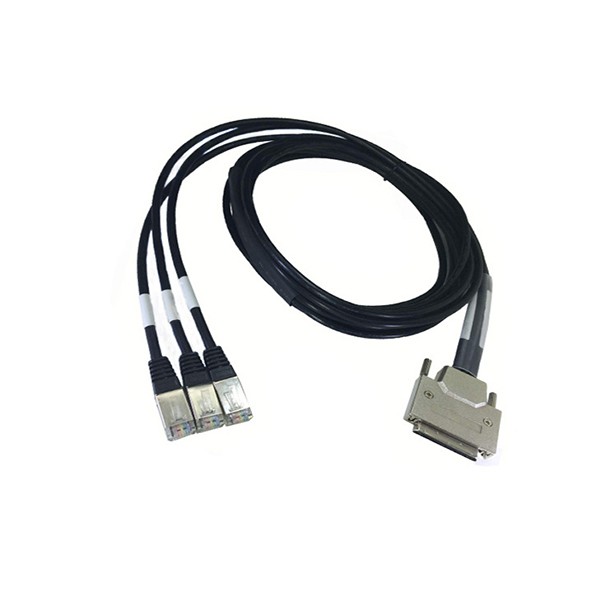
The VHDCI 68 to 3 Ports RJ45 Cable is also an interesting option. In a surveillance system, you might have multiple cameras that need to be connected to a central device. This cable allows you to connect up to three cameras (using RJ45 connectors) to a single VHDCI interface. It's a convenient way to streamline the connection process and manage the data flow from multiple cameras.
Then there's the SCSI - 5 68 Pin VHDCI Cable. This cable is useful for direct connections between SCSI devices. If you have a SCSI - enabled surveillance recorder and a SCSI hard drive, this cable can be used to establish a direct link between them, ensuring fast and efficient data transfer.
However, there are also some considerations when using VHDCI SCSI cables in a surveillance system. One of the main issues is compatibility. Not all surveillance devices support SCSI interfaces. Most modern surveillance systems are designed to use Ethernet or other more common interfaces. So, before you decide to use VHDCI SCSI cables, you need to make sure that your surveillance cameras, recorders, and storage devices are SCSI - compatible.
Another consideration is the cost. VHDCI SCSI cables and SCSI - compatible devices can be more expensive than their non - SCSI counterparts. You need to weigh the benefits of using VHDCI SCSI cables (such as high - speed data transfer and reliability) against the additional cost.
In terms of installation, VHDCI SCSI cables can be a bit more complex to install compared to other types of cables. The connectors are high - density, which means you need to be careful when plugging them in to avoid damaging the pins. Also, the cables need to be properly routed and secured to prevent any signal interference.
Overall, VHDCI SCSI cables can be a great option for a surveillance system, especially if you have a high - end setup that requires high - speed and reliable data transfer. They offer the speed and reliability needed to handle the large amounts of video data generated by surveillance cameras. But you need to carefully consider the compatibility, cost, and installation requirements before making a decision.
If you're interested in using VHDCI SCSI cables for your surveillance system or have any questions about our products, feel free to reach out. We're here to help you find the best cable solutions for your specific needs. Whether you're setting up a small - scale surveillance system for a home or a large - scale system for a business, we can provide you with the right cables and advice.
References:
- General knowledge of SCSI technology and surveillance system requirements.
- Product specifications of VHDCI SCSI cables.