




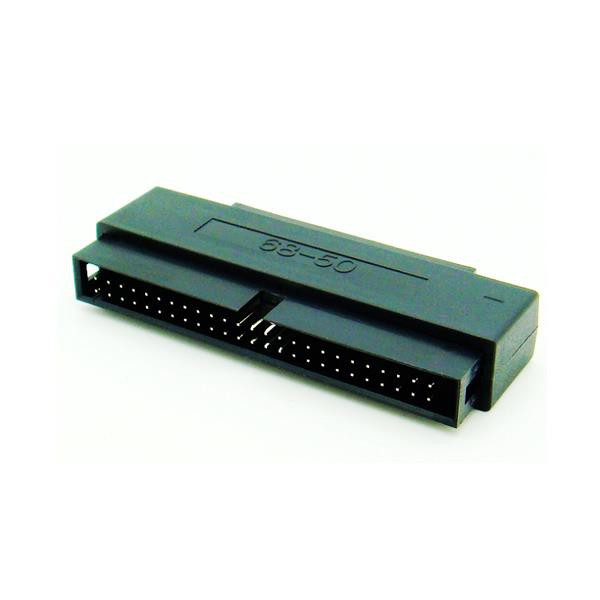
As a supplier from a SCSI Adapter factory, ensuring product compliance is not just a regulatory requirement but a cornerstone of our business. In this blog, I'll share the multifaceted approaches we take to guarantee that our SCSI adapters, such as the 68 Female to Female SCSI Adapter with Bracket, SCA 80 to 68 Pin Female Adapter, and HPDB 68 Male to IDC 50 Male Adapter, meet all the necessary standards.
Understanding Regulatory Standards
The first step in ensuring product compliance is to have a comprehensive understanding of the relevant regulatory standards. SCSI adapters are subject to a variety of regulations, depending on the market they are intended for. For example, in the European Union, products must comply with the Restriction of Hazardous Substances (RoHS) directive, which restricts the use of specific hazardous materials in electrical and electronic equipment. We closely monitor all changes in these regulations and ensure that our production processes are adjusted accordingly.
We also keep a close eye on industry - specific standards. The Small Computer System Interface (SCSI) is governed by a set of standards developed by the International Committee for Information Technology Standards (INCITS). These standards define the electrical, mechanical, and protocol specifications for SCSI devices. By adhering to these standards, we ensure that our adapters are interoperable with a wide range of SCSI - compatible devices.
Supplier Qualification and Material Sourcing
The quality of the materials used in our SCSI adapters is crucial for compliance. We have a rigorous supplier qualification process in place. Before partnering with a supplier, we conduct in - depth audits of their manufacturing facilities, quality control systems, and compliance with relevant regulations. We only source materials from suppliers who can provide documentation proving that their products meet the required standards.
For example, when sourcing printed circuit boards (PCBs), we require suppliers to provide certificates indicating that the PCBs are RoHS - compliant. We also test the materials for electrical conductivity, dielectric strength, and other relevant parameters to ensure that they meet our internal quality standards. This way, we can trace the origin of every component in our SCSI adapters and ensure that they are all compliant.
In - house Testing and Quality Control
Once the materials are sourced, we conduct a series of in - house tests during the manufacturing process. Our quality control teams are equipped with state - of - the - art testing equipment. For electrical testing, we use oscilloscopes, logic analyzers, and multimeters to measure the electrical characteristics of the SCSI adapters. These tests ensure that the adapters meet the electrical specifications defined by the SCSI standards.
We also perform mechanical tests. For example, we check the fit and finish of the connectors to ensure that they are properly aligned and can withstand the mechanical stress during normal use. We test the durability of the brackets and other physical components by subjecting them to repeated cycles of stress and vibration.
In addition to these routine tests, we also conduct functional tests. We connect the SCSI adapters to a variety of SCSI - compatible devices, such as hard drives, tape drives, and scanners, to ensure that they can transfer data accurately and reliably. Any adapter that fails these tests is immediately removed from the production line and undergoes further analysis to identify the root cause of the problem.
Certification and Third - Party Testing
To provide an additional layer of assurance, we often send our SCSI adapters for third - party testing and certification. There are independent testing laboratories around the world that are recognized for their expertise in testing electrical and electronic equipment. These laboratories conduct comprehensive tests on our adapters to verify their compliance with various standards.

For example, we may send our adapters to a laboratory for CE certification, which indicates that the product meets the essential requirements of the European Union's health, safety, and environmental protection legislation. We also obtain UL (Underwriters Laboratories) certification for products intended for the North American market. This certification provides evidence that our adapters have been tested to meet the safety standards set by UL.
Product Documentation and Traceability
Accurate and detailed product documentation is another important aspect of compliance. We maintain comprehensive records of every batch of SCSI adapters we produce. These records include information about the materials used, the manufacturing processes, the test results, and the certification details. This documentation not only helps us ensure compliance but also enables us to provide after - sales support and respond to any customer inquiries or regulatory audits.
We also implement a traceability system. Each SCSI adapter is assigned a unique serial number, which allows us to track its entire production history. In the event of a quality issue or a regulatory concern, we can quickly identify the affected products, trace them back to their source, and take appropriate action, such as a product recall if necessary.
Employee Training and Awareness
Ensuring product compliance is a company - wide effort, and all employees play a role. We provide regular training programs for our employees to keep them updated on the latest regulatory requirements and quality control procedures. Our production workers are trained to identify potential compliance issues during the manufacturing process, and they are empowered to stop the production line if they suspect a problem.
Our sales and marketing teams are also trained to understand the compliance requirements of different markets. This helps them provide accurate information to customers and ensure that the products are promoted and sold in a compliant manner.
Continuous Improvement
Compliance is not a one - time achievement but an ongoing process. We regularly review our compliance processes and performance to identify areas for improvement. We collect feedback from customers, regulatory authorities, and our internal teams to identify any emerging issues or opportunities for optimization.
For example, if we receive feedback from customers about a particular SCSI adapter having compatibility issues with a new SCSI device, we investigate the problem and make the necessary adjustments to our production processes or product design. We also participate in industry forums and standards - setting organizations to stay ahead of the curve and contribute to the development of better standards.
Conclusion
As a SCSI Adapter factory supplier, ensuring product compliance is a complex but essential task. By understanding regulatory standards, carefully sourcing materials, conducting in - house testing, obtaining third - party certification, maintaining detailed documentation, training our employees, and continuously improving our processes, we can guarantee that our SCSI adapters, including the 68 Female to Female SCSI Adapter with Bracket, SCA 80 to 68 Pin Female Adapter, and HPDB 68 Male to IDC 50 Male Adapter, meet all the necessary requirements.
If you are interested in purchasing high - quality, compliant SCSI adapters, we would be more than happy to discuss your needs. Our team of experts can provide you with detailed information about our products and help you select the right SCSI adapters for your specific applications. Contact us to start a procurement discussion.
References
- International Committee for Information Technology Standards (INCITS). SCSI standards.
- European Union. Restriction of Hazardous Substances (RoHS) directive.
- Underwriters Laboratories (UL). Safety standards for electrical and electronic equipment.