


In the dynamic realm of data storage and transfer, the 36 Pin SCSI Cable stands as a stalwart component, facilitating the seamless movement of real - time data. As a dedicated supplier of 36 Pin SCSI Cables, I've witnessed firsthand the critical role these cables play in various industries. In this blog, we'll delve into the intricacies of how a 36 Pin SCSI Cable handles real - time data transfer.
Understanding the Basics of SCSI and the 36 Pin Cable
SCSI, or Small Computer System Interface, is a set of standards for physically connecting and transferring data between computers and peripheral devices. The 36 Pin SCSI Cable is designed to support specific SCSI configurations, providing a reliable pathway for data. It is engineered to meet the high - speed and high - reliability requirements of modern data - intensive applications.
The 36 Pin SCSI Cable comes in different types, each tailored to specific needs. For instance, the MDR 36 Position Plug Computer Cables are widely used in many computer systems. These cables are designed with precision to ensure proper connectivity and signal integrity. The MDR 36 position plug provides a secure and stable connection, which is crucial for real - time data transfer.
Another type is the VHDCI 36 Pin To VHDCI 36 Pin Cable. VHDCI (Very High - Density Cable Interconnect) cables are known for their high - density design, which allows for more data lines in a smaller space. This is particularly useful in environments where space is at a premium, such as server racks. The VHDCI 36 Pin To VHDCI 36 Pin Cable is capable of handling high - speed data transfer, making it suitable for real - time applications that require quick and efficient data movement.
The HPCN 36 Pin Male To Male SCSI Cable is also a popular choice. HPCN (High - Performance Cable Network) cables are designed for high - performance computing environments. The male - to - male configuration provides a direct connection between two devices, minimizing signal loss and interference. This type of cable is ideal for real - time data transfer between servers, storage arrays, and other high - end computing devices.
Signal Transmission in Real - Time Data Transfer
Real - time data transfer requires the cable to transmit signals accurately and quickly. The 36 Pin SCSI Cable is designed with multiple conductors that carry different types of signals. These signals include data signals, control signals, and power signals.
Data signals are the most critical part of real - time data transfer. The cable must be able to transmit these signals without distortion or loss. To achieve this, the 36 Pin SCSI Cable uses high - quality conductors and insulation materials. The conductors are typically made of copper, which has excellent electrical conductivity. The insulation materials are carefully selected to minimize electromagnetic interference (EMI) and crosstalk between the different conductors.
Control signals are used to manage the data transfer process. They include signals for device selection, data direction control, and error detection. The 36 Pin SCSI Cable ensures that these control signals are transmitted accurately, allowing the connected devices to communicate effectively. For example, when a computer requests data from a storage device, the control signals in the cable will coordinate the transfer process, ensuring that the data is sent and received in the correct order.
Power signals are also an important part of the cable. They provide the necessary power to the connected devices. The 36 Pin SCSI Cable is designed to handle the power requirements of the devices, ensuring that they operate properly during real - time data transfer.
Bandwidth and Speed
Bandwidth and speed are crucial factors in real - time data transfer. The 36 Pin SCSI Cable is capable of supporting high - bandwidth and high - speed data transfer. The bandwidth of a cable refers to the amount of data that can be transmitted over a given period of time. The speed of the cable refers to how fast the data can be transmitted.
The 36 Pin SCSI Cable can support different SCSI speeds, such as Fast SCSI, Wide SCSI, and Ultra SCSI. Fast SCSI can transfer data at speeds of up to 10 MB/s, while Wide SCSI can transfer data at speeds of up to 20 MB/s. Ultra SCSI can support even higher speeds, with some versions capable of transferring data at speeds of up to 160 MB/s or more.
The high - speed capabilities of the 36 Pin SCSI Cable make it suitable for real - time applications such as video editing, data streaming, and online gaming. In video editing, for example, large amounts of video data need to be transferred in real - time between the computer and the storage device. The 36 Pin SCSI Cable can handle this high - speed data transfer, ensuring that the editing process is smooth and efficient.
Error Detection and Correction
Real - time data transfer requires high reliability. Any errors in the data transfer process can lead to serious problems, such as data corruption or system crashes. The 36 Pin SCSI Cable incorporates error detection and correction mechanisms to ensure the integrity of the data.
Error detection is typically done using parity checking. Parity bits are added to the data during the transfer process. When the data is received, the receiving device checks the parity bits to ensure that the data has been transmitted correctly. If an error is detected, the receiving device can request the sending device to re - transmit the data.
Error correction is a more advanced mechanism. It involves using algorithms to correct errors in the data without having to re - transmit the entire data. The 36 Pin SCSI Cable may use error correction codes (ECC) to detect and correct errors. ECC can detect and correct single - bit errors and some multi - bit errors, improving the reliability of the data transfer.
Cable Length and Signal Degradation
The length of the 36 Pin SCSI Cable can have an impact on real - time data transfer. As the cable length increases, the signal quality may degrade. This is due to factors such as signal attenuation, EMI, and crosstalk.
Signal attenuation refers to the loss of signal strength as the signal travels along the cable. Longer cables are more prone to signal attenuation, which can result in a weaker signal at the receiving end. To compensate for signal attenuation, the 36 Pin SCSI Cable may use signal amplifiers or repeaters. These devices can boost the signal strength, ensuring that the data is transmitted accurately over longer distances.
EMI and crosstalk can also cause signal degradation. EMI is caused by external electromagnetic fields, while crosstalk is caused by the interference between the different conductors in the cable. The 36 Pin SCSI Cable is designed to minimize these effects through the use of shielding and proper cable routing.
Applications in Different Industries
The 36 Pin SCSI Cable is widely used in various industries due to its high - performance and reliability. In the healthcare industry, for example, it is used in medical imaging systems such as MRI and CT scanners. These systems generate large amounts of data in real - time, which need to be transferred quickly and accurately to the storage and processing devices. The 36 Pin SCSI Cable ensures that the data transfer process is smooth and reliable, allowing doctors to make accurate diagnoses.
In the financial industry, the 36 Pin SCSI Cable is used in trading systems. These systems require real - time data transfer to process large volumes of financial transactions. The high - speed and high - reliability of the 36 Pin SCSI Cable ensure that the trading systems operate efficiently, minimizing the risk of data loss or delays.
In the manufacturing industry, the 36 Pin SCSI Cable is used in industrial automation systems. These systems rely on real - time data transfer to control the production process. The cable ensures that the control signals and sensor data are transmitted accurately, allowing the manufacturing processes to run smoothly.
Why Choose Our 36 Pin SCSI Cables
As a supplier of 36 Pin SCSI Cables, we are committed to providing high - quality products. Our cables are manufactured using the latest technology and strict quality control measures. We use only the best materials to ensure the reliability and performance of our cables.
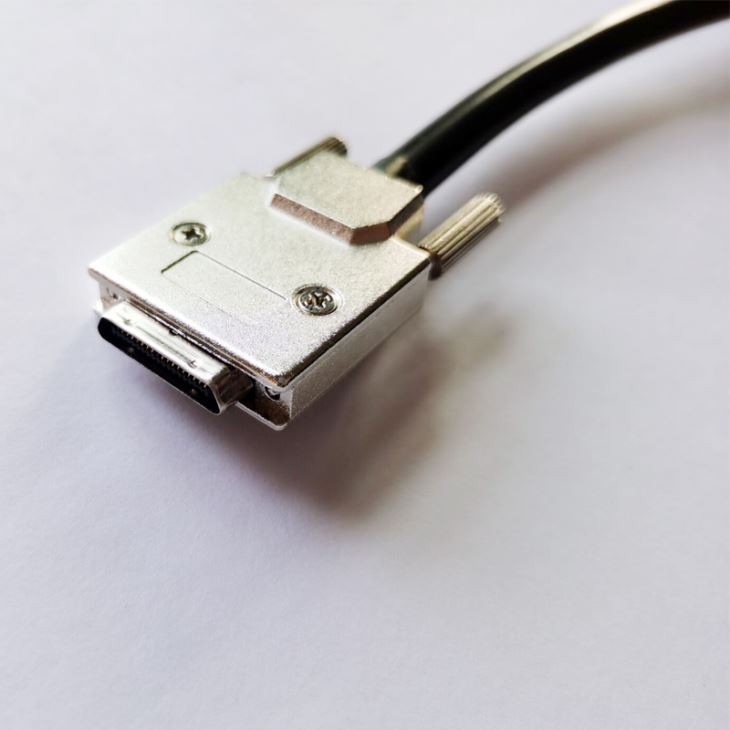

Our team of experts has extensive experience in the field of SCSI cables. We can provide customized solutions to meet the specific needs of our customers. Whether you need a standard cable or a special - purpose cable, we can design and manufacture it for you.
We also offer excellent customer service. Our sales team is available to answer your questions and provide technical support. We understand the importance of real - time data transfer in your business, and we are dedicated to helping you find the right cable solution.
If you are in need of 36 Pin SCSI Cables for your real - time data transfer applications, we invite you to contact us for procurement and further discussion. Our goal is to provide you with the best products and services, ensuring that your data transfer needs are met efficiently and effectively.
References
- SCSI Technology Handbook, published by SCSI Trade Association.
- Data Communication and Networking, by Andrew S. Tanenbaum.
- High - Speed Digital Design: A Handbook of Black Magic, by Howard Johnson and Martin Graham.