


How does a Bulk Parallel Cable work in a humid environment?
As a supplier of bulk parallel cables, I've often been asked about how these cables perform in various environmental conditions, especially in humid environments. In this blog post, I'll delve into the intricacies of how bulk parallel cables function in humidity, the challenges they face, and the measures we can take to ensure their optimal performance.
Understanding Bulk Parallel Cables
Bulk parallel cables are designed to transmit multiple data signals simultaneously over parallel conductors. They are commonly used in applications such as printers, scanners, and other peripheral devices that require high - speed data transfer. These cables typically have multiple pins or connectors, allowing for the parallel transmission of data bits. For example, the DB25 Male to Centronics 36 Male Parallel Printer Cable is a popular choice for connecting printers to computers, enabling fast and efficient data transfer.
The Impact of Humidity on Bulk Parallel Cables
Humidity can have several adverse effects on bulk parallel cables. One of the primary concerns is corrosion. When the air is humid, water vapor can condense on the metal components of the cable, such as the connectors and conductors. Over time, this moisture can cause oxidation and corrosion, which can lead to a degradation of the electrical conductivity of the cable. Corroded connectors may result in poor contact, leading to signal loss, intermittent connections, or even complete failure of the cable.
Another issue is insulation breakdown. The insulation materials used in bulk parallel cables are designed to prevent electrical leakage between conductors. However, in a humid environment, moisture can penetrate the insulation, reducing its effectiveness. This can cause electrical interference between adjacent conductors, leading to data errors and reduced signal quality.
Electrical Conductivity and Signal Integrity
In a humid environment, the presence of moisture can increase the electrical conductivity of the air and the cable's surface. This can lead to an increase in electrical noise, which can interfere with the data signals being transmitted through the cable. The increased conductivity can also cause short - circuits between adjacent conductors, especially if the insulation has been compromised.
Signal integrity is crucial for the proper functioning of bulk parallel cables. Any degradation in signal quality can result in errors in data transmission, which can be particularly problematic in applications where accurate data transfer is essential. For example, in a printing application, data errors can lead to print quality issues such as smudged or incomplete prints.
Challenges in Humid Environments
In addition to corrosion and insulation breakdown, there are other challenges that bulk parallel cables face in humid environments. One such challenge is the growth of mold and mildew. Moisture provides an ideal environment for the growth of these microorganisms, which can damage the cable's insulation and other components. Mold and mildew can also release spores, which can be a health hazard in enclosed spaces.
Another challenge is the expansion and contraction of the cable materials due to changes in temperature and humidity. These changes can cause mechanical stress on the cable, leading to cracks in the insulation or damage to the connectors. Over time, this can result in a weakened cable structure and reduced performance.
Protective Measures
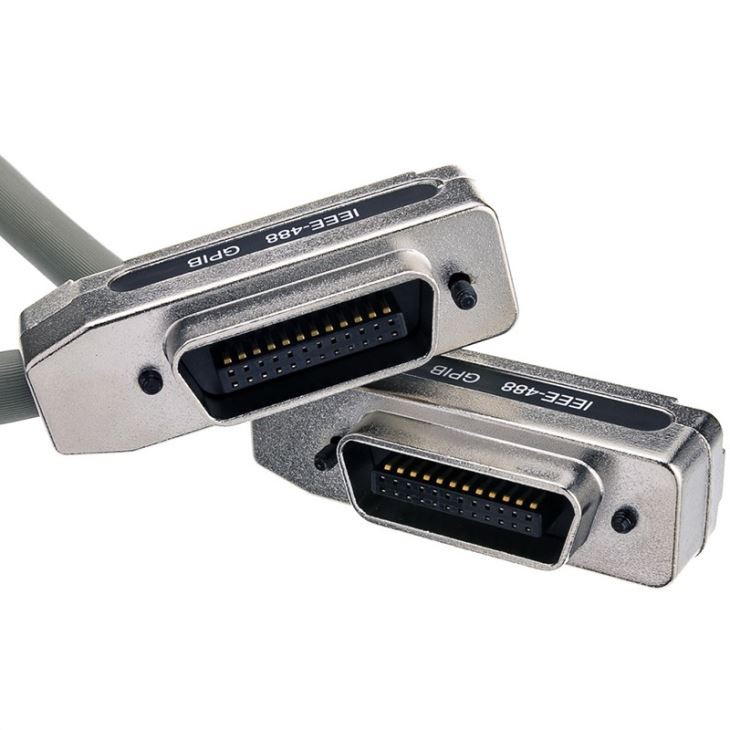
To ensure the reliable performance of bulk parallel cables in humid environments, several protective measures can be taken. One of the most effective measures is to use cables with proper insulation and shielding. For example, the Shielded IEEE 488 Interface CN24 GPIB Cable is designed with shielding to protect the conductors from external interference, including the effects of humidity.
Sealing the cable connectors is another important protective measure. By using waterproof or moisture - resistant connectors, we can prevent moisture from entering the cable and causing damage. Additionally, applying a protective coating to the cable can help to prevent corrosion and the growth of mold and mildew.
Proper storage and installation are also crucial. Cables should be stored in a dry environment, and during installation, they should be protected from direct exposure to moisture. For example, cables can be installed in conduit or other protective enclosures to shield them from the elements.
Testing and Monitoring
Regular testing and monitoring of bulk parallel cables in humid environments are essential to detect any potential issues early. Electrical tests can be performed to measure the cable's conductivity, insulation resistance, and signal quality. Visual inspections can also be carried out to check for signs of corrosion, mold, or physical damage.

By monitoring the performance of the cables over time, we can identify trends and take proactive measures to prevent failures. For example, if a cable's insulation resistance is gradually decreasing, it may be a sign of moisture penetration, and appropriate action can be taken to address the issue.
Our Product Range for Humid Environments
As a bulk parallel cable supplier, we offer a range of products that are designed to withstand the challenges of humid environments. Our 36 Way Centronics Male To CN36 Printer Cable is made with high - quality materials and advanced manufacturing techniques to provide reliable performance even in harsh conditions. We also offer custom - made cables that can be tailored to specific requirements, including enhanced protection against humidity.
Contact Us for Your Bulk Parallel Cable Needs
If you're looking for high - quality bulk parallel cables that can perform well in humid environments, we're here to help. Our team of experts can provide you with the right solutions for your specific applications. Whether you need cables for printers, scanners, or other peripheral devices, we have the expertise and products to meet your needs. Contact us today to discuss your requirements and start a procurement洽谈.
References
- "Electrical Wiring Handbook" by McGraw - Hill Professional
- "Cable and Connector Technology" by John Wiley & Sons
- Industry standards and guidelines related to cable performance in humid environments