




As a supplier of Bulk Parallel Cables, I often get inquiries about the various aspects of these cables, including the chemical composition of their outer jackets. The outer jacket of a Bulk Parallel Cable serves multiple crucial functions, such as protecting the internal conductors from physical damage, environmental factors, and electrical interference. Understanding its chemical composition can provide valuable insights into its performance, durability, and suitability for different applications.
Common Materials in Outer Jackets
Polyvinyl Chloride (PVC)
PVC is one of the most widely used materials for cable outer jackets. It is a synthetic polymer made from vinyl chloride monomers. PVC jackets offer several advantages. Firstly, they are highly flexible, which makes them easy to install in various settings. This flexibility allows the cables to be bent and routed without causing damage to the internal conductors. For example, in a data center where cables need to be neatly arranged in tight spaces, the flexibility of PVC - jacketed cables is a significant advantage.
Secondly, PVC has good resistance to abrasion. It can withstand the wear and tear that occurs during installation and normal use. This is especially important in industrial environments where cables may come into contact with rough surfaces or moving equipment.
Chemically, PVC can be formulated in different ways to achieve specific properties. For instance, plasticizers are often added to PVC to increase its flexibility. However, over time, these plasticizers can migrate out of the PVC, which may lead to a change in the jacket's properties, such as reduced flexibility and increased brittleness.
Thermoplastic Elastomers (TPE)
TPEs are a class of materials that combine the properties of thermoplastics and elastomers. They are composed of hard plastic segments and soft rubbery segments. TPE - jacketed cables are known for their excellent flexibility and elasticity. This makes them suitable for applications where the cables need to be repeatedly bent or twisted, such as in robotics or portable electronic devices.
TPEs also have good resistance to chemicals and UV radiation. In outdoor applications, where cables are exposed to sunlight and various environmental chemicals, TPE jackets can provide long - term protection to the internal conductors. For example, in a solar power plant, TPE - jacketed cables can withstand the harsh outdoor conditions without significant degradation.
The chemical structure of TPEs allows them to be recycled more easily compared to some other materials. This is an important consideration in today's environmentally conscious world, as companies are increasingly looking for sustainable solutions.
Polyethylene (PE)
PE is a simple polymer made from ethylene monomers. It is a lightweight and cost - effective material for cable jackets. PE jackets have excellent electrical insulation properties, which is crucial for ensuring the proper functioning of the cables.
They also have good resistance to moisture. In wet environments, such as in underground cable installations or near water sources, PE - jacketed cables can prevent water from seeping into the internal conductors and causing short - circuits.
However, PE has relatively low resistance to abrasion compared to PVC and TPE. So, in applications where the cables are likely to be exposed to high levels of physical stress, additional protection may be required.
Specialized Materials for Specific Applications
Flame - Retardant Materials
In environments where fire safety is a major concern, such as in commercial buildings, hospitals, and transportation systems, cables with flame - retardant outer jackets are essential. These jackets are often made of materials that contain flame - retardant additives.
One common flame - retardant additive is bromine. Brominated flame retardants work by releasing bromine radicals when exposed to heat, which can interrupt the combustion process. However, there are concerns about the environmental and health impacts of some brominated flame retardants. As a result, alternative flame - retardant materials, such as phosphorus - based compounds, are being increasingly used.
Phosphorus - based flame retardants can form a protective char layer on the surface of the cable jacket when exposed to fire. This char layer acts as a barrier, preventing oxygen from reaching the internal conductors and reducing the spread of the fire.
Oil - Resistant Materials
In industrial settings where cables may come into contact with oils and lubricants, such as in manufacturing plants or automotive workshops, oil - resistant outer jackets are necessary. Materials like nitrile rubber or fluoropolymers are often used for this purpose.
Nitrile rubber has good resistance to a wide range of oils and hydraulic fluids. It can maintain its integrity even when exposed to these substances over an extended period. Fluoropolymers, on the other hand, offer excellent chemical resistance and can withstand exposure to harsh chemicals in addition to oils.

Impact of Chemical Composition on Cable Performance
The chemical composition of the outer jacket has a direct impact on the cable's mechanical, electrical, and environmental performance. For example, a cable with a PVC jacket that has been formulated with high - quality plasticizers will have better flexibility and longer service life compared to a cable with a poorly formulated PVC jacket.
In terms of electrical performance, jackets with good insulation properties, such as PE jackets, can help to reduce signal interference and ensure the reliable transmission of data. This is crucial in high - speed data communication applications, such as Ethernet networks.
The environmental performance of the cable is also affected by the jacket's chemical composition. Cables with jackets that are resistant to UV radiation, moisture, and chemicals can be used in a wider range of environments without the risk of premature failure.
Our Product Range
As a Bulk Parallel Cable supplier, we offer a wide range of cables with different outer jacket materials to meet the diverse needs of our customers. For example, our 34 Pin V.35 Male To Female Rounter Data Cable is available with both PVC and TPE jackets. The PVC - jacketed version is suitable for general - purpose applications in indoor environments, while the TPE - jacketed version is ideal for applications that require high flexibility and chemical resistance.
Our Centronics 36 Pin Parallel Printer Cable is designed with a focus on durability and reliable data transmission. The outer jacket is carefully selected to provide protection to the internal conductors, ensuring that the printer receives accurate data.
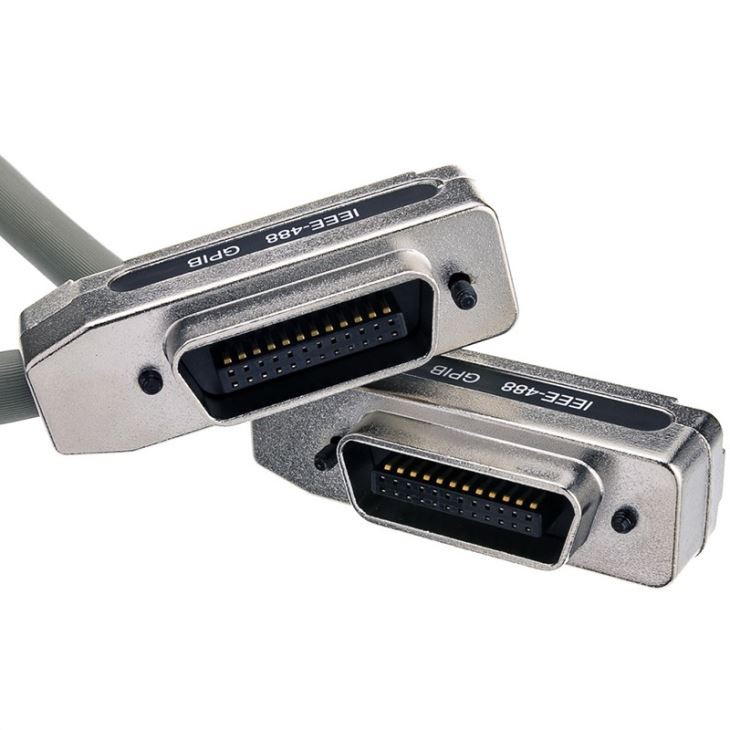
For applications that require high - speed data transfer and protection against electrical interference, our Shielded IEEE 488 Interface CN24 GPIB Cable comes with a specialized outer jacket that combines good insulation properties with electromagnetic shielding.
Contact Us for Procurement
If you are in need of Bulk Parallel Cables and want to discuss the best outer jacket material for your specific application, we are here to help. Our team of experts can provide you with detailed information about the chemical composition and performance of our cables. We can also offer customized solutions to meet your unique requirements. Contact us to start a procurement discussion and find the perfect cable for your project.
References
- "Handbook of Cable Technology" by John A. Camacho
- "Polymer Science and Engineering" by Donald R. Paul and Charles B. Bucknall
- "Cable Engineering for Communication Networks" by R. A. Deal and R. A. Winder