




Yo, tech enthusiasts! Today, I'm gonna break down the differences between Thunderbolt 3 and SCSI Adapters. As a SCSI Adapter supplier, I've got a pretty good grip on both technologies, and I'm stoked to share what I know with you.
Let's start with Thunderbolt 3. It's a relatively new technology that's been making waves in the tech world. Thunderbolt 3 uses a USB - C connector, which is super convenient because it's reversible. You don't have to fumble around trying to plug it in the right way. This technology offers some seriously high - speed data transfer rates. In fact, it can reach up to 40 gigabits per second. That's blazing fast!
One of the coolest things about Thunderbolt 3 is its versatility. You can use it to connect all sorts of devices, like external hard drives, graphics cards, and even multiple 4K monitors. It's like a Swiss Army knife for your computer, allowing you to expand your system in so many ways. Another great feature is that it can provide power delivery. So, you can charge your laptop through the same cable that you're using for data transfer.
Now, let's talk about SCSI Adapters. SCSI, which stands for Small Computer System Interface, has been around for a long time. It might not be as flashy as Thunderbolt 3, but it's still a reliable and powerful technology. SCSI Adapters are typically used in enterprise - level systems, servers, and high - end workstations.
One of the key advantages of SCSI Adapters is their ability to handle multiple devices on a single bus. This means you can connect several hard drives, tape drives, or other storage devices to your computer using just one SCSI Adapter. It's great for building large - scale storage systems.
SCSI also offers high - speed data transfer, although not as fast as Thunderbolt 3 in most cases. However, the transfer speeds are still more than enough for many enterprise applications. And let's not forget about its reliability. SCSI has a long - standing reputation for being a stable and robust technology, which is crucial in business environments where data integrity is a top priority.
In terms of connectors, SCSI Adapters come in various types. For example, there's the HD50 connector. If you're in a situation where you need to change the gender of the HD50 connector, you can use the HD50 Female to Female Gender Changer. This little adapter can be a real lifesaver when you're trying to make your system work.
Another popular SCSI Adapter is the 68 Female to Female SCSI Adapter with Bracket. It's useful for connecting devices with 68 - pin connectors, and the bracket provides extra support and stability. And if you're dealing with SCA 80 and 68 - pin devices, the SCA 80 to 68 Pin Female Adapter is the way to go. It allows you to bridge the gap between different types of connectors.
When it comes to compatibility, Thunderbolt 3 is mainly designed for modern computers, especially laptops and desktops running Windows, macOS, or Linux. It's a great option for consumers and professionals who need a high - speed, versatile connection for their personal or creative work.
On the other hand, SCSI Adapters are more commonly used in older systems and enterprise setups. Many legacy systems still rely on SCSI technology, and upgrading to a different interface might not be feasible or cost - effective. So, SCSI Adapters continue to play an important role in keeping these systems running smoothly.
In terms of cost, Thunderbolt 3 devices can be quite expensive. The technology is relatively new, and the components used in Thunderbolt 3 cables and adapters are often more costly. SCSI Adapters, on the other hand, can be more affordable, especially if you're looking for basic models. However, high - end SCSI Adapters with advanced features can also be pricey.
Another difference is in the ease of installation. Thunderbolt 3 is generally easier to set up. You just plug in the device, and in most cases, your computer will recognize it right away. SCSI Adapters, on the other hand, might require some configuration. You need to set the correct SCSI IDs for each device on the bus to avoid conflicts.
So, which one should you choose? Well, it depends on your needs. If you're a consumer or a creative professional who wants the latest and greatest technology, with high - speed data transfer and the ability to connect all sorts of devices, Thunderbolt 3 is probably the way to go. But if you're working in an enterprise environment, dealing with large - scale storage systems, and need a reliable and proven technology, SCSI Adapters are still a solid choice.
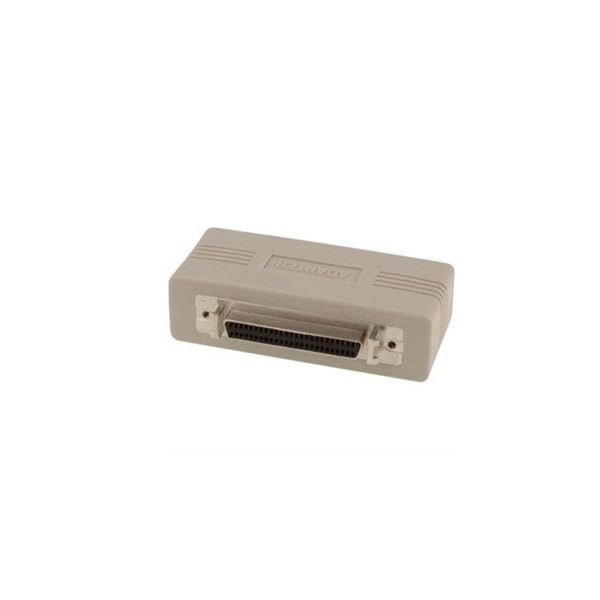

As a SCSI Adapter supplier, I can tell you that we offer a wide range of SCSI Adapters to meet different needs. Whether you're looking for a basic adapter for a small - scale system or a high - end adapter for a large enterprise setup, we've got you covered. Our products are tested and certified to ensure the highest quality and reliability.
If you're interested in learning more about our SCSI Adapters or have any questions about which adapter is right for your system, don't hesitate to reach out. We're always here to help you make the best decision for your technology needs. Whether you're building a new server, upgrading an existing system, or just looking for a replacement adapter, we can provide you with the right solution.
In conclusion, both Thunderbolt 3 and SCSI Adapters have their own unique features and advantages. Understanding the differences between them will help you choose the technology that's best suited for your specific requirements. So, take the time to evaluate your needs, and make an informed decision. And if you decide that SCSI Adapters are the way to go for you, we're here to support you every step of the way.
References
- "SCSI: Small Computer System Interface" - Various industry - standard documents on SCSI technology.
- "Thunderbolt 3: The Next Generation of Connectivity" - Manufacturer's documentation and technical articles on Thunderbolt 3.