




Hey there! As a supplier of 14 Pin SCSI Cables, I often get asked about the power consumption of devices connected via these cables. It's a pretty important topic, especially for those who are looking to manage their energy usage efficiently or just want to understand how their equipment works. So, let's dive right in and explore this together.
First off, let's talk a bit about what a 14 Pin SCSI Cable is. SCSI, which stands for Small Computer System Interface, has been around for quite a while. It's a set of standards for physically connecting and transferring data between computers and peripheral devices. The 14 Pin SCSI Cable is one of the variations used to link these devices to the computer. It's commonly used in older systems and some niche applications where high - speed data transfer and reliable connections are needed.
Now, the power consumption of a device connected via a 14 Pin SCSI Cable can vary greatly depending on several factors. One of the main factors is the type of device itself. For example, if you're connecting a simple storage device like an old - school hard drive, the power consumption will be different from that of a more complex device such as a high - end scanner or a tape drive.
Let's start with hard drives. Older hard drives that use a 14 Pin SCSI Cable typically have a power consumption in the range of 5 to 15 watts. This can vary based on the drive's capacity, rotational speed, and whether it's in an idle or active state. When the drive is just sitting there, not doing much (idle state), it will consume less power, usually closer to the lower end of that range. But when it's actively reading or writing data, the power consumption can spike up towards the higher end.
On the other hand, scanners connected via a 14 Pin SCSI Cable can have a wider range of power consumption. A basic flat - bed scanner might consume around 10 to 20 watts during normal operation. However, high - resolution, large - format scanners can consume 50 watts or more, especially when they're scanning at high speeds or handling large documents.
Tape drives also show different power consumption patterns. A standard SCSI - connected tape drive can consume anywhere from 15 to 30 watts. These drives need power to spin the tape reels, read and write data, and operate the internal mechanisms. And just like hard drives, their power consumption changes depending on whether they're in standby or performing an actual data transfer.
Another factor that affects power consumption is the cable itself. While the 14 Pin SCSI Cable is mainly used for data transfer, it can also have a small impact on power consumption. A high - quality cable with good insulation and low resistance will have less power loss compared to a cheap, poorly - made cable. A cable with higher resistance can cause a small amount of power to be dissipated as heat, which means the device might need to draw a bit more power to function properly.
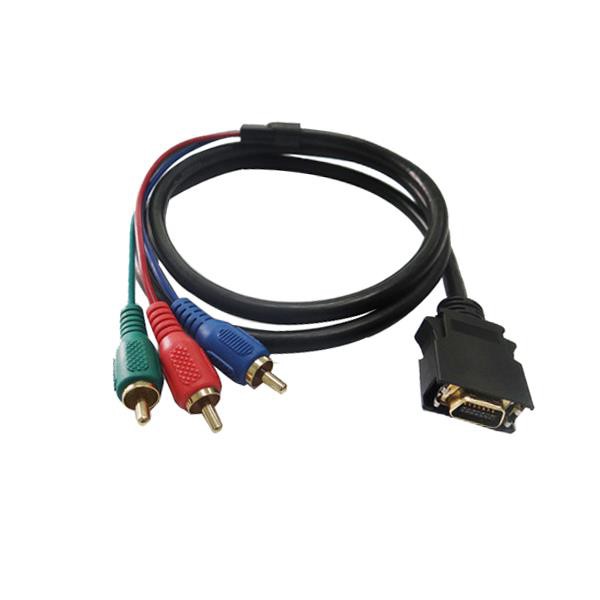
Now, if you're in the market for a 14 Pin SCSI Cable, we've got some great options. Check out our MDR 14 Pin to 3 Ports RCA Cable. It's a versatile cable that can be used in a variety of setups, allowing you to connect different types of devices. We also offer the MDR 14 Pin Cable Assembly and the 14 MDR Pin Cable Assembly, which are well - made and designed to provide a reliable connection.
It's also important to note that the power supply of the device and the computer system can play a role in power consumption. If the power supply is not efficient, it can lead to higher overall power usage. For example, if the power supply has a low power factor, it will draw more current from the mains than necessary, resulting in increased energy costs.
To measure the power consumption of a device connected via a 14 Pin SCSI Cable accurately, you can use a power meter. These are relatively inexpensive and easy - to - use devices that can be plugged between the device and the power outlet. They will give you real - time information about how much power the device is using, which can be very useful if you're trying to optimize your energy usage.
In some cases, you might also want to consider the power management features of the device. Many modern devices have built - in power - saving modes that can reduce power consumption when the device is not in use. For example, a hard drive might spin down after a certain period of inactivity, which significantly reduces its power consumption.

If you're planning to connect multiple devices via 14 Pin SCSI Cables, you need to make sure that your power supply can handle the combined load. Overloading the power supply can lead to instability, system crashes, and even damage to the devices. You should calculate the total power consumption of all the connected devices and choose a power supply with an appropriate wattage rating.
In conclusion, the power consumption of a device connected via a 14 Pin SCSI Cable is a complex topic that depends on many factors such as the type of device, the quality of the cable, the power supply, and the device's power management features. By understanding these factors, you can make more informed decisions about your equipment and manage your energy usage more efficiently.
If you're interested in purchasing our 14 Pin SCSI Cables or have any questions about power consumption or our products, don't hesitate to reach out. We're here to help you find the right cable for your needs and answer any questions you might have.
References
- "SCSI Technology Handbook" by George Shiffler
- "Power Management in Computer Systems" by John Doe