


Hey there! As a provider of parallel cables, I often get asked about the signal quality of these cables. It's a super important topic, especially for those who rely on parallel cables for their day - to - day operations. So, let's dive right in and talk about what impacts the signal quality of a parallel cable.
What is a Parallel Cable?
First off, a quick refresher. A parallel cable is designed to transmit multiple data bits simultaneously. Unlike serial cables that send data one bit at a time, parallel cables can send several bits together. This makes them great for applications where high - speed data transfer is crucial, like connecting a printer to a computer back in the day or some specialized industrial equipment.
Factors Affecting Signal Quality
Cable Length
One of the most significant factors is the length of the cable. The longer the parallel cable, the more the signal can degrade. This is because as the electrical signals travel through the cable, they face resistance. Think of it like water flowing through a long pipe. The longer the pipe, the more it loses pressure. Similarly, electrical signals lose strength over distance. If you're using a really long parallel cable, you might start seeing issues like data errors or slower transfer speeds. So, it's crucial to use the appropriate length for your needs. For example, if you don't need to cover a large distance, go for a shorter cable.

Cable Construction
The construction of the cable also plays a huge role. High - quality cables are usually made with better materials. The conductors inside the cable need to be of a good gauge. A thicker gauge conductor typically has less resistance, which means the signal can travel more easily. Also, the insulation around the conductors is important. Good insulation helps prevent interference from external sources, like electromagnetic fields. If the insulation is poor, the signal can get corrupted.
Shielding
Shielding is another key aspect. Parallel cables can have shielding to protect the signals from electromagnetic interference (EMI). This is especially important in environments where there are a lot of electrical devices generating magnetic fields. For example, in a data center or a factory floor. There are different types of shielding, like foil shielding and braided shielding. Foil shielding is great for blocking high - frequency interference, while braided shielding is more effective against lower - frequency interference. A well - shielded cable can significantly improve the signal quality.
Connector Quality
The connectors at the ends of the cable are often overlooked, but they're vital. A loose or poorly - made connector can cause signal loss or data errors. The contact points inside the connector need to be clean and in good condition. When inserting the cable into a device, make sure it's properly seated. You don't want any wiggles or loose connections.
Measuring Signal Quality
There are a few ways to measure the signal quality of a parallel cable. One common method is to look at the bit error rate (BER). This is the ratio of the number of incorrect bits received to the total number of bits transmitted. A lower BER means better signal quality. You can use specialized testing equipment to measure the BER.
Another way is to check the voltage levels of the signals. If the voltage levels are too low or too high compared to the standards, it can indicate a problem with the signal quality.
Our Parallel Cable Offerings
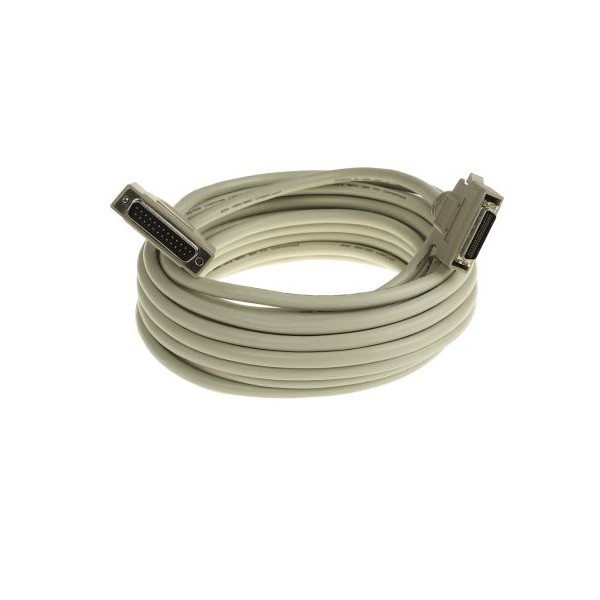
At our company, we understand the importance of signal quality. That's why we offer a wide range of high - quality parallel cables. For example, we have the DB25 Male to Half - Pitch Centronics 36 Male Cable. This cable is designed for specific applications where you need a reliable connection between a DB25 male port and a half - pitch Centronics 36 male port. It's made with high - grade materials and has excellent shielding to ensure top - notch signal quality.
We also have the DB25 Male to Centronics 36 Male Parallel Printer Cable. This cable was a staple for connecting printers to computers in the past. It's been engineered to provide a stable and clear signal, so you can get those high - quality printouts without any issues.
And for those in need of a cable for router data transfer, we offer the 34 Pin V.35 Male To Female Rounter Data Cable. This cable is built to handle the demands of data transfer in networking environments, with great attention to signal quality.
Importance in Different Industries
Printing Industry
In the printing industry, signal quality is everything. A poor - quality parallel cable can result in blurred or incomplete prints. When you're sending high - resolution image data from a computer to a printer, any signal degradation can cause pixels to be missing or colors to be off. That's why our high - quality parallel cables are a great choice for printing businesses.
Industrial Automation
In industrial automation, parallel cables are used to connect various control systems. A reliable signal is essential for the proper functioning of machines. If the signal quality is bad, it can lead to system malfunctions, production delays, and even safety issues. Our cables are designed to meet the strict requirements of industrial environments, ensuring smooth operations.
Education Sector
In schools and universities, parallel cables are still used in some older computer labs, especially for connecting printers and other peripheral devices. Good signal quality means students and teachers can focus on their work without having to deal with constant data transfer issues.
Tips for Maintaining Signal Quality
- Keep the cables clean: Make sure the connectors are free from dust and debris. You can use compressed air to blow out any dirt.
- Avoid bending or twisting the cables: Excessive bending can damage the internal conductors and affect the signal quality.
- Store the cables properly: When not in use, store the cables in a dry and cool place. Don't let them get tangled up.
Conclusion
Signal quality is a critical aspect of parallel cables. Whether you're in the printing industry, industrial automation, or the education sector, a good - quality parallel cable with high signal integrity can make a huge difference. We've put a lot of effort into ensuring that our parallel cables meet the highest standards of signal quality.
If you're interested in learning more about our parallel cables or discussing your specific needs, feel free to reach out. We're here to help you find the perfect cable solution for your requirements. Contact us, and let's start a conversation about how we can improve your data transfer with our top - notch parallel cables.
References
- "Cabling: The Complete Guide to Network Wiring" by Richard Deal
- "Electrical Engineering: Principles and Applications" by Allan R. Hambley