



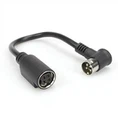
Today's HDMI interface not only can meet the current high-definition 1080P resolution, but also supports advanced digital audio formats such as DVD Audio, and can support eight-channel 96kHz and flat-panel 192kHz digital audio transmission. In use, the HDMI interface differs greatly in specifications. If you buy a LCD TV at a high price, and its HDMI interface is a low version, is this a disadvantage? So how do you identify the version of the HDMI cable? Let's talk about the technicians of Starte.
1, HDMI 1.1 version
This version of the interface was released earlier. When absorbing video signals, the 1.1 version only supports 1080i-scale signals, but it does not fully support 1080P HD specifications. In the past few years, we have been able to satisfy the needs of users. Today, only supporting the 1080i style is not satisfied with the needs of the wide range of audiophiles.
Therefore, the HDMI interface version 1.1 still has a series of compatibility issues, and now only supports the 800x600, 1024x768 and other scales. Even with the 1366×768 rate adopted by the low-end flat-panel TVs at this stage, this initial version of the HDMI excuse is already not acceptable for everyone in terms of compatibility. What's more, LCD TVs equipped with such excuses are not able to perform point-to-point output when playing HD signals, and the emerging images may also be ambiguous and inaccurate.
2, HDMI 1.2 version
In order to solve the problems of low resolution of HDMI 1.1 support and poor compatibility with computer equipment, HDMI scale organization introduced HDMI 1.2 scale in 2005. This t-tOMtT2-based interface reaches a 165MHz bandwidth on a single link, can deliver a data rate of 4.95Gbps, and can fully support 1080p full HD video signals.
By correcting the standard scale, the HDMI 1.2 version also enhances the compatibility of the display interface of the PC device, and can easily support all display resolutions including 1366×768, and it can fully support the point-to-point format of the display screen.
3, HDMI 1.3 version
In 2006, HDMI also released the latest interface of HDMI version 1.3, which is also the HDMI interface adopted by most flat-panel TVs. The biggest change brought by HDMI version 1.3 is to increase the single link bandwidth frequency to 340MHz, and also enable these LCD TVs to achieve 10.2Gbps data transmission, and the 24-bit color supported by HDMI1.1 and 1.2 versions. Deeply expanded to 30, 36 and 48.
Currently, the highest specification 1080p video requires 3.72Gbps bandwidth for transmission, while most advanced display devices such as flat panel TVs and projectors can display 24-bit and 1617M colors. The HDMI 1.3 version of the interface has been developed beyond the current scale configuration, which also allows the HDMI1.3 version of the interface to cope with higher display specifications of digital devices.
4, HDMI 1.4 version
On May 28th, 2009, the HDMI Association released a new version. Silicon Image made the first SiI9387 port solver and SiI9334 transmitter to support 1DTV and home theater products. At the CES show, domestic companies immediately exhibited flat-panel TVs with Ethernet functions, audio return channels and intelligently adjusted content.
Of course, the 24-bit to 36-bit color depth is increased to 2160P (4096X2160), and the 48-bit is based on 1.3, which is still 1200P. The micro HDMI interface on the 3D video portable device is also supported.
5, HDMI 2.0 version
The sound output performance of HDMI 2.0 is also greatly enhanced, and it can process up to 32 channels of lossless audio. Although this sounds a bit exaggerated, it still brings a lot of practical meaning in actual use. For example, the latest Dolby Atmos surround sound format has reached 64-channel cinema level, even for the home version, it supports at least 32 channels. So, want a home theater to get cinema-like sound? HDMI 2.0 can be easily implemented.

The shape of the HDMI 2.0 cable is completely different from the current one. If you buy a device that supports HDMI 2.0, you don't need to buy a new cable. At the same time, HDMI 2.0 is also backward compatible with the old version, so the old Blu-ray player is also compatible with the new 4K TV.