



GPIB (General Purpose Interface Bus) cable, also known as IEE488 cable or HP-IB cable(Hewlett Packard Interface Bus. IEEE-488 is an extremely flexible system that allows data to be transferred between any device on the bus. The system adopts a connector which features male and female piggy-backed 24-pin Centronics style connections to allow daisy-chaining to another instrument or printing device.
There are 16 signal wires in total, of which 8 wires are used for bidirectional communication, 5 wires are used for bus management, and 3 wires are used for signal shake hands.

The working principle of IEEE-488 is: each device on the bus has a unique address, so that the addresses of all devices are different from each other; each device connected to these buses plays the following three roles (some devices) It is also possible to play two roles at the same time - that is, as both a listener and a sender):
Controller: A controller is the device responsible for controlling the work of the bus. This role is usually played by a computer, which is used to direct other devices to perform their duties and operate according to their corresponding roles. In addition to this, the controller also needs to ensure that there are no conflicts on the bus: for example, when two transmitters transmit at the same time, the corresponding data will be corrupted and the system will not work properly. Multiple controllers can be set up on the same bus, but only a single controller must be allowed to work at the same time.
Listener: A listener is a device that is connected to the bus and receives commands from the bus. A listener that only accepts information from one side, such as a printer.
Transmitter: A transmitter is a device that feeds back information and commands to the bus. For example, when a meter set up on the bus provides data to the bus, the meter acts as a transmitter.
The data flow speed of IEEE-488 is determined by the slowest device among the devices in operation, and the maximum data rate is about 1Mbps. In general, the bus length cannot exceed 20 meters. When the distance between two adjacent devices does not exceed 2 meters, a maximum of 15 devices can be connected. In addition, the bus length can be extended by active expanders, so that the maximum number of connected devices can be increased to 31.
Today, IEEE-488 is not only still commonly used communication interface in scientific research and engineering equipment, but is also used for a variety of other purposes, including data acquisition. Most benchtop equipment includes IEEE-488 as a standard accessory or as an optional accessory that facilitates the use of the test equipment in various applications, making it compatible with systems other than ATE test benches. Although IEEE-488 is no longer the standard configuration interface for computers, but with its unique flexibility and convenience, IEEE-488 is still widely used today.
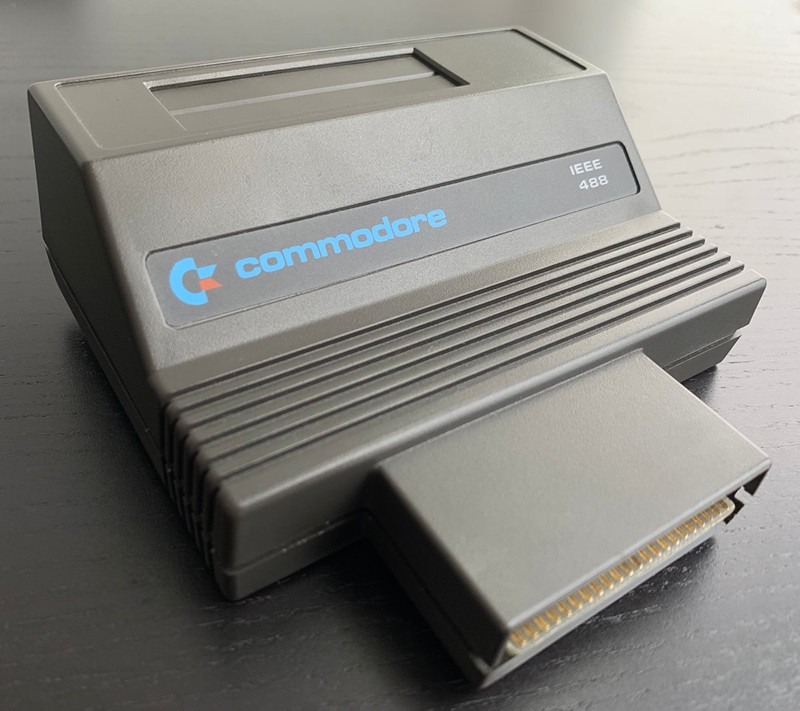
In the current market, the price difference between high-quality IEEE-488 cable and so-called "affordable" products is not obvious. In the cost of the entire connection system, cables, adapters and other connection accessories account for only a small part. However, this small part of the investment is often of great significance to the entire application system.

Starte makes IEEE-488 GPIB HPIB CN24 Male to Female Metal Connector Extension Cable. Also name 24-Pin IEEE-488 GPIB Control Board Communication Cable. This IEEE-488 C24MF to C24MF HPIB/GPIB Bus Cable is with screw locks, meets IEEE 488 and ANSI/IEEE 488.2 standards. Support for digital 8-bit parallel (bi-directional) data transfer. Suitable for laboratory test equipment and Commodore 64 disk drives.


