



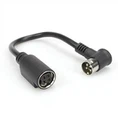
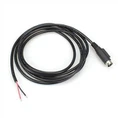
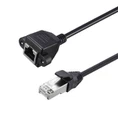
Different cables transport video signals in different transmission modes and principles. The most mentioned wire is HDMI cable. The VGA cable that once dominated the twisted pair is gradually forgotten. It is not the performance of VGA that can't meet HD video. The demand, but the various propaganda on the Internet blurs the user's correct judgment. Now throw the prejudice to understand the VGA HD cable.

The VGA transmission signal consists of five kinds of R/G/B/H/V, which are divided into three primary colors and a line sync signal. Although the VGA cable is composed of 15 wires, there are only 5 wires actually used for transmitting image signals. Therefore, to distinguish the advantages and disadvantages of the VGA wires, it is first necessary to look at the quality of the five wires for transmitting video image signals.

VGA twisted pair transmission technology
The transmission mode mainly passes through the transmitter and the receiver at both ends, and the transmitter is responsible for re-encoding the VGA video signal and transmitting the differential signal in the network cable, and transmitting it to the remote receiver to decode and restore the VGA video signal. VGA cable adopts video differentiation technology. When each signal is transmitted by twisted pair, the signals of the same waveform with opposite polarity can be synchronously released, so that the signals released by a pair of twisted pairs cancel each other out, completely solving the problem of crosstalk inside the signal.