



USB-IF currently concentrates all of its efforts on USB 3.2. They contact the manufacturer to speed up its market penetration. The idea is good, but look at the current situation of USB 3.1 Gen 2.
From the details released this week, the main highlight is that USB 3.2 doubles the bandwidth directly on the basis of USB 3.1 Gen 2, and also requires integrated USB 2.0 and USB 3.1 masters for backward compatibility. Some USB Type-C data lines implement dual channels.
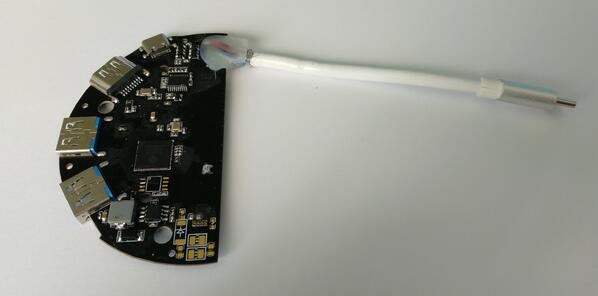
Now, the USB-IF organization also emphasizes that USB 3.2 requires a new USB controller to achieve high transmission rates, and the existing USB Type-C cable can be fully satisfied.
In other words, USB 3.2 can achieve 20Gbps data transmission (2.5GB/s bandwidth) over existing Type-C lines. At present, this program has been supported by giants such as Apple, Intel, and AMD, and it is expected that the USB 3.2 host chip will arrive sometime next year.