


Can a Bulk Serial Cable be used for marine applications?
As a supplier of Bulk Serial Cables, I've been frequently asked whether our products can be utilized in marine applications. This is a crucial question considering the unique and often harsh conditions present in marine environments. In this blog post, I'll delve into the feasibility of using Bulk Serial Cables in marine settings, exploring the challenges, potential solutions, and the suitability of our specific cable offerings.
Understanding Marine Environments
Marine environments are characterized by a combination of factors that pose significant challenges to electronic equipment and cables. These include high humidity, saltwater exposure, extreme temperature variations, and mechanical stress from waves, vibrations, and vessel movements. Any cable used in such an environment must be able to withstand these conditions to ensure reliable and continuous operation.
High humidity is a constant issue in marine settings. Moisture can penetrate cable insulation, leading to corrosion of conductors and electrical shorts. Saltwater, in particular, is highly corrosive and can accelerate the degradation of cable materials. Additionally, the temperature can vary widely, from the cold depths of the ocean to the hot sun on the deck of a ship. These temperature fluctuations can cause materials to expand and contract, potentially leading to cable damage over time.
Mechanical stress is another major concern. Waves and vessel movements can subject cables to bending, twisting, and pulling forces. Cables must be able to withstand these mechanical stresses without breaking or losing their electrical integrity.

Challenges of Using Bulk Serial Cables in Marine Applications
Bulk Serial Cables, like any other cables, face several challenges when used in marine environments. One of the primary concerns is the protection of the cable's internal conductors from moisture and saltwater. Standard cable insulation materials may not be sufficient to prevent water ingress, especially in long-term exposure to a marine environment.
Another challenge is the mechanical durability of the cables. The constant movement and vibrations in a marine setting can cause the cable to flex and bend, which may lead to conductor breakage or insulation damage. The connectors on the cables are also vulnerable to mechanical stress, as they can become loose or damaged over time.
Electromagnetic interference (EMI) is another factor to consider. In a marine environment, there are many sources of EMI, such as radar systems, communication equipment, and electrical motors. Bulk Serial Cables need to be shielded effectively to prevent interference from affecting the data transmission.
Solutions for Using Bulk Serial Cables in Marine Applications
To overcome the challenges mentioned above, several solutions can be implemented. First, the cables can be designed with special insulation materials that are resistant to moisture and saltwater. For example, some cables use a waterproof and corrosion-resistant outer jacket made of materials such as polyethylene or polyurethane. These materials provide an additional layer of protection against the harsh marine environment.
In terms of mechanical durability, cables can be reinforced with strong internal structures. This can include the use of aramid fibers or steel braids to provide additional strength and flexibility. The connectors can also be designed to be more robust, with features such as locking mechanisms to prevent them from coming loose due to vibrations.
To address the issue of EMI, cables can be shielded with a conductive layer, such as aluminum foil or copper braid. This shielding helps to block electromagnetic interference and ensures reliable data transmission.
Suitability of Our Bulk Serial Cable Offerings
Our company offers a range of Bulk Serial Cables that are designed to meet the demands of various applications, including marine environments. We understand the challenges faced by cables in marine settings, and we have taken steps to ensure that our products are up to the task.
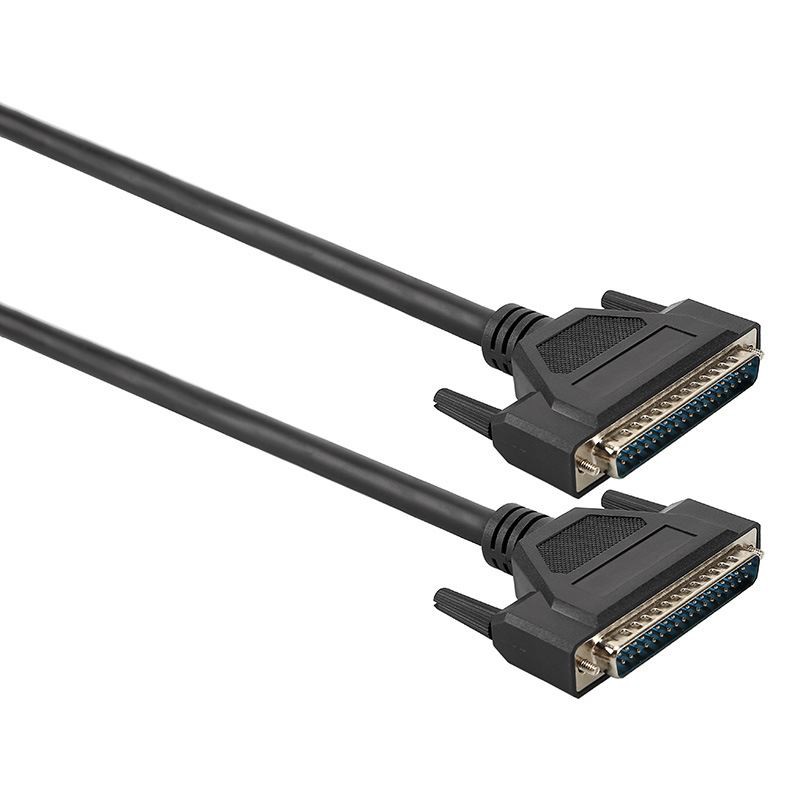
One of our popular products is the 44 Pin (HD44) Male To Male DB44 Cable. This cable is constructed with high-quality materials that provide excellent protection against moisture and corrosion. The connectors are designed to be secure and durable, with a locking mechanism to prevent them from coming loose in a vibrating environment.
Another option is the D-sub 37 Pos DB37 Pin Serial Data Cable. This cable features a shielded design to minimize electromagnetic interference, making it suitable for use in areas with high levels of EMI. The cable is also designed to be flexible and durable, able to withstand the mechanical stresses of a marine environment.
For applications that require multiple connections, we offer the DB25 Male to Dual DB25 Female Cable. This cable provides a convenient solution for connecting multiple devices, while still maintaining the reliability and performance required in a marine setting.
Conclusion
In conclusion, while there are challenges associated with using Bulk Serial Cables in marine applications, with the right design and materials, it is definitely possible. Our company's Bulk Serial Cables are engineered to withstand the harsh conditions of the marine environment, offering reliable data transmission and long-term durability.
If you are in the market for Bulk Serial Cables for your marine application, we encourage you to reach out to us. Our team of experts can help you select the right cable for your specific needs and provide you with detailed information about our products. We are committed to providing high-quality cables and excellent customer service, and we look forward to working with you to meet your marine cable requirements.
References
- "Marine Electrical Systems: Design, Installation, and Troubleshooting" by Nigel Calder
- "Cable and Wiring Installation Manual" by the Institute of Electrical and Electronics Engineers (IEEE)
- "Electromagnetic Compatibility Engineering" by Henry W. Ott