



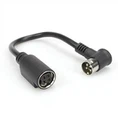
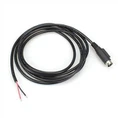
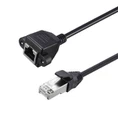
Universal rubber plastic power cord
1. Scope of application: Connection and internal installation line of power, lighting, electrical equipment, instrumentation and telecommunication equipment with AC rated voltage of 450/750V and below.
2, the occasions and methods of laying: indoor clearing and communication channels, tunnels along the wall or overhead laying; outdoor overhead laying, wearing iron pipe or plastic pipe laying, electrical equipment, instruments and radio installation, are fixed laying; plastic The sheathed power cord can be laid directly into the soil.
3, the general requirements: economical and durable, simple structure.
4. Special requirements:
(1) When laying outdoors, it is required to be resistant to the atmosphere, especially to sunlight, due to the influence of conditions such as sunlight, rain and freezing; it has cold resistance requirements in severe cold areas;
(2) In use, it is easily damaged by external force or flammable. When there are many contact with oil, the pipe should be worn; when the pipe is worn, the power cord is subjected to a large pulling force and there is a possibility of scratching, and lubrication measures should be taken;
(3) When used as electrical equipment, when the installation position is small, it should have certain flexibility, and the separation of the insulated core should be clear. It should be matched with the corresponding joint terminal and plug to make the connection convenient and reliable; Occasionally, shielded power cords should be used;
(4) For high ambient temperature, sheathed rubber power cord should be used; heat resistant rubber power cord should be applied for special high temperature applications.
1. Conductor power cord core: When used for internal installation of power, lighting and electrical equipment, copper core is preferred, and compacted core is recommended for large cross-section conductors; conductors of fixed type 1 or 2 are generally used for fixed installation. structure.
2. Insulation: Insulation materials generally use natural styrene-butadiene rubber, polyvinyl chloride, polyethylene, nitrile and polyvinyl chloride composites; the heat-resistant power cord is made of polyvinyl chloride with a temperature resistance of 90 °C.
3. Sheath: The sheath material generally has five kinds of PVC, cold-resistant polyvinyl chloride, anti-ant polyvinyl chloride, black polyethylene and neoprene.
For special cold resistance and outdoor overhead laying, black polyethylene and neoprene sheathed power cords should be used.
In the environment of external force, corrosion, humidity, etc., the power cord of rubber or plastic sheath can be used.
Rubber plastic soft power cord
1. Scope of application: mainly applicable to the connection of medium and light mobile electrical appliances (home appliances, power tools, etc.), instrumentation, power lighting; working electricity
The pressure is 750V and below, and most of them are AC 300C.
2, because the product should be frequently moved, bent, twisted, etc., so the power cord is required to be soft, structurally stable, not easy to kink, and has a certain degree of wear resistance; plastic sheathed rubber power cord can be laid directly in the soil.
3. The grounding wire adopts yellow-green double-color wire, and other cores in the rubber power cable are not allowed to adopt yellow-green wire core.
4. When used for the power connection cable of electric heating appliances, weaving rubber insulated cord or rubber insulated cord should be used as appropriate.
5. The structure is required to be simple and light.
1. Conductor power cord: It adopts copper core, the structure is soft, and is made of multiple single strands; the cord conductor generally adopts the fifth or sixth conductor structure.
2. Insulation: Insulation materials are generally made of natural styrene butadiene rubber, polyvinyl chloride or soft polyethylene plastic.
3. The cable pitch is smaller.
4. The outer protective layer is woven with cotton yarn to avoid overheating and scalding the insulating layer.
5. In order to facilitate the use and simplify the production process, the three-core balance structure can save production time and improve production efficiency.
Shielded insulated power cord
1. Performance requirements of shielded power cord: Basic requirements for similar power cords that are not shielded.
2, because it meets the requirements of equipment for shielding (anti-interference performance), it is generally recommended for medium-level electromagnetic interference occasions; plastic sheathed rubber power cord can be laid directly in the soil.
3. The shielding layer should be in good contact with the connecting device or grounded at one end, and the shielding layer should not be loosened, continuously threaded and not easily scraped by foreign objects.
1. Guide power core: tin plating is allowed in some occasions;
2. The surface coverage density of the shielding layer should meet the standard or meet the user's requirements; the shielding layer should be woven or wrapped with tinned copper wire; if the outer casing should be squeezed, the shielding can be woven or wrapped with soft round copper wire.
3. In order to prevent internal interference between the core or the pair, each core (or pair) can be produced with separate phase shielding structures.
General rubber rubber power cord
1. The general rubber sheathed rubber power cord has a wide application range. It can be applied to all kinds of electrical equipment requiring mobile connection, including the connection of electrical mobile equipment used in various departments of industry and agriculture.
2, according to the use of rubber power line cross-section size and the ability to with the mechanical external force, divided into light, medium and heavy three. These three types of products have soft and flexible requirements, but the light rubber power cord has a high softness requirement, and is light, small in size, and cannot withstand strong mechanical external forces; the medium rubber power cord has a certain degree of softness. And can withstand considerable mechanical external force; heavy rubber power cord has a higher mechanical strength.
3, rubber power cord sheath should be tight and a certain roundness. YQW, YZW, YCW rubber power cords are suitable for field use (such as searchlights, agricultural electric ploughs, etc.), and should have better resistance to sunlight aging.
1. Conductor power cord: It is made of copper soft wire strands. The structure is soft, and the large section surface allows paper bags to improve the bending performance.
2. The insulation adopts natural styrene-butadiene rubber, and the insulation has good aging performance.
3. The rubber for outdoor products uses neoprene or a blended rubber formula based on neoprene.
Mining rubber power cord
1. It has a wide range of applications. It is mainly used for rubber power cord products for mining industry ground and underground equipment. It involves mining electric drill rubber power cord, rubber power cord for communication and lighting equipment, mining and transportation rubber power cord, cap lamp rubber power supply. Line, underground mobile substation power supply rubber power cord.
2. The use environment of mining rubber power cord is very complicated, the working environment is very harsh, gas and coal dust are concentrated, which is easy to cause explosion, so the rubber power cord has high safety requirements.
3. The product should be moved, bent, twisted, etc. frequently when used. Therefore, the power cord is required to be soft, structurally stable, not easy to kink, etc., and has certain wearability.
1. Conductor power cord: It adopts copper core, the structure is soft, and is made of multiple single strands: the cord conductor generally adopts the fifth or sixth conductor structure.
2, insulation: insulation materials are generally rubber.
3. The cable pitch is smaller.
4, more products use metal weaving, uniform electric field, improve the sensitivity of the insulation status display.
5. There is a thick outer sheath, and the color separation process is carried out under the mine to make the construction personnel understand the different voltage levels used by the rubber power cord.
Earthquake rubber power cord
1. Land use: small outer diameter, light weight, soft, wear-resistant, bending resistance, weather resistance, water resistance, anti-interference, good insulation performance, easy identification of core wire,
The set is easy to organize.
The wire is insulated with a soft structure or an enameled wire, the core is twisted and separated, the insulating material is made of a material having a small dielectric constant, and the sheath is made of a polyurethane material.
2, for aviation: no magnetic, tensile strength, small outer diameter, light weight.Copper conductor
3, for sea use: good sound permeability, good water resistance, moderate floating, can float to a certain depth under water, tensile, bending resistance, anti-interference.
Special sound-permeable material, reinforcing core or armored foam inner sheath to adjust the floating degree.
Drilling rubber power cord
1. Bearing power supply rubber power line: small outer diameter is usually less than 12mm; long length, single length supply above 3500m; oil and gas resistant, water pressure resistant to 120MPa (1200 times atmospheric pressure); high temperature resistance: above 100°C; anti-interference , tensile strength: above 44KN; wear-resistant, hydrogen sulfide-resistant gas; all armored steel strands do not spread when broken, otherwise it will cause waste wells.
1. The conductor is made of soft structure and tinned;
2. High temperature resistant polypropylene, ethylene propylene rubber or fluoroplastic for insulation;
3. Semi-conductive material for shielding;
4. High-strength galvanized steel wire for armor; 5. Specially manufactured technology.
2, perforated rubber power cord: hole cross-sectional area and tensile force, wear, vibration, not loose.
1. The medium soft structure of the conductor;
2. Polypropylene, ethylene propylene rubber or other high temperature resistant materials for insulation;
3. The conductor, insulation and armor are of the correct size.
4. Surveying rubber power lines for coal fields, non-metals, metals, geothermal, hydrology and underwater.
1. Reinforced core and inner armor;
2. Conductor is soft copper wire;
3. Ordinary rubber for insulation;
4. Sheath neoprene;
5. Special case with metal or non-metal armor;
6. Underwater rubber power supply The line should use coaxial rubber power cord;
7, the integrated detector should have power, communication and other functions.
8. Submersible pump rubber power cord: The outer diameter of the tubing is small, requiring small size outside the rubber power cord; the depth of the well is increased, the power is large, the insulation is required to withstand high temperature, high pressure, and the structure is stable; good electrical performance, good insulation performance, and small leakage current; Long life, stable structure, reusability; good mechanical properties.
1. Small and medium-sized oil pipes adopt flat rubber power cord to ensure small outer dimensions; conductors are solid, large cross-section: stranded conductors, round rubber power cords;
2. Polyethylene-lead rubber power cord cores - Fluorine 46 sintering line, ethylene-propylene insulation; electric rubber power cord with ethylene-propylene, cross-linked polyethylene heat-resistant insulation;
3, sheath oil-resistant neoprene, chlorosulfonated polyethylene and other oil-resistant high-temperature materials, lead sheath, etc.
4, using chain armor;
5, anti-halogen structure, in the bare armor with anti-halogen sheath.
Elevator rubber power cord
1. The rubber power cord should be freely suspended before use, fully retracted, and the rubber power cord reinforcing core should be fixed while receiving tensile force;
2. Multiple rubber power cords should be laid in rows. During operation, the rubber power cord moves up and down with the elevator, moving and bending frequently, requiring soft and good bending performance;
3, the rubber power line is laid vertically, requiring a certain tensile strength;
4. The working environment is oily and fireproof, and the rubber power cord is not required to be ignited;
5. The outer diameter is small and the weight is light.
1. Adopt 0.2mm round copper single-wire bundle stranding, wrap the insulation layer between the insulation and the conductor, and increase the softness and bending performance of the rubber power cord when the cable is twisted in the same direction;
2. The rubber power cord is added to the rubber power cord to strengthen the core, and the mechanical tension is applied. The reinforcing core is made of nylon rope, steel wire rope and the like to increase the tensile strength of the rubber power cord;
3. The YTF rubber power cord adopts a neoprene-based sheath to improve the weather resistance and non-flammability of the rubber power cord.
Control signal rubber power cord
1. Because the control signal rubber power cord is used to control the measurement system, the rubber power cord is required to work safely and reliably;
2, generally fixed laying, but the rubber power cord and equipment connection
Requires softness and is required to withstand multiple bends without breaking;
3. The working voltage is 380V and below, and the voltage of the signal rubber power line is lower;
4. The working current of the signal rubber power line is generally below 4A. When the control rubber power line is used as the main equipment loop, the current is slightly larger, so the cross section can be selected according to the line voltage drop and mechanical properties.
1. The wire is made of copper core, and the fixed laying adopts a single structure to add 7 stranded structures; the moving adopts 5 types of soft conductor structure to meet the softness and bending resistance;
2. Insulation is mainly made of polyethylene, polyvinyl chloride, natural styrene-butadiene rubber and other insulation;
3. The insulated core should be reversed into a cable to make the structure more stable. When the field rubber power cable is cabled, it is filled with nylon rope to increase the tensile strength, while the same cable can increase the soft performance.
4. Sheath: It mainly uses polyvinyl chloride, neoprene and nitrile polyvinyl chloride composites.
DC high voltage rubber power cord
1. The straight high-pressure rubber power cord has a wide application range and is mainly used in new technical equipments in various industries, such as X-ray machines, electron beam processing, electron bombardment electron guns, electrostatic painting, etc. These products are generally power supplies. The power is relatively large, so the filament current passing through the rubber power line is also relatively large, up to tens of amps; the voltage ranges from 10KV to 200KV;
2. Most of the rubber power cords are fixedly laid and are not in direct contact with people;
3, rubber power line transmission energy is large, to consider the allowable working temperature of the rubber power line thermal rubber power line;
4, some equipment use medium frequency short-time discharge, rubber power cord
Must withstand 2.5-4 times the voltage, so consider enough electrical strength;
5. Since various equipments have not been standardized and serialized, the working voltage between the filaments and the working voltage between the filament core and the gate core are different for the same type of equipment, so they must be selected separately.
1. Guide power core: The core is generally 3 cores, and there are also 4 cores or 5 cores;
2, 3-core rubber power cord generally two filament heating core, one control core; wire and shield with DC high voltage;
3, 3-core rubber power cord has two forms: one is similar to the X-rubber power cord, and uses a phase-separated insulation to package a semi-conductive layer and a high-voltage layer; the other uses the control core as a center conductor, which is extruded and insulated. The two filaments are concentrically twisted, and then the semi-conductive layer and the high-voltage insulation layer are extruded; the high-voltage insulation layer: the natural maximum field strength of the natural styrene-butadiene rubber is 27KV/mm, and the ethylene-propylene insulation is 35KV/mm;
4. Outer shielding layer: woven with 0.15 -0.20mm tinned copper wire, the weaving density is not less than 65%; or wrapped with metal tape;
5, the sheath, extruded with special soft polyvinyl chloride or nitrile polyvinyl chloride.
Twisted pair power cord
For twisted pairs, the user is most concerned with several indicators that characterize their performance. These indicators include attenuation, near-end crosstalk, impedance characteristics, distributed capacitance, and DC resistance.
(1) attenuation
Attenuation is a measure of signal loss along the link. Attenuation is related to the length of the cable, and as the length increases, the signal attenuation increases. The attenuation is expressed in units of "db", which represents the ratio of the signal strength of the source transmitter to the signal strength of the receiver. Since the attenuation varies with frequency, the attenuation over all frequencies within the application range should be measured.
(2) Near-end crosstalk
Crosstalk is divided into near-end crosstalk and far-end crosstalk (FEXT). The tester mainly measures NEXT. Because of the line loss, the influence of the magnitude of FEXT is small. Near-end crosstalk (NEXT) loss is the measurement of signal coupling from one pair of wires to another in a UTP link. For UTP links, NEXT is a key performance indicator and one of the most difficult to measure accurately. As the frequency of the signal increases, the measurement difficulty will increase. NEXT does not represent the crosstalk value produced at the near endpoint, it simply represents the crosstalk value measured at the near endpoint. This magnitude will vary with cable length, and the longer the cable, the smaller its value becomes. At the same time, the signal at the transmitting end is also attenuated, and the crosstalk to other pairs is relatively small. Experiments have shown that only the NEXT measured within 40 meters is more realistic. If the other end is an information outlet that is longer than 40 meters, it will generate a certain degree of crosstalk, but the tester may not be able to measure the crosstalk value. Therefore, it is best to perform NEXT measurements at both endpoints. The tester is equipped with appropriate equipment so that the NEXT values at both ends can be measured at one end of the link.
(3) DC resistance
TSB67 does not have this parameter. The DC loop resistor consumes a portion of the signal and converts it into heat. It refers to the sum of the resistance of a pair of wires. The DC resistance of the twisted pair of the 11801 specification shall not be greater than 19.2 ohms. The difference between each pair should not be too large (less than 0.1 ohms), otherwise it means poor contact and the connection point must be checked.
(4) Characteristic impedance
Unlike the loop DC resistance, the characteristic impedance includes the resistance and the impedance of the inductor and the impedance of the capacitor from 1 to 100 MHz, which is related to the distance between the pair of wires and the electrical properties of the insulator. Various cables have different characteristic impedances, while twisted pair cables are available in 100 ohms, 120 ohms, and 150 ohms.
(5) Attenuation crosstalk ratio (ACR)
In some frequency ranges, the proportional relationship between crosstalk and attenuation is another important parameter that reflects cable performance. ACR is sometimes also expressed in terms of signal-to-noise ratio (SNR), which is calculated from the difference between the worst attenuation and the NEXT magnitude. The ACR value is larger, indicating that the anti-interference ability is stronger. General system requirements are at least greater than 10 decibels.
(6) Cable characteristics
The quality of the communication channel is described by its cable characteristics. SNR is a measure of the strength of a data signal, taking into account interfering signals. If the SNR is too low, it will cause the receiver to be unable to resolve the data signal and the noise signal when the data signal is received, eventually causing data errors. Therefore, in order to limit data errors to a certain range, a minimum acceptable SNR must be defined.