



Network cables are classified according to the link rate. Common types are Category 3, Category 5 (100M) and Category 5e (155M), as well as the latest Category 6 cable (255M). The former has a fine wire diameter and the latter has a coarse wire diameter that provides twice the bandwidth of the Super Category 5.
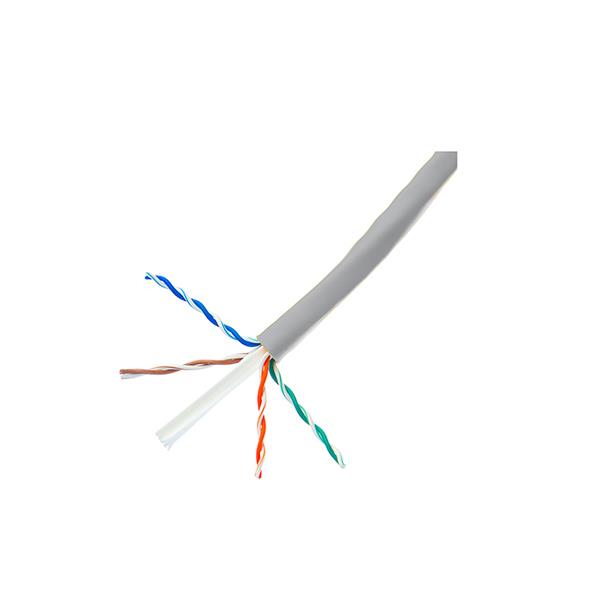
Some friends will purchase six types of network cable with 1000M as the main network of the switch. Will you ask that cat6 cable can run 1000M? In a building, no more than 100M, what is the meaning of 500M when using cat6 cable?
1000M and 500M mentioned above refer to bandwidth, M means mega, not meters. The six types of network cables are the configurations of the Gigabit network.
1000M network, requiring physical frequency 100MHz
Super five 0.5-line diameter OFC oxygen-free copper wire, maximum frequency 155MHz
Six types of 0.555 wire diameter OFC oxygen-free copper wire, the maximum frequency of 250MHz
It seems that there is no difference between Super Category 5 and Category 6 running Gigabit.
The standard bandwidth of CAT6 is 250MHz, and the four-pair bidirectional transmission easily reaches 1000Mbps. This type is tailored for Gigabit.
As for the use of CAT5E can also be achieved, there is nothing wrong, must choose the regular network cable manufacturers' products, the transmission performance of the six types of wiring is much higher than the super five standards, the six types of network cable is the best choice for 1Gbps data transmission.
In the standard network transmission distance, the maximum transmission distance of the six types of network cables is also specified within 100 meters, but in actual engineering, the six types of network cables that meet the international standards and pass the test can pass the transmission distance of about 150 meters.