



In early 2022, HMDI LA, the governing body of the HDMI standard, released the HDMI 2.1a standard specification. The new HDMI 2.1a standard specification will add a feature called SBTM (Source-Based Tone Mapping), which allows different windows to display SDR and HDR content simultaneously to optimize HDR displays for a better user experience, while many existing devices can be updated through firmware to support SBTM functionality. Recently, HMDI LA officially announced another update about HDMI 2.1a standard, introducing a very useful feature that will enable new cables to support "HDMI Cable Power" technology in the future to gain power supply capability. It will enhance the power supply to the source device and improve the stability of long distance transmission. To put it simply, it can be understood that based on the "HDMI Cable Power" technology, active HDMI cables will be able to obtain more power from the source device, making it easier to power even several meters of HDMI cable without the need for an additional power cable.
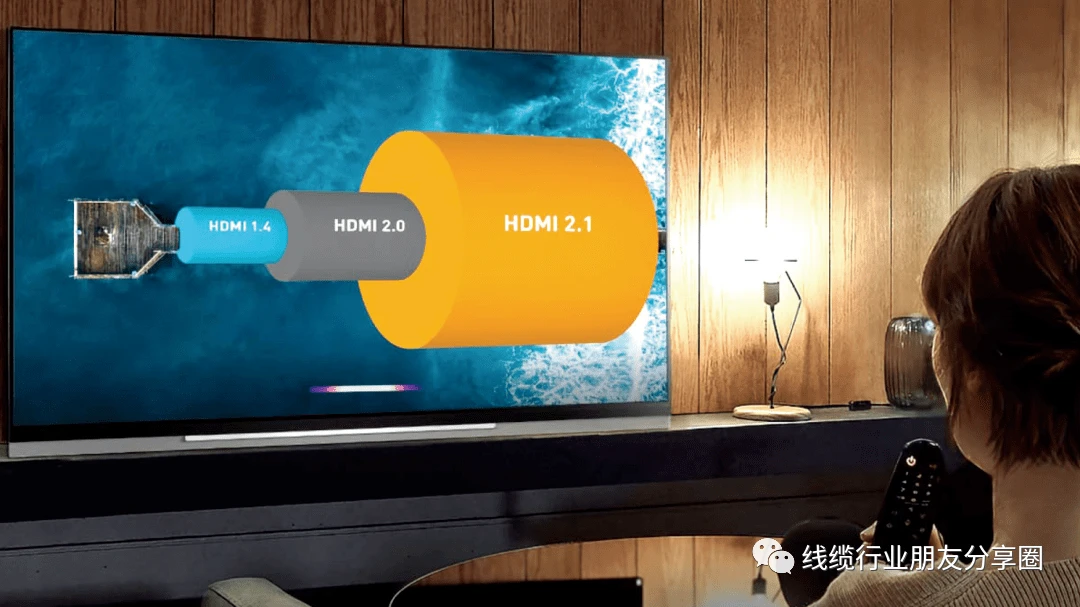
We know that the longer the cable, more difficult to ensure signal stability when connecting. HDMI 2.1 standard, with 48Gbps data transfer speed, makes this problem even more apparent. The addition of "HDMI Cable Power" technology not only gives HDMI cables the ability to be powered, but also improves the stability of data transmission over long distances, provided that both the source and receiving devices support this feature. In addition, the new cable can only be connected in one direction, with one end marked exclusively for the source device and the other for the receiving device, so if the connection is reversed, no damage to the device will occur but the connection will be lost. HDMI cables with "HDMI Cable Power" technology include a separate power connector for source devices that do not support this technology, typically these connectors are USB Micro or USB Type-C connectors. As more and more source devices add support for "HDMI Cable Power" technology, it becomes easier for users to build a convenient and reliable home theatre.

When using Cable Power enabled devices and cables, only one end of the cable can be plugged into the source device to receive extra power. However, even if you get it backwards, no harm will come to the equipment, but the cable will not transmit any signal at all. For those considering using the cable in a wall or other confined space, it will be very important to get the ends of the cable oriented correctly. If you buy a new device that supports Cable Power, you don't have to use Cable Power-enabled cables under normal use, the new ports are backwards compatible and your existing HDMI cables will still do what they have always done. Conversely, if you decide to purchase Cable with Power-enabled, you don't already own any Cable Power-enabled devices, this is also possible. Cable Power-enabled cables come with a separate power connector so they can be powered with a 5 volt USB adapter (usually Micro-USB or USB Type-C) so they can work, but when you eventually upgrade your source devices to support cable power, you will be able to ditch the USB power adapter and installation naturally becomes more simpler. If this sounds a lot like RedMere technology, some HDMI cables are used to get a little extra power from the source device to allow longer runs - that's because it's a very similar idea. The difference is that RedMere cables cannot collect enough power to allow the full bandwidth of an extended superfast cable. Like the idea of Cable Power but wish you didn't have to spend money on a new product? Unfortunately this is unlikely, as a spokesperson for the HDMI licensing authority explained that this is because "Cable Power" requires a chip to be installed in the source device, and these chips need to be manufactured specifically for this function, so the HDMI chip story begins.
